How Animals Can Help You Find Water
Animals need water just as people do, so signs of animal activity can sometimes provide clues about where water may be found.
For Scouts, this is an interesting way to combine survival skills, nature observation and tracking. However, animal signs should be treated as clues rather than a guaranteed method of finding water.
The priority is always to remain safe, stay within the agreed activity area and avoid disturbing wildlife.
Look for Animal Trails
Animals often use the same routes repeatedly.
A well-used trail through vegetation may indicate that animals regularly travel between feeding, resting and watering areas.
If several trails appear to converge towards lower ground, this may be worth noticing.
Don’t automatically follow the trail, though. It could lead through difficult or unsafe terrain.
Look for Tracks
Animal tracks can provide clues about what wildlife is using an area.
You might notice footprints in mud, soft ground or sand.
If you see repeated tracks from several animals heading in the same general direction, water could potentially be somewhere along that route.
However, tracks don’t tell you exactly where the animals were going.
They may simply be travelling between feeding or shelter areas.
Watch for Concentrations of Activity
If you notice lots of animal signs in one area, think about why.
Animals may gather around food, shelter, water or suitable habitat.
A combination of tracks, trails and vegetation can therefore be more useful than a single footprint.
Look at Birds
Bird activity can sometimes provide clues about nearby water.
Birds may visit ponds, streams and other water sources to drink or bathe.
However, birds also travel considerable distances and may simply be moving between feeding and nesting areas.
Don’t assume that seeing birds means water is immediately nearby.
Look for Insects
Insects are often associated with damp environments and water.
You may notice increased insect activity around ponds, streams and other wet areas.
This can be another clue when combined with the surrounding landscape.
It should never be treated as proof that a drinkable water source is present.
Watch the Direction of Movement
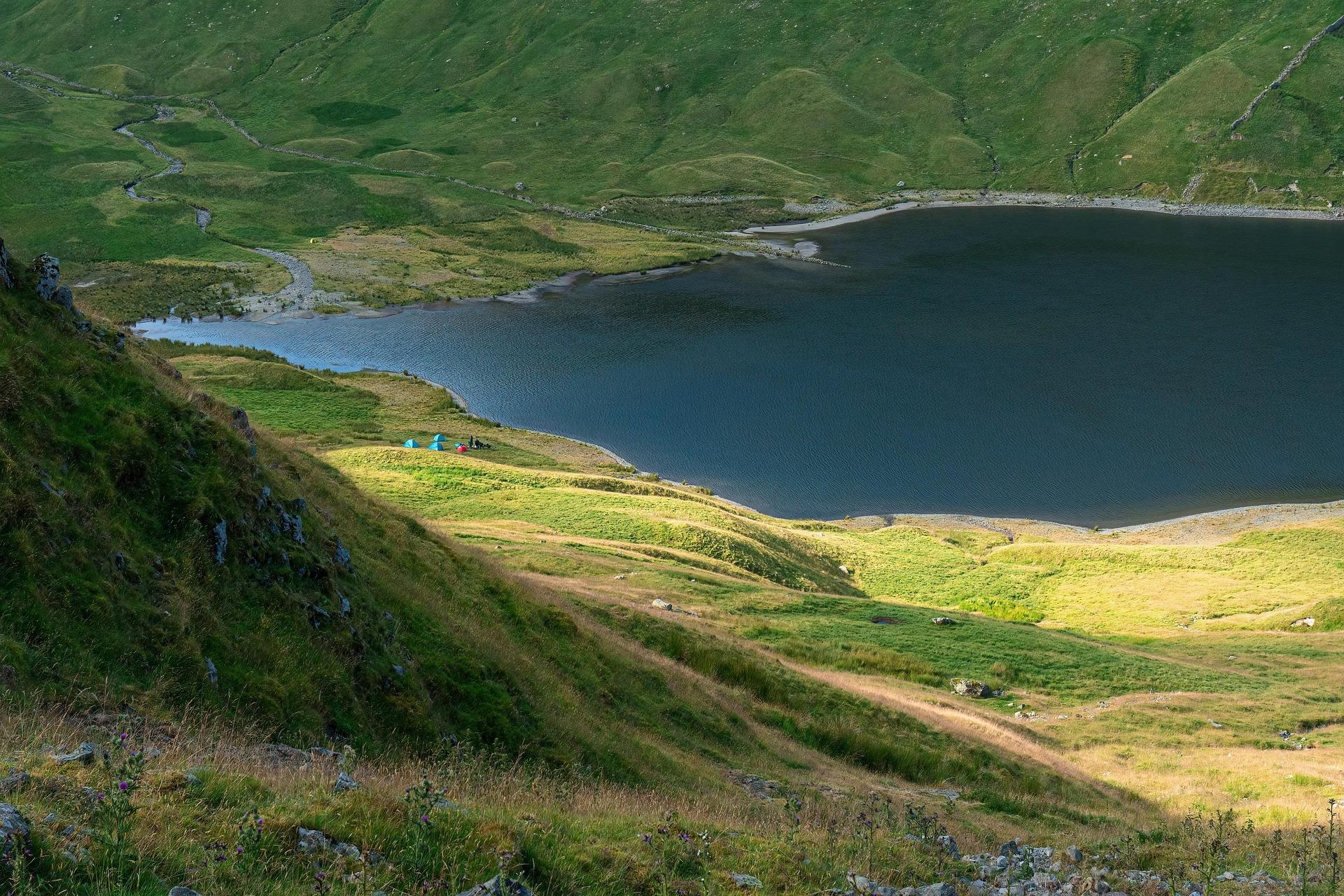
If several signs suggest animals are moving towards a particular area, consider what the terrain looks like in that direction.
Does the land fall?
Is there a valley?
Is there vegetation that suggests greater moisture?
Combining animal signs with an understanding of the landscape can provide better information than relying on animal behaviour alone.
Don’t Follow Wildlife
This is an important distinction.
You’re observing signs of wildlife, not tracking an animal in order to reach water.
Don’t chase animals, approach them closely or follow them through dense vegetation.
Wild animals can behave unpredictably, and disturbing them can cause unnecessary stress.
Don’t Approach Nests or Burrows
Animal activity can sometimes reveal the location of nests, dens or burrows.
Leave these areas alone.
Don’t put your hands into holes or attempt to investigate them.
If a trail appears to lead into an area containing nests or other wildlife, choose another route.
Combine Clues
The most useful approach is to look for several clues at once.
For example, you might notice:
A valley running downhill.
Several animal trails heading towards it.
Damp vegetation.
And a stream marked on your map.
Together, these clues provide a much stronger indication of where water may be located.
Use Your Map
Maps remain one of the most reliable tools for locating known water sources.
If you spot animal activity, use it as an observation rather than replacing your navigation skills.
Check your position and compare what you’re seeing with the landscape around you.
Don’t Assume the Water Is Safe
Even if animals appear to be drinking from a water source, that doesn’t mean humans should drink it untreated.
Animals can use water containing microorganisms or contaminants that aren’t visible.
Natural water intended for drinking should be assessed and treated appropriately.
Don’t Enter Unsafe Terrain
A useful animal trail isn’t necessarily a safe human route.
It might lead down a steep bank, through thick vegetation or into an area that becomes hazardous after rain.
Never put yourself at risk simply because you think an animal knows where water is.
Younger Scouts
This topic works particularly well as a nature observation exercise.
During a supervised walk, ask Scouts to look for tracks, trails and signs of animal activity.
Instead of asking them to actually find water, ask:
“What might this tell us about the environment?”
This keeps the focus on observation and respect for wildlife.
Older Scouts
Older Scouts can combine animal signs with navigation.
Give them an area to observe and ask them to identify possible reasons for concentrations of animal activity.
They can then compare their observations with maps and the surrounding terrain.
Leader Notes
It’s important not to present animal behaviour as a reliable survival shortcut.
The real skill is learning how to combine different environmental clues.
This activity also provides a good opportunity to reinforce the principle that wildlife should be observed rather than disturbed.
Safety
Never chase, corner or deliberately approach wildlife.
Do not disturb nests, dens, burrows or other animal habitats.
Don’t put hands into holes or hidden spaces.
Never enter unsafe terrain to follow animal tracks or trails.
Stay within the agreed activity area and maintain appropriate group contact.
Don’t assume that water used by animals is safe for people to drink.
Assess and treat natural water appropriately before drinking.
Wash hands after handling or closely examining potentially contaminated ground, animal signs or natural materials.
Learning Outcomes
Scouts learning how animals can provide environmental clues can develop their ability to:
Final Thought for Scouts
Animals can tell you a lot about the landscape if you know how to look.
Watch the signs, respect the wildlife and use your observations alongside your other outdoor skills.
The goal isn’t to follow an animal.
It’s to learn what its presence can tell you about the environment around you.
🔒Ready to test your survival skills?
Join Survival Guides UK for free, complete challenges, earn badges and increase your Survival Level.
JOIN FREE →
CRAIG BURR
FOUNDER · SURVIVAL GUIDES UK
I'm Craig, the person behind Survival Guides UK. I created SGUK because I wanted somewhere people could learn real outdoor skills in a practical, straightforward way — from lighting a fire and tying knots to navigation, campcraft and everything in between.
You can read more about the story behind SGUK here as well as our approach here.