Historical Campsite Construction
What Is Historical Campsite Construction?
Historical campsite construction is the study and practical recreation of the shelters, camps and outdoor structures used by people in the past.
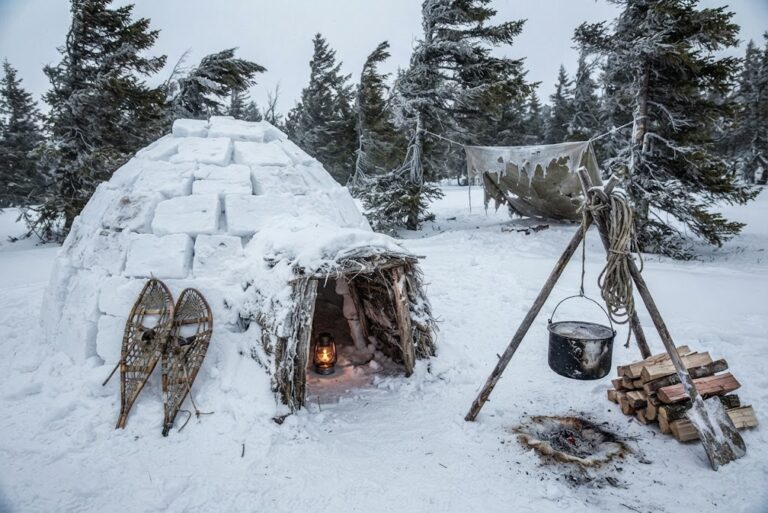
Before modern tents, camping equipment and manufactured shelters were widely available, people often relied on locally available materials and practical construction skills. Branches, poles, bark, reeds, grasses, canvas and rope could all be used to create temporary shelters.
For Scouts, exploring these techniques can be an enjoyable way to understand how people lived outdoors while developing useful skills in shelter building, knots, teamwork and planning.
The aim is not simply to build a shelter. It is to understand why it was built that way, what materials were available and how the design suited its environment.
Why Study Historical Campsite Construction?
Historical campsite construction combines practical outdoor skills with an understanding of history.
A traditional shelter can demonstrate:
It can also encourage Scouts to think about how much equipment is really needed to stay comfortable outdoors.
Types of Historical Camp Structures
Different cultures and periods developed their own approaches to outdoor shelter.
Lean-To Shelters
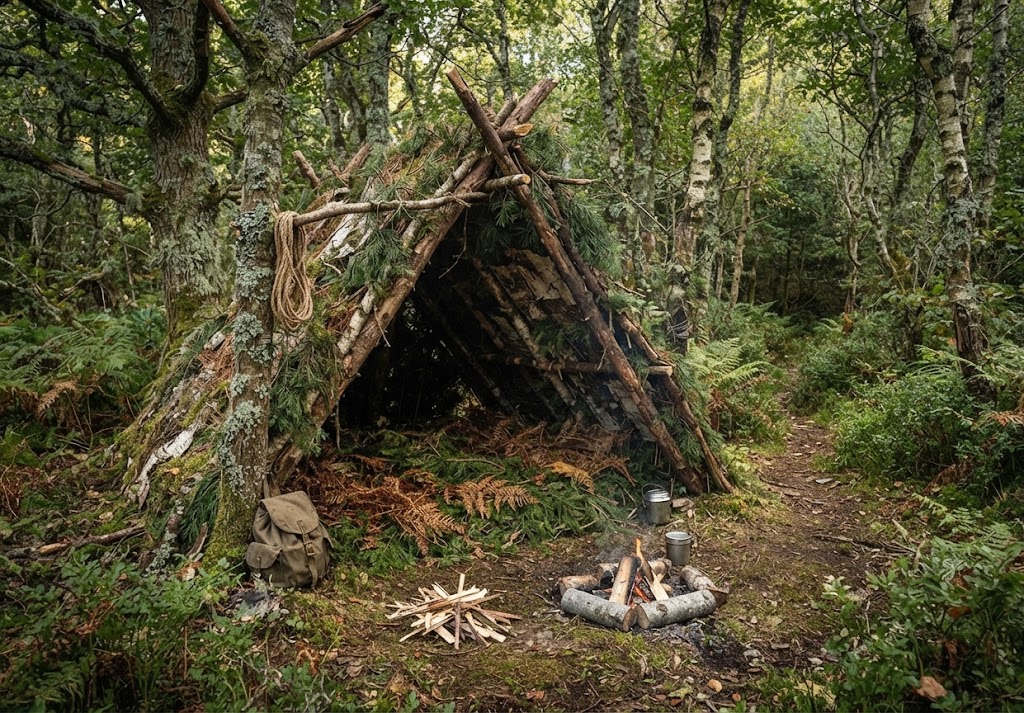
The lean-to is one of the simplest shelter designs. A sloping framework can be supported against a horizontal ridge or sturdy structure and covered with suitable material.
A recreated lean-to can demonstrate basic principles of:
Wigwams and Conical Shelters
Conical shelters used frameworks of poles and a covering material. Similar designs have been used in different forms by various peoples around the world.
When recreating these shelters for educational purposes, it is important to understand the particular culture and avoid presenting different traditions as though they were all the same.
Canvas and Bell Tents
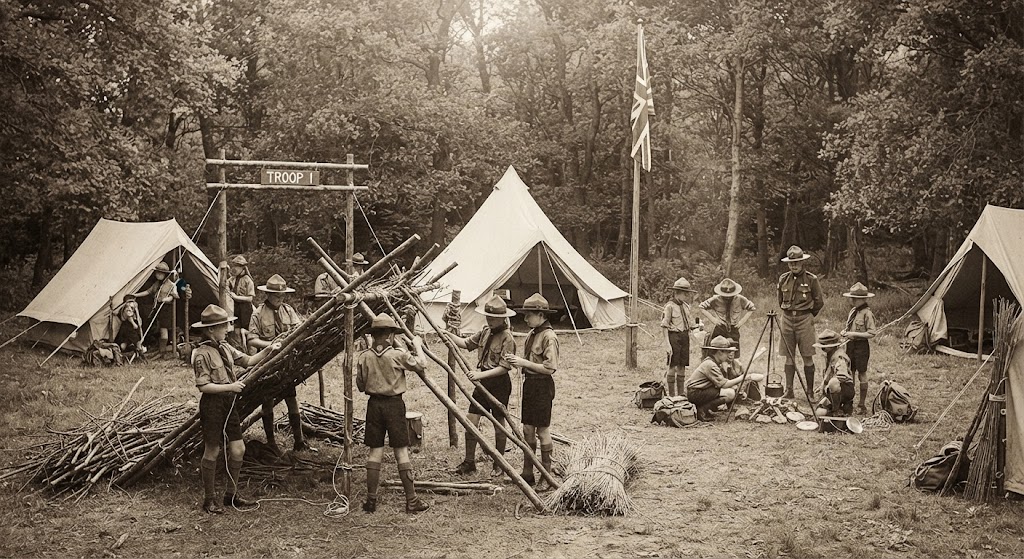
Canvas became an important material for military, expedition and camping shelters. Canvas tents provided a relatively portable way of creating a protected living space.
Historic-style canvas camping can be particularly useful for demonstrating how campsite organisation developed before lightweight synthetic tents became common.
Bushcraft-Style Shelters
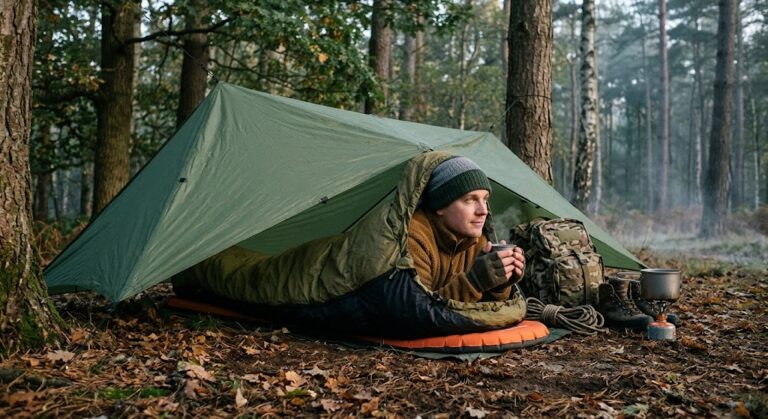
Simple woodland shelters can demonstrate techniques involving poles, cordage and natural materials.
However, modern Scouts should only collect or cut materials where they have permission. A historical technique should never become an excuse for damaging living trees or woodland habitats.
Choosing a Historical Campsite
The location of a historical campsite is just as important as the shelter itself.
Look for:
Avoid building beneath dead or damaged trees, on unstable slopes or in places that could become flooded.
A good historical recreation should demonstrate good judgement as well as traditional skills.
Traditional Construction Materials
Historical camps often depended on materials that were available locally.
Depending on the activity and location, a demonstration might use:
For modern activities, manufactured or recycled materials are often the better choice. They allow Scouts to practise the construction method without unnecessarily removing materials from the environment.
Building a Historical Shelter
A simple shelter-building activity can be organised as a practical Scout challenge.
Step 1: Research the Design
Before construction begins, find out when and where the shelter design was used.
Ask:
This turns the activity into more than just shelter building.
Step 2: Plan the Structure
Sketch the shelter before starting.
Decide where the entrance will be, how the framework will be supported and how the covering will be attached.
The group should also consider wind direction, drainage and the available space.
Step 3: Build the Framework
Construct the main supports first.
Use secure knots or suitable lashings where appropriate. Check each joint as you work rather than waiting until the shelter is finished.
A strong framework should remain stable without relying on excessive force or complicated construction.
Step 4: Add the Covering
Once the framework is secure, add the covering material.
Overlap sections where necessary to reduce gaps and consider how rain would run away from the entrance and sleeping area.
Step 5: Test the Shelter
Inspect the finished structure carefully.
Check for:
The shelter should be treated as a learning exercise rather than assumed to be suitable for overnight use.
Historical Campsite Organisation
Historical campsite construction is not just about shelters.
A well-organised camp also needs areas for different activities.
A recreation could include designated spaces for:
This helps Scouts understand why campsite layout matters.
Keeping cooking and food areas separate from sleeping spaces can also improve hygiene and reduce hazards.
Knots and Lashings
Traditional campsite construction provides an excellent opportunity to practise pioneering skills.
Useful techniques can include:
Scouts should understand what each knot or lashing is designed to do rather than simply memorising names.
A useful challenge is to give teams a limited selection of rope and poles and ask them to construct part of a shelter using only the techniques they have learned.
Historical Cooking and Camp Life
A historical campsite can be extended beyond shelter construction.
Depending on the activity, Scouts could investigate:
This can turn a simple construction project into a wider outdoor history activity.
Any cooking or fire activity must be supervised and carried out using modern safety standards, even when the activity is based on historical methods.
Environmental Responsibility
Historical campsite construction should never damage the environment unnecessarily.
Avoid cutting living trees, stripping bark or removing plants simply to make a recreation more authentic.
Instead, consider using:
The objective is to recreate the principles and experience of historical construction without causing unnecessary environmental harm.
Always follow the rules of the campsite, landowner and local authority.
Safety Considerations
Traditional construction methods can involve hazards that are less obvious than those found with modern camping equipment.
Take care with:
Children should only use tools appropriate to their age and ability, with suitable supervision.
Never assume that because a technique was historically used, it is automatically safe today.
A Historical Campsite Construction Challenge
Try running a timed construction challenge for a Scout group.
Give each team:
The team must build a stable model or shelter while explaining why the design was historically useful.
Award points for:
The winning team does not necessarily need to build the largest shelter. Good planning and safe construction should matter just as much as speed.
What Historical Campsite Construction Teaches
This type of activity can develop a wide range of Scout skills.
Scouts can practise:
It also demonstrates an important outdoor principle: good preparation and simple construction can make a big difference when resources are limited.
Final Tips
When planning a historical campsite construction activity:
Historical campsite construction is a practical way to connect outdoor skills with history. By building shelters and campsite structures inspired by the past, Scouts can discover how people solved everyday outdoor problems using the materials, knowledge and technology available to them.
🔒Ready to test your survival skills?
Join Survival Guides UK for free, complete challenges, earn badges and increase your Survival Level.
JOIN FREE →
CRAIG BURR
FOUNDER · SURVIVAL GUIDES UK
I'm Craig, the person behind Survival Guides UK. I created SGUK because I wanted somewhere people could learn real outdoor skills in a practical, straightforward way — from lighting a fire and tying knots to navigation, campcraft and everything in between.
You can read more about the story behind SGUK here as well as our approach here.