How to Walk Efficiently on Steep Ground
Steep ground can make an ordinary walk feel much harder than it needs to be. The temptation is often to push harder and try to get the difficult section over with, but that usually leaves you tired surprisingly quickly.
Walking efficiently on steep ground is more about how you move than how strong you are. A few changes to your pace, stride and foot placement can make a noticeable difference, particularly when you have a long climb or descent ahead.
Slow Down Before You Need To
One of the easiest mistakes is starting a steep section at the same pace you were using on level ground.
It might feel fine for the first few minutes, but your breathing soon becomes harder and your legs start working much more than they were before. By the time you slow down, you’ve already used a lot of energy.
Instead, reduce your pace as the ground gets steeper. It can feel almost too slow at first, but that’s often the point.
You should be able to settle into a rhythm that you can maintain rather than repeatedly speeding up, tiring yourself out and then stopping for a long rest.
Take Shorter Steps
Shortening your stride is one of the simplest ways to make steep ground easier.
Long steps require more effort and can leave you reaching awkwardly for the next foothold. On a steep climb, take smaller steps and keep them reasonably consistent.
You don’t need to shuffle along with tiny steps, but there is usually no benefit in stretching your legs out unnecessarily.
Think about keeping your movement controlled rather than trying to cover as much ground as possible with every step.
Find a Rhythm
Once you’re on a steep section, try to find a pace that you can keep going with.
Your breathing will probably be heavier than it is on level ground, but it shouldn’t feel as though you’re constantly fighting to catch your breath. If you can’t maintain your rhythm, slow down.
Some people naturally develop a useful pattern between their steps and breathing. You don’t have to count every step, but having a steady rhythm can stop you from repeatedly changing pace.
If the slope gets steeper, adjust your pace rather than trying to maintain the same speed.
Look at the Ground in Front of You
On steep terrain, where you place your feet matters more.
Look far enough ahead to understand the route, but also pay attention to the ground immediately in front of your feet. Rocks, loose stones, roots, mud and uneven surfaces can all change how you need to move.
You don’t want to stare at the ground for the entire climb. Keep looking up and checking the route, then bring your attention back to your next few steps.
This becomes particularly important when you’re tired because that’s when careless foot placement is more likely.
Use the Whole Foot When You Can
Try to place your foot securely rather than repeatedly stepping onto tiny edges or unstable pieces of ground.
On a grassy slope, for example, you may be able to get a much more secure footing by placing more of the sole onto the ground rather than walking on your toes.
The exact technique depends on the terrain. Rocky ground, mud, loose scree and steep grass all require slightly different foot placement.
The basic principle is simple: look for secure footholds and don’t make every step harder than it needs to be.
Use Zigzags on Very Steep Slopes
When a slope is particularly steep, walking directly uphill can be exhausting.
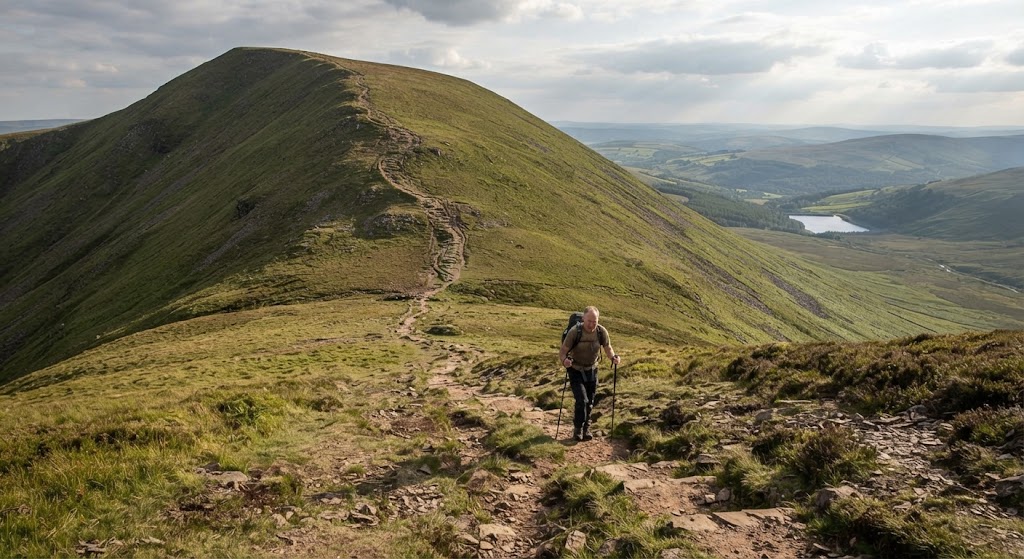
If the terrain and path allow it, taking a zigzag route reduces the effective gradient you are dealing with at any one time. This is one reason established mountain paths often wind backwards and forwards rather than heading directly towards the top.
Don’t create your own zigzags across fragile ground or vegetation just to make a climb easier. Follow the established path where there is one and consider the condition of the terrain before changing direction.
Keep Your Upper Body Relaxed
It’s easy to tense your shoulders and lean forwards excessively when climbing.
A slight forward lean can be natural on a steep ascent, but you don’t need to hunch yourself over. Try to keep your shoulders relaxed and let your arms move naturally.
If you’re using walking poles, allow them to help with balance and rhythm rather than leaning heavily on them.
The more relaxed your movement is, the less energy you tend to waste on unnecessary tension.
Don’t Forget to Breathe
It sounds obvious, but people often hold their breath or start taking very shallow breaths when concentrating on a difficult climb.
Try to keep your breathing steady. If you find yourself gasping for air, that’s usually a good indication that you’ve started too quickly or the slope has become more demanding.
Slow down and give yourself time to settle back into a manageable rhythm.
You don’t need a complicated breathing technique. The main thing is to avoid turning the climb into a race against your own lungs.
Use Short Rest Stops
A short pause can be useful on a long climb, but don’t wait until you’re completely exhausted before taking one.
If you stop, use the opportunity properly. Take a few breaths, have a drink if you need one and look at the route ahead.
There’s also nothing wrong with stopping simply because you know the next section is going to be demanding.
The aim is to manage your energy throughout the climb rather than repeatedly reaching the point where you have nothing left.
Make the Most of Easier Ground
Steep routes often have small sections where the gradient eases.
Use them.
You don’t necessarily need to speed up when the ground becomes easier. Instead, use the flatter section to settle your breathing and let your legs recover slightly before the next steep section.
Being able to recognise these little changes in terrain is a useful part of walking efficiently.
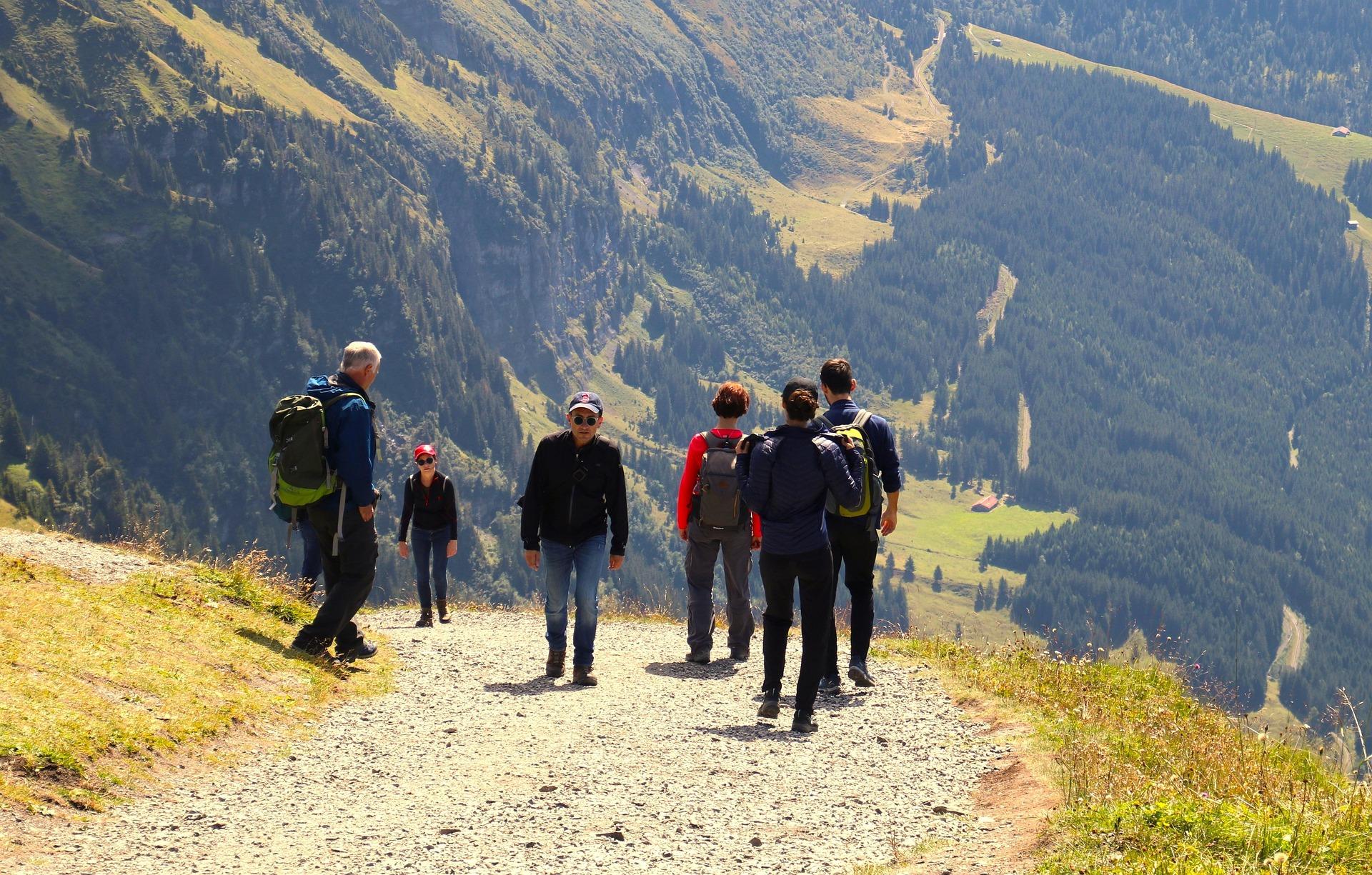
Take Extra Care Going Downhill
Walking efficiently downhill is different from walking uphill.
There can be a temptation to lean backwards and brake with every step, particularly on a steep descent. This can put a lot of strain on your legs and make you less stable.
Instead, keep your movements controlled and take shorter steps when the ground is steep or uneven. Keep your knees comfortably bent rather than locking them straight.
On loose or slippery ground, slow down further. Your priority is maintaining control rather than getting to the bottom quickly.
Don’t Race the Descent
Downhill sections can feel easy because you’re no longer fighting gravity to gain height.
That doesn’t mean they’re risk-free.
Your legs can become tired from controlling your descent, and a misplaced foot can have more serious consequences when you’re moving quickly. Loose stones can also move beneath you, particularly on steep paths.
If the ground is rough, wet or unstable, give yourself plenty of time.
A controlled descent is usually much more comfortable than arriving at the bottom with aching legs and wondering why you hurried.
Use Walking Poles Properly
Walking poles can be particularly useful on steep ground because they give you additional points of contact and can help with balance.
On climbs, plant them where they give you useful support without forcing you into an awkward position. On descents, they can help you judge the ground ahead and take some pressure off your legs.
Don’t rely on them to keep you upright, though. Your feet still need to find secure ground.
If you already use poles, practise with them on easier terrain so that using them on a steep section feels natural.
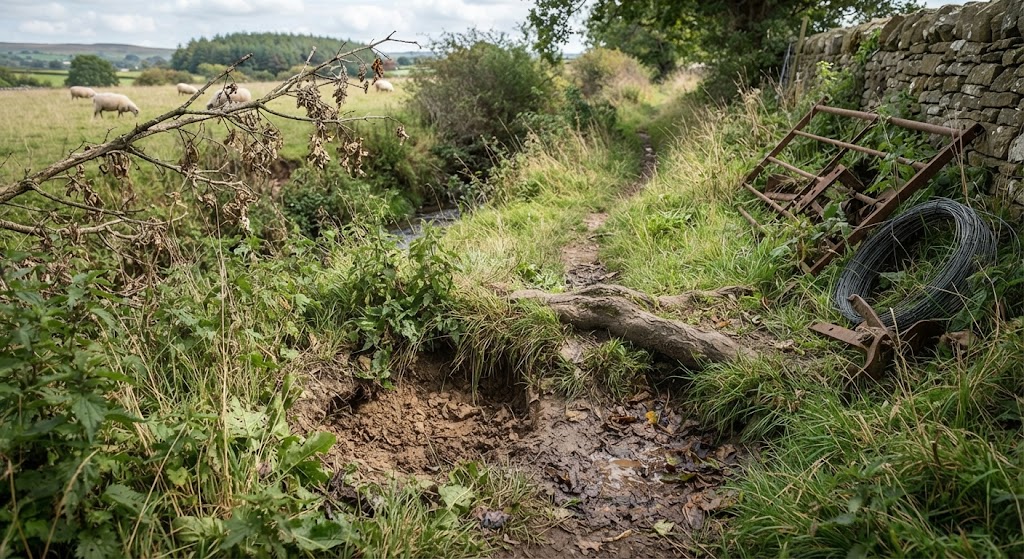
Watch What the Weather Has Done to the Ground
A steep path can be a completely different proposition after heavy rain, frost or prolonged dry weather.
Wet grass can become slippery. Mud can hide uneven ground. Loose stones may move more easily, and hard-packed ground can become awkward after freezing conditions.
Before tackling a steep section, take a moment to look at what you’re actually dealing with rather than relying on how the path looked earlier in the day.
Sometimes the most efficient way to deal with steep ground is to choose a safer route around it.
Know When to Stop
There is a point where trying to walk more efficiently isn’t enough.
If you’re becoming very tired, unsteady, dizzy or unable to concentrate properly, stop and deal with the situation rather than simply trying to push through.
You may need a proper rest, food, water, warmer clothing or a change of plan.
Steep terrain has a way of making small problems more noticeable. Don’t let the desire to finish a climb turn a manageable situation into a difficult one.
Practise on Terrain You Know
You don’t need to head straight for a mountain to practise walking efficiently on steep ground.
Find a local hill or steep path that you’re familiar with and pay attention to how your movement changes as the gradient increases.
Try shortening your stride, slowing your pace and finding a steady rhythm. Then notice what happens when you descend again.
The more you practise these adjustments, the less conscious they become.
Efficient Doesn’t Mean Fast
The biggest change to make is probably the simplest one: stop thinking of efficiency as speed.
Walking efficiently means using your energy sensibly, keeping your movement controlled and arriving at the top with enough left in the tank to continue your journey.
A slower walker who maintains a steady pace can often make better progress over a long, steep route than someone who charges uphill and has to stop repeatedly.
Steep ground is rarely about getting it over with. It’s about finding a way of moving that you can keep going with.
🔒Ready to test your survival skills?
Join Survival Guides UK for free, complete challenges, earn badges and increase your Survival Level.
JOIN FREE →
CRAIG BURR
FOUNDER · SURVIVAL GUIDES UK
I'm Craig, the person behind Survival Guides UK. I created SGUK because I wanted somewhere people could learn real outdoor skills in a practical, straightforward way — from lighting a fire and tying knots to navigation, campcraft and everything in between.
You can read more about the story behind SGUK here as well as our approach here.