Survival Psychology
Activity Overview
Difficulty: Intermediate
Time: 45–60 minutes
Location: Suitable indoor or outdoor training area
Best for: Scouts and Explorers
Skills: Decision-making, emotional control, situational awareness, teamwork, resilience, survival mindset
Survival psychology is the ability to manage your thoughts, emotions and behaviour when something goes wrong outdoors.
In an emergency, the biggest problem is not always the weather, equipment or terrain. Panic, confusion and poor decisions can make a manageable situation much worse. A good survival mindset helps you slow down, assess what is happening, use the resources available and take sensible action.
The aim is not to eliminate fear. Fear is a useful warning system. The aim is to recognise it, control your response and continue thinking clearly.
A useful survival sequence is:
Stop → Breathe → Observe → Think → Plan → Act → Review
What You’ll Learn
You will learn how stress can affect your thinking and behaviour, how to avoid rushing into decisions, and how to break a difficult situation into manageable tasks.
You will also practise techniques for maintaining a positive but realistic mindset, communicating with others and dealing with setbacks.
Survival psychology is particularly important because survival situations rarely go exactly according to plan. Good equipment and outdoor skills are valuable, but you also need the mental ability to use those skills when you are tired, cold, frightened or uncertain.
🟢 SAFETY – LOW RISK
The activity itself involves discussion, observation and simple decision-making exercises, so the physical risk is low. If training scenarios are carried out outdoors, leaders should still choose a suitable location, maintain appropriate supervision and stop an exercise if anyone becomes distressed or uncomfortable.
Survival training should never deliberately place Scouts in genuine danger or create unnecessary fear. The purpose is to practise sensible responses in a controlled environment.
Equipment
You do not need specialist equipment to learn survival psychology. A notebook and pencil can be useful for recording decisions during exercises.
For practical scenarios, you can use ordinary outdoor equipment such as a map, compass, torch, whistle, shelter materials or first-aid kit. Using familiar equipment helps demonstrate an important principle: survival depends on making good use of what you have, rather than simply having lots of equipment.
Prerequisites
Scouts should understand basic outdoor safety and know how to raise the alarm if something goes wrong.
It also helps to have basic knowledge of navigation, shelter, clothing, first aid and emergency procedures. Survival psychology works alongside these practical skills rather than replacing them.
Instructions
1. Understand the Stress Response
When something unexpected happens, your body may react before you have consciously thought about the situation.
Your heart rate can increase, breathing can become faster and your muscles may tense. You might feel frightened, confused or desperate to do something immediately.
This is a normal response to danger.
The problem occurs when the stress response causes you to make decisions without properly assessing the situation. Recognising this reaction is therefore an important survival skill.
2. Stop Before Acting
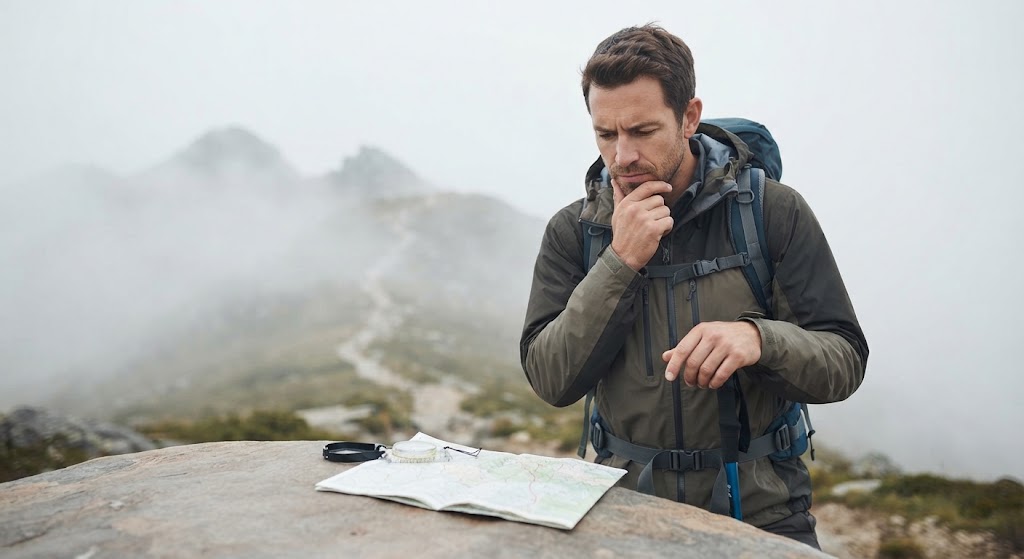
One of the most useful habits in an emergency is to stop.
If you become lost, separated from your group or discover that something has gone wrong, resist the temptation to immediately rush off looking for a solution.
Stop somewhere safe and take a few controlled breaths.
Ask yourself:
What has actually happened? Where am I? What dangers are present? What do I know for certain?
This short pause can prevent a small problem from becoming a much larger one.
3. Control Your Breathing
Controlled breathing can help you regain concentration when you are frightened or stressed.
Take slow, comfortable breaths rather than deliberately trying to breathe as deeply as possible. Concentrate on the physical sensation of breathing and allow your attention to settle.
The objective is not to make yourself completely fearless. It is to create enough mental space to start thinking clearly again.
4. Separate Facts From Assumptions
Stress can make guesses feel like facts.
For example, if you cannot immediately see your group, you might think:
“They must have gone a long way without me.”
But you do not actually know that.
Instead, identify what you know, what you think, and what you need to find out.
This simple habit helps prevent imagination from taking over when information is limited.
5. Use a Simple Decision Process
When faced with a problem, work through it methodically.
First identify the immediate hazards. Then consider your location, resources, weather, time and physical condition.
Next decide what options are available and consider the likely consequences of each one.
Choose the safest practical option and act on it. After acting, reassess the situation rather than simply continuing because you have already started.
This is particularly important when conditions change.
6. Break Big Problems Into Small Tasks
A difficult situation can become overwhelming if you think about everything that could go wrong at once.
Instead, break the problem down.
If you are unexpectedly delayed outdoors, for example, you might first concentrate on staying in a safe location. Then consider shelter, warmth, communication and signalling.
You do not need to solve the entire problem in your head simultaneously.
Deal with the next important problem first.
7. Maintain a Realistic Positive Mindset
A positive attitude can be useful, but survival psychology is not about pretending everything is fine.
Instead, use realistic statements such as:
“This is difficult, but I can deal with the next step.”
“I don’t know the answer yet, so I need to gather more information.”
“We have limited resources, but we can use what we have.”
This approach avoids both panic and false confidence.
8. Work With the Group
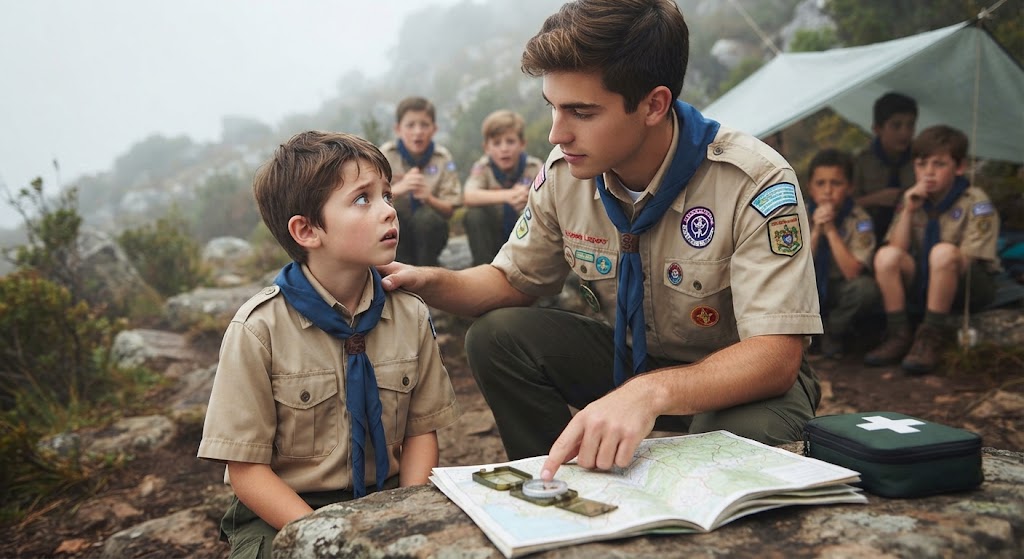
People respond differently to stress. One person may become quiet, another may talk constantly, while someone else may immediately start giving orders.
Good teamwork helps prevent individual stress from affecting the whole group.
Communicate clearly and calmly. Make sure everyone understands the plan and encourage people to report problems such as feeling cold, injured, frightened or exhausted.
Leadership in a stressful situation is not about shouting the loudest. It is about helping the group remain organised and make sensible decisions.
9. Recognise When You Are Becoming Overloaded
Tiredness, cold, hunger, dehydration and prolonged stress can all reduce your ability to think clearly.
Watch for signs such as repeatedly making the same mistake, becoming unusually irritable, forgetting simple information or struggling to concentrate.
If you notice this happening, stop and reassess.
A short rest, food, water, warmth or a change of task may make a significant difference. In a real emergency, tell the responsible adult or emergency service what is happening rather than trying to hide the problem.
10. Practise Under Controlled Conditions
Survival psychology becomes more useful when you practise making decisions before a real emergency happens.
A leader can create simple scenarios such as:
“You discover that your planned route is blocked. What do you do?”
Give the Scouts time to discuss the situation. Ask them what they know, what they do not know, what hazards exist and what their safest options are.
The objective is not to find one perfect answer. It is to practise staying calm, gathering information and explaining the reasoning behind a decision.
11. Learn From the Outcome
After a scenario, carry out a short debrief.
Ask:
This turns mistakes into learning opportunities.
The most useful survival lessons often come from understanding why a decision was made, rather than simply being told whether the decision was right or wrong.
Final Tip
You cannot always control what happens outdoors, but you can control what you do next.
Stop, breathe, assess the situation and deal with one problem at a time. A calm mind will not solve every survival problem, but it gives you the best chance of using your knowledge, equipment and teamwork effectively.
🔒Ready to test your survival skills?
Join Survival Guides UK for free, complete challenges, earn badges and increase your Survival Level.
JOIN FREE →
CRAIG BURR
FOUNDER · SURVIVAL GUIDES UK
I'm Craig, the person behind Survival Guides UK. I created SGUK because I wanted somewhere people could learn real outdoor skills in a practical, straightforward way — from lighting a fire and tying knots to navigation, campcraft and everything in between.
You can read more about the story behind SGUK here as well as our approach here.