The STOP Principle
Activity Overview
Difficulty: Beginner
Time: 30–45 minutes
Location: Suitable indoor or outdoor training area
Best for: Scouts and Explorers
Skills: Emergency decision-making, situational awareness, staying calm, problem-solving, communication
The STOP principle is a simple way of slowing down and organising your thoughts when something goes wrong outdoors.
STOP stands for:
S — Stop
T — Think
O — Observe
P — Plan
The principle helps prevent a common emergency mistake: acting quickly before understanding what has happened.
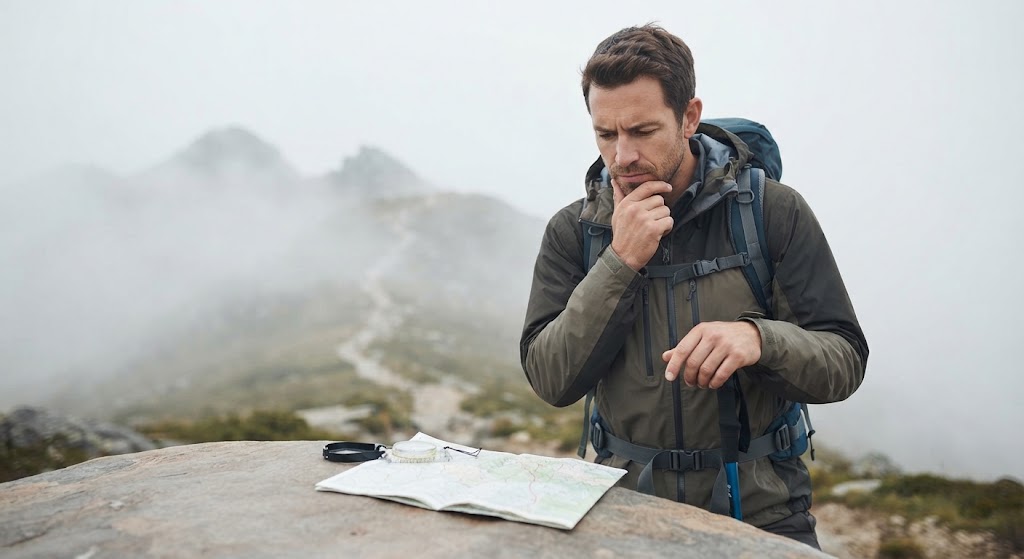
For example, if you realise that you are lost, immediately walking in a random direction may make the situation worse. Using STOP encourages you to pause, consider the situation, observe your surroundings and make a deliberate plan.
STOP is not a replacement for emergency procedures or professional help. It is a simple mental tool for helping you use your existing outdoor skills more effectively.
What You’ll Learn
You will learn how to use the four stages of STOP to deal with unexpected situations.
The principle is particularly useful when you feel worried, confused or under pressure. It gives you a sequence to follow rather than expecting you to remember everything at once.
By practising STOP, Scouts can develop the habit of pausing before acting, checking what is actually happening and choosing a sensible next step.
🟢 SAFETY – LOW RISK
Learning and practising the STOP principle is a low-risk activity because it involves discussion, observation and controlled scenarios rather than inherently hazardous practical tasks.
If scenarios are conducted outdoors, use a suitable location, maintain normal supervision and ensure that exercises do not deliberately expose Scouts to danger or create unnecessary distress.
Equipment
No specialist equipment is required.
For practical exercises, you can use equipment that Scouts might realistically have outdoors, such as a map, compass, whistle, torch or waterproof clothing.
Using familiar equipment makes the scenarios more useful because Scouts have to think about what resources are actually available rather than imagining that they have unlimited equipment.
Prerequisites
Scouts should understand basic outdoor safety and know how to raise the alarm and seek assistance when something goes wrong.
Basic knowledge of navigation, first aid and emergency procedures is useful, but the STOP principle can be taught to beginners because the method itself is straightforward.
Instructions
1. Learn What STOP Means
Start by learning the four stages:
Stop — Don’t rush into action.
Think — Consider what has happened and what the immediate priorities are.
Observe — Look carefully at your surroundings, resources, people and changing conditions.
Plan — Decide on the safest sensible action and then carry it out.
The important point is that STOP is a sequence, not four unrelated tips.
2. Stop
The first step is to stop moving or stop what you are doing, provided your current position is safe.
This is particularly important when you are frightened or confused. Continuing automatically can take you further from safety or into a new hazard.
For example, if you suddenly realise that you have lost the route, don’t immediately start walking in the hope that you will recognise something familiar.
Pause.
Take a moment to regain your concentration.
If you are somewhere immediately dangerous, however, move to a safe position first. STOP should never mean remaining in danger simply because you are following the acronym.
3. Think
Now consider what has actually happened.
Try to separate facts from assumptions.
Ask yourself:
What do I know? What has changed? Is anyone injured? Is there an immediate danger? What was our last known safe position?
Thinking at this stage prevents you from jumping straight to a solution before understanding the problem.
It also helps reduce the effect of fear. Instead of thinking about everything that could go wrong, concentrate on the situation that actually exists.
4. Observe
Look carefully at the information available to you.
Check your surroundings, weather conditions, terrain and the people with you. Consider what equipment and resources are available.
If navigation is involved, check your map and compass rather than relying on memory or guesswork.
If someone is injured, observe their condition and follow the appropriate first-aid procedure.
Observation is particularly important because circumstances can change. A plan that was sensible ten minutes ago may no longer be appropriate.
5. Plan
Once you understand the situation, decide what to do next.
A good plan should be simple, realistic and appropriate to the circumstances.
Consider the safest available options and their consequences.
If you are unsure of your location, for example, your plan might involve staying together, stopping further movement, checking your navigation information and contacting the responsible adult or following the group’s established emergency procedure.
Don’t create unnecessary complexity. In stressful situations, a simple plan that everyone understands is usually easier to carry out.
6. Communicate the Plan
If you are part of a group, make sure everyone understands what is happening.
Tell the group what you have identified and what you intend to do.
Good communication prevents several people from taking different actions at the same time.
A leader might say:
“We’re going to stay together, move to this safe position and then check the map.”
Everyone should know what is expected of them.
7. Act on the Plan
STOP is not about standing still indefinitely.
Once you have assessed the situation and selected an appropriate response, act.
Use your outdoor skills and follow your group’s emergency procedures.
If the situation requires outside assistance, get it rather than trying to solve a problem beyond your ability.
The purpose of STOP is to make your actions deliberate rather than impulsive.
8. Reassess
After taking action, check whether the situation has improved.
Ask:
Has anything changed? Is the plan working? Are we still safe?
If new information appears, you can go through STOP again.
This makes the principle a continuous process rather than something you use only once.
For example:
Stop → Think → Observe → Plan → Act → reassess → STOP again if necessary.
9. Practise With Simple Scenarios
Give Scouts realistic but controlled situations to work through.
For example:
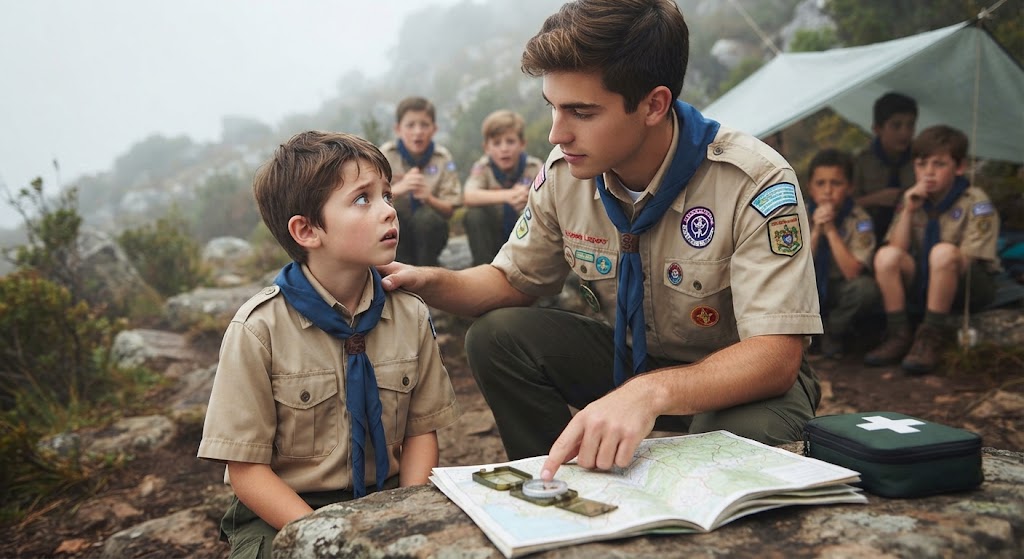
“You are walking with your patrol and realise you haven’t seen a familiar landmark for some time. You are no longer certain that you are following the planned route.”
Ask the Scouts to explain each stage.
Stop: What should you do first?
Think: What do you actually know?
Observe: What information can you gather?
Plan: What is the safest next step?
Encourage them to explain why they have chosen their response.
10. Add Pressure Gradually
Once Scouts understand the basic process, introduce mild distractions into scenarios.
For example, tell them that the weather is deteriorating or that the group is becoming concerned.
The aim is not to frighten them. It is to demonstrate that STOP becomes particularly useful when emotions begin to influence decision-making.
Afterwards, discuss whether anyone felt rushed and whether the process helped them organise their thoughts.
11. Connect STOP to Other Skills
STOP becomes much more powerful when combined with practical outdoor knowledge.
A Scout who knows navigation can use STOP to avoid wandering when lost.
Someone trained in first aid can use STOP to assess the situation before treating an injured person.
Someone who understands shelter and clothing can use STOP to recognise when exposure is becoming a priority.
The principle therefore isn’t a separate survival skill. It is a framework for using other skills properly when conditions become stressful.
12. Make It a Habit
The greatest benefit comes from using STOP before you actually need it.
Practise saying the four words during training exercises until the sequence becomes familiar.
When something unexpected happens, you want the first response to be:
Stop. Think. Observe. Plan.
That small pause can be enough to prevent an impulsive decision and give you time to work out the safest way forward.
Final Tip
When everything seems to be happening at once, don’t try to solve everything at once.
Remember STOP: Stop, Think, Observe, Plan.
A calm pause is often the first useful action you can take in an emergency.
🔒Ready to test your survival skills?
Join Survival Guides UK for free, complete challenges, earn badges and increase your Survival Level.
JOIN FREE →
CRAIG BURR
FOUNDER · SURVIVAL GUIDES UK
I'm Craig, the person behind Survival Guides UK. I created SGUK because I wanted somewhere people could learn real outdoor skills in a practical, straightforward way — from lighting a fire and tying knots to navigation, campcraft and everything in between.
You can read more about the story behind SGUK here as well as our approach here.