How to Stay Comfortable in a Small Tent
A small tent can be surprisingly comfortable when you know how to use the space properly. The problem is that it doesn’t take much equipment, wet clothing or a badly organised rucksack to make the inside feel cramped.
You don’t need a huge tent to have a good night’s sleep outdoors. You just need to make the space work for you.
A little preparation before you get inside can make a much bigger difference than you might expect.
Choose Where You Pitch Carefully
Comfort starts before you even put the tent up.
Look for reasonably level ground without obvious stones, roots or hollows underneath you. You don’t want to spend the night lying on something uncomfortable, and a slight hollow can collect water if it rains.
Think about what is around you as well. A sheltered position can make a small tent feel much more comfortable in poor weather, although you still need to avoid places that could become unsafe.
Once you’ve found a suitable spot, take a few minutes to clear away small debris before pitching. Don’t start moving large rocks, branches or vegetation unnecessarily, but removing a few uncomfortable twigs can be worthwhile.
Keep Your Kit Organised
In a small tent, organisation matters.
There simply isn’t room to throw everything into a corner and sort it out later.
Keep the things you’ll need during the night somewhere you can reach them easily. Your torch, water bottle, glasses, phone, map or other essentials shouldn’t be buried underneath your sleeping bag or packed away at the bottom of your rucksack.
Try to give everything a place.
It might sound obvious, but when you’re sitting in a tiny tent in the dark, knowing exactly where something is becomes very useful.
Keep Your Rucksack Out of the Way
Your rucksack can take up a surprising amount of space.
If the weather allows, you may be able to leave it in the porch or vestibule. If it needs to stay inside, position it somewhere where it isn’t constantly in the way.
Don’t block the entrance or pile everything around your sleeping area.
You want to be able to get in and out without knocking half your belongings over.
Use the Porch
If your tent has a porch or vestibule, make use of it.
It’s useful for storing muddy boots, wet equipment and items you don’t need inside the sleeping area.
You don’t want to bring everything into the inner tent simply because there is space for it. Keeping wet and dirty equipment in the porch can make the sleeping area feel considerably more pleasant.
Just remember that anything left outside the inner tent still needs to be protected from the weather.
Don’t Bring More Than You Need
One of the easiest ways to make a small tent uncomfortable is to fill it with unnecessary equipment.
Before a trip, think about what you actually need.
Every extra piece of kit takes up space, and small items have a habit of multiplying once they’re inside a tent.
That doesn’t mean leaving important equipment at home. It means being selective.
A well-packed rucksack can make a small tent feel much bigger.
Keep Wet Clothing Under Control
Wet clothing is particularly annoying in a small tent.
If you’ve been walking in the rain, you’ll need somewhere to put wet waterproofs without getting everything else wet.
Use the porch where appropriate, or hang clothing inside where it can dry safely without blocking ventilation or coming into contact with your sleeping bag.
Don’t seal a soaking-wet tent and all your wet gear inside your rucksack afterwards. Give things a chance to dry when conditions allow.
Manage Condensation
Condensation is one of the biggest annoyances when sleeping in a small tent.
You breathe out moisture during the night, and if the air inside the tent can’t escape, that moisture can collect on the inner surface.
It can be tempting to close every vent because you’re trying to stay warm, but good ventilation is important.
Use the tent’s vents as intended and keep the inner and outer tent properly separated.
A little airflow can make the inside feel much more comfortable and help reduce condensation.
Don’t Cook Inside the Tent
Never use a camping stove inside a tent or other enclosed sleeping area.
Apart from the risk of fire, camping stoves can produce carbon monoxide, which is dangerous and can build up in an enclosed space.
If you need to cook, follow the manufacturer’s instructions and use the stove in a suitable, well-ventilated outdoor location.
In a small tent, it’s especially important not to be tempted to make exceptions simply because the weather is unpleasant.
Keep Your Sleeping Area Simple
Once you’re ready for bed, you don’t need much inside the sleeping area.
Your sleeping mat, sleeping bag and a few essentials are usually enough.
Try not to put clothing, food packaging and other equipment underneath or around your sleeping bag unless there’s a good reason to.
The less clutter you have, the easier it is to settle down.
Keep Essentials Within Reach
Before getting into your sleeping bag, think about what you might need during the night.
Put your torch somewhere you can reach it without getting completely out of your sleeping bag. Keep your water bottle nearby and make sure you know where your phone or other important items are.
If you’re camping somewhere cold, it’s also worth keeping any items that you don’t want to become excessively cold somewhere appropriate rather than leaving them exposed.
A few seconds of preparation before you settle down can save a lot of rummaging around later.
Deal With Your Boots Before Bed
Wet or muddy boots don’t belong in your sleeping bag, but you also don’t want to discover in the morning that they’ve become soaked by overnight rain.
Keep them somewhere suitable, usually in the porch, and position them so that they are protected as far as possible from the weather.
In colder conditions, think about where your footwear and other important equipment needs to be kept so that it remains usable in the morning.
Make Yourself Warm Before You Get Into Your Sleeping Bag
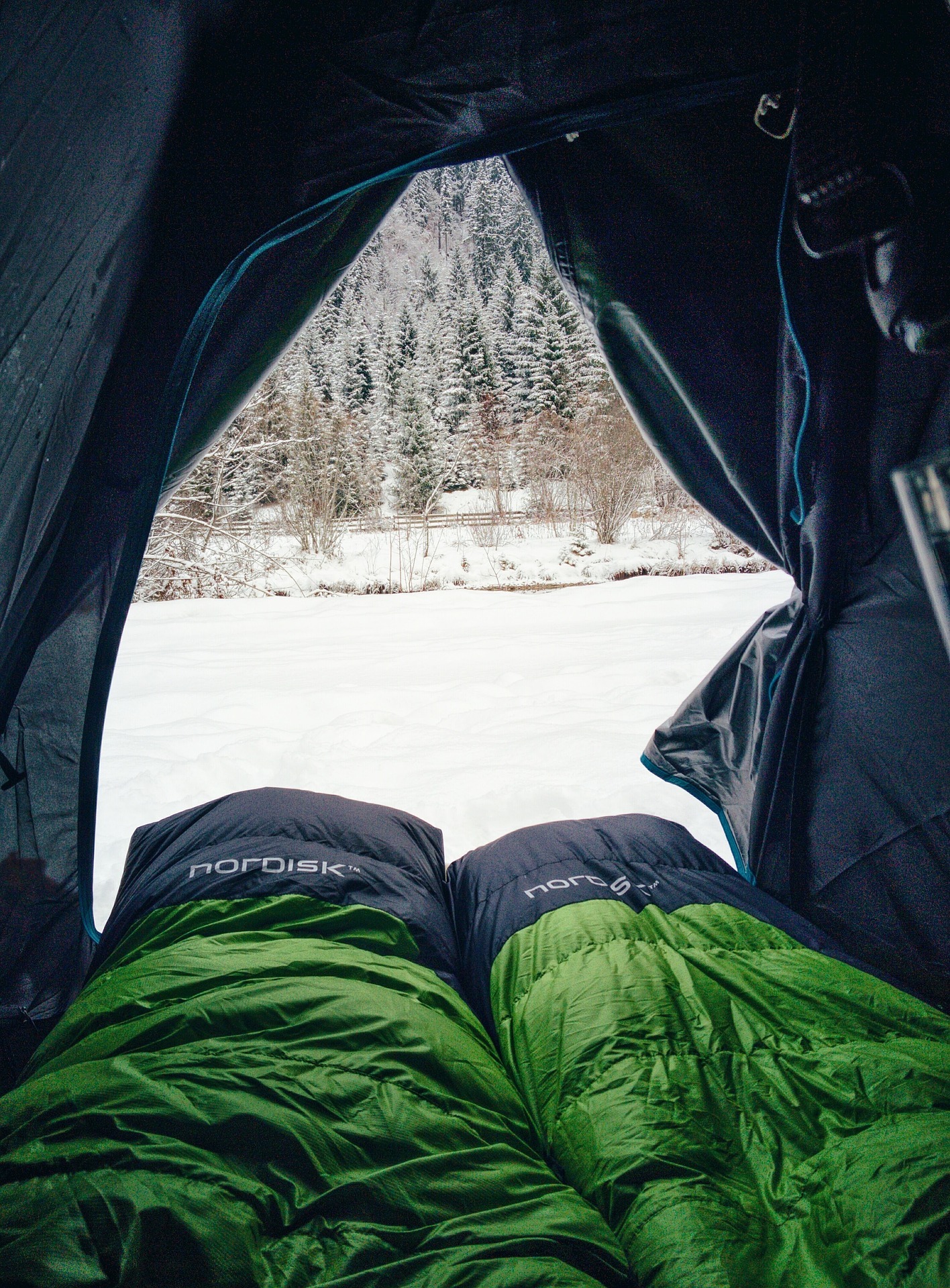
Your sleeping bag is designed to keep you warm, but it works better when you aren’t already freezing.
If you’re cold before getting into it, put on suitable dry layers and make sure you’re comfortable before settling down.
Don’t rely on piling on every piece of clothing you own without thinking about it. Too many layers can compress the insulation in some sleeping bags and make them less effective.
Your sleeping mat also plays an important part in keeping you comfortable because it provides insulation from the cold ground as well as cushioning.
Don’t Try to Make a Small Tent Feel Like a Bedroom
There’s a limit to how spacious a small tent can feel.
You don’t need to fight against that.
Think of the tent as a simple sleeping space rather than a tiny bedroom. Keep the important things close, organise everything else and accept that you’re going to have less room than you would at home.
Once you’ve stopped trying to make the tent feel bigger than it is, small spaces become much easier to live with.
A Few Small Changes Make a Big Difference
A small tent doesn’t have to mean an uncomfortable night.
Choose a good pitch, keep your equipment organised and use the available space properly. Keep wet and dirty equipment under control, make use of the porch and maintain sensible ventilation.
Most importantly, don’t fill the tent with things you don’t need.
When everything has a place and you’ve prepared properly, even a small tent can become a surprisingly comfortable little base for the night.
🔒Ready to test your survival skills?
Join Survival Guides UK for free, complete challenges, earn badges and increase your Survival Level.
JOIN FREE →
CRAIG BURR
FOUNDER · SURVIVAL GUIDES UK
I'm Craig, the person behind Survival Guides UK. I created SGUK because I wanted somewhere people could learn real outdoor skills in a practical, straightforward way — from lighting a fire and tying knots to navigation, campcraft and everything in between.
You can read more about the story behind SGUK here as well as our approach here.