How Body Position Can Affect Heat Loss Outdoors
When you’re cold outdoors, most people think about putting on another layer or finding shelter. Those are important steps, but your body position can also affect how quickly you lose heat.
How you sit, stand, lie down or position yourself in relation to the wind and ground can influence your exposure to cold air and cold surfaces.
This is particularly useful to understand when camping, hiking, taking part in Scout activities or dealing with an unexpected situation outdoors.
Why Does Body Position Matter?
Your body loses heat in several different ways.
Heat can be lost through radiation, conduction, convection and evaporation.
Your position can affect some of these processes by changing how much of your body is exposed to cold air, how much is touching a cold surface and how much protection you have from wind.
Body position isn’t a replacement for proper clothing or shelter, but it can be another useful part of managing heat loss.
Keep as Much of Your Body Protected as Practical
When you’re cold, reducing unnecessary exposure can help.
Keeping your arms close to your body, protecting your neck and keeping exposed areas covered can reduce the amount of skin exposed to cold air.
This is particularly useful when you’re waiting for help or unable to move around normally.
Curling Up Can Reduce Exposure
If you’re sitting or resting in a cold environment, bringing your limbs closer to your body can reduce your exposed surface area.
This can help conserve heat compared with spreading your arms and legs widely.
However, don’t curl yourself into an uncomfortable position or restrict your breathing.
Comfort, circulation and safety still matter.
Protect Your Head and Neck
Your head and neck should be protected from cold conditions where appropriate.
A hat, hood or suitable neck covering can reduce exposure.
If you’re resting in cold weather, avoid leaving your neck exposed simply because the rest of your body is well insulated.
Keep Your Arms Close When Resting
When sitting still in cold conditions, keeping your arms close to your torso can help reduce exposure.
You can also place your hands inside your sleeves or pockets where appropriate.
Gloves should still be worn when needed.
Don’t Stand With Your Arms Exposed
Standing around in cold weather can become uncomfortable quickly, particularly when there is wind.
Keeping your arms protected and adjusting your clothing before you become cold is more effective than relying on body position alone.
Sitting on Cold Ground Increases Heat Loss
Body position becomes particularly important when you’re sitting or lying down.
A large part of your body may come into contact with the ground.
This increases the opportunity for heat to be transferred from your body into the colder surface.
This process is called conduction.
Use Insulation Underneath You
If you need to sit down in cold conditions, use a sit mat or another suitable insulating layer.
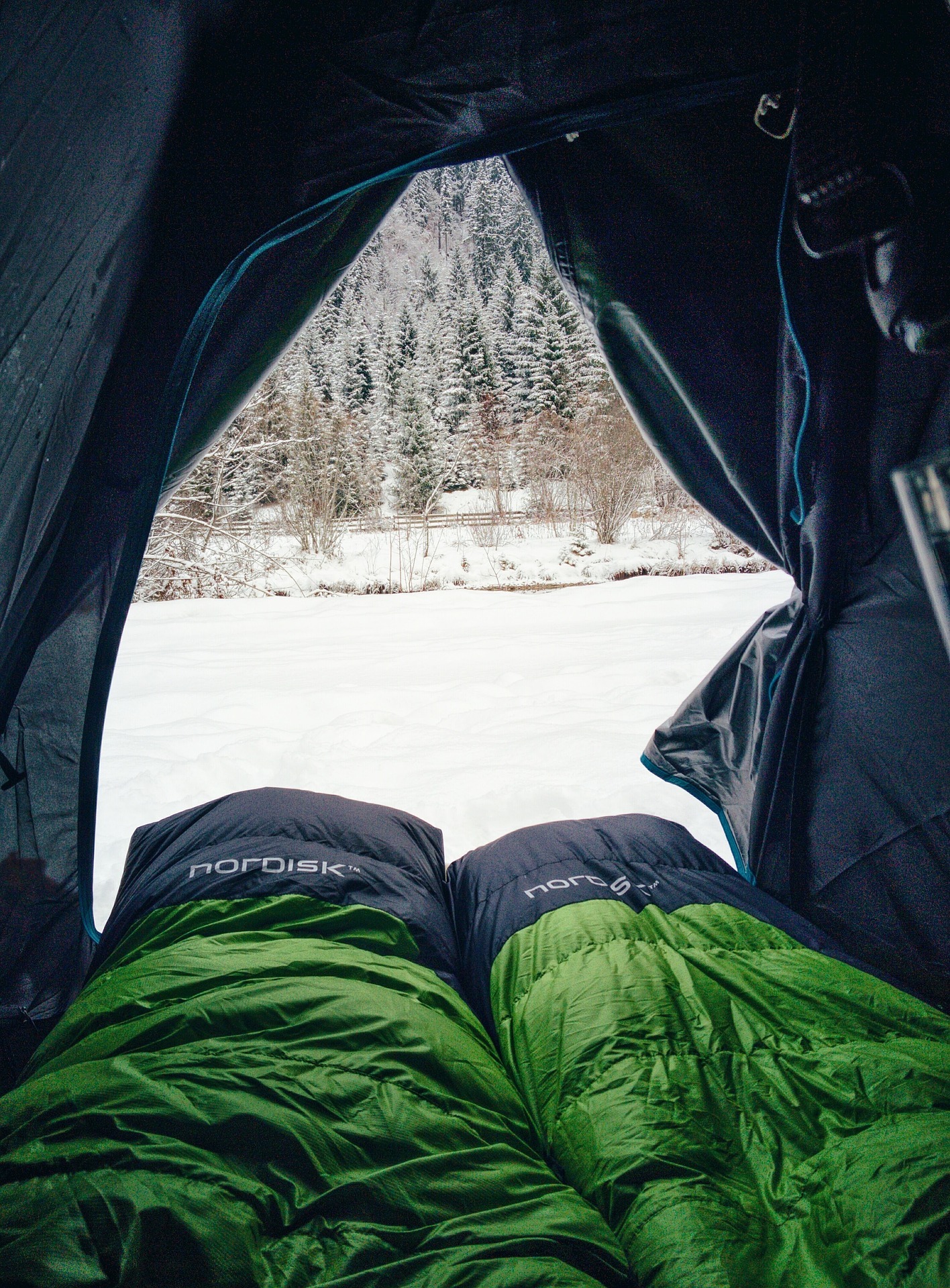
When camping, use a proper sleeping mat beneath your sleeping bag.
This is usually much more effective than simply changing your sleeping position.
Don’t Lie Directly on Cold Ground
Lying directly on cold ground can result in significant conductive heat loss.
This is particularly important if you’re resting for a long period.
Use suitable insulation underneath your body whenever possible.
Your Sleeping Position
When sleeping outdoors, your sleeping position can influence comfort and exposure, but the insulation underneath you is generally more important than whether you sleep on your back, side or front.
A suitable sleeping bag and sleeping mat should do most of the work.
Choose the sleeping position that allows you to remain comfortable and properly insulated.
Avoid Compressing Your Sleeping Bag
Sleeping bags work by trapping insulating air.
If you compress the insulation excessively, it may become less effective.
Avoid sleeping in positions that unnecessarily squash the insulation around your body.
Don’t Fold a Sleeping Bag Into a Small Ball
Your sleeping bag is designed to provide insulation when lofted.
Don’t deliberately compress it around yourself in an attempt to become warmer.
Instead, allow the insulation to expand as designed.
Keep Your Feet Inside the Sleeping Bag
Your feet can become cold quickly.
Make sure they’re properly inside the sleeping bag and that the foot section isn’t being unnecessarily compressed.
A suitable sleeping mat beneath your feet is also important.
Use Your Sleeping Bag Hood Correctly
If your sleeping bag has a hood, use it according to the manufacturer’s design.
A hood can help reduce heat loss around your head.
Don’t pull it so tightly that it becomes uncomfortable or interferes with normal breathing.
Body Position and Wind
Your position relative to the wind can also matter.
A sheltered position can reduce exposure to moving air.
If you’re taking a break outdoors, position yourself behind an appropriate windbreak where possible.
Turn Your Back to the Wind
If there is no suitable shelter and you need to remain outside, facing away from the wind can reduce direct exposure to your face and upper body.
This is particularly useful while waiting or taking a short break.
However, a proper windproof outer layer provides much better protection than body position alone.
Use Existing Windbreaks
Terrain, hedges, buildings and other suitable structures can reduce wind exposure.
When choosing where to sit or rest, consider whether a safe windbreak is available.
Don’t use an apparent windbreak if it introduces another hazard.
Don’t Shelter Under Dangerous Trees
Trees can provide protection from wind, but they can also create hazards.
Dead branches and damaged trees can fall, especially during strong winds.
Don’t position yourself underneath unstable trees simply because they block the wind.
Body Position During a Hike
When hiking, your body position naturally changes as you move.
Walking uphill produces heat, while stopping reduces heat production.
This is why you can feel comfortable while walking but quickly become cold when you stop.
Put on a Layer Before Resting
If you’re approaching a rest stop, put on an extra layer before sitting down.
This prevents your body temperature from dropping unnecessarily.
Waiting until you’re already cold makes it harder to recover.
Avoid Sitting for Too Long
If conditions are cold, long periods of inactivity can increase heat loss.
Where appropriate, keep moving gently or shorten rest periods.
This is particularly relevant during outdoor activities where participants may be waiting for others.
Body Position During Scout Activities
Scout activities can involve plenty of standing around.
Scouts may spend several minutes listening to instructions before running around again.
Leaders should consider where the group is standing and whether the location is exposed to wind or sitting on cold ground.
A sheltered briefing location can make a significant difference.
Younger Scouts May Become Distracted
Younger Scouts may be focused on the activity and not realise that they are becoming cold.
They may also sit directly on wet or cold ground without thinking about heat loss.
Leaders should monitor the group and encourage Scouts to use sit mats and appropriate clothing.
Body Position When Waiting for Help
Body position can become more important during an emergency.
If someone is unable to move normally, they may lose heat more quickly because they aren’t producing as much body heat through activity.
If it is safe to do so, get them into shelter and insulate them from the ground.
Reduce Contact With Cold Surfaces
If you’re waiting for assistance outdoors, don’t sit or lie directly on cold ground if you can avoid it.
Use a rucksack, sleeping mat, spare clothing or emergency blanket as a barrier where appropriate.
The aim is to reduce conductive heat loss.
Keep the Person Dry
Body position won’t compensate for wet clothing.
If someone is wet and becoming cold, getting them out of the rain and wind and adding dry insulation should take priority.
Replace wet clothing where practical.
Don’t Move Someone Unnecessarily
In an emergency, particularly if someone may have an injury, don’t reposition them unnecessarily.
Consider the possibility of injury before moving someone.
If they’re seriously affected by cold, seek appropriate emergency assistance and follow professional advice.
Position Yourself Inside a Shelter
If you’re using a tent, emergency shelter or other suitable shelter, position yourself so that you’re protected from draughts as much as possible.
Keep insulation underneath you.
Don’t block ventilation or create additional hazards while trying to get warmer.
Body Position and Emergency Blankets
An emergency blanket can help reflect radiant heat and provide a barrier from wind and moisture.
It works best when combined with other forms of insulation.
Don’t rely on the blanket alone if someone is wet, exposed or lying directly on cold ground.
Don’t Wrap Someone’s Face
When using an emergency blanket or other covering, keep the person’s face clear.
They need unobstructed breathing and should be monitored.
Avoid Restricting Circulation
When trying to keep warm, don’t wrap clothing, blankets or other materials so tightly that circulation is restricted.
Warmth should never come at the expense of normal breathing or circulation.
Body Position Isn’t a Substitute for Clothing
Changing your posture may help reduce exposure, but it can’t replace proper outdoor clothing.
A suitable base layer, insulation and weatherproof outer layer will normally have a much greater effect.
Think of body position as one small part of a wider approach to reducing heat loss.
Body Position Isn’t a Substitute for Shelter
If conditions are becoming severe, don’t rely on curling up or turning your back to the wind.
Find suitable shelter.
A building, vehicle, tent or other appropriate shelter can provide much better protection.
Don’t Curl Up So Tightly That You Can’t Move
In some situations, people may instinctively curl up when they’re cold.
This can reduce exposed surface area, but remaining in a tightly compressed position for a long time can become uncomfortable.
If you’re able to move safely, change position occasionally and maintain normal circulation.
Keep Your Hands and Feet Comfortable
If you’re sitting still for a long time, move your fingers and toes occasionally where appropriate.
This can help maintain comfort.
However, persistent numbness or loss of sensation should be taken seriously.
Gentle Movement Can Produce Heat
If you’re cold but otherwise safe and able to move, gentle activity can help produce body heat.
Walking around, moving your arms or performing light activity may help.
Don’t exercise to exhaustion or become sweaty.
Don’t Use Exercise to Replace Shelter
If someone is becoming seriously cold, telling them to keep exercising isn’t an adequate solution.
The priority should be reducing further heat loss through shelter, dry clothing and insulation.
Body Position and Heat Loss: The Main Principles
The basic ideas are easy to remember.
Reduce unnecessary exposure.
Protect your head and neck.
Keep your body insulated from cold surfaces.
Use windbreaks where appropriate.
Stay dry.
Keep moving when appropriate.
Use proper clothing and shelter.
These principles are more important than any particular posture.
Recognising Excessive Cold Exposure
Changes in body position may become less important if someone is already becoming seriously cold.
Watch for:
These may be signs of hypothermia or significant cold exposure.
What to Do If Someone Is Seriously Cold
Move them to a safe sheltered environment where possible.
Remove wet clothing where practical and add dry insulation.
Protect them from further wind and cold surfaces.
Seek urgent medical assistance if they show signs of serious cold exposure.
Call 999 or 112 in an emergency.
Final Thought
Body position is only one small part of managing heat loss outdoors, but it is useful to understand how it can affect your exposure.
Keeping yourself protected from wind, reducing contact with cold surfaces and using suitable insulation can all help conserve heat.
The most important thing is not finding a magical posture that keeps you warm. It is combining sensible positioning with proper clothing, shelter and preparation.
When you’re cold outdoors, think about what your body is touching, what the wind is reaching and how much of you is exposed.
🔒Ready to test your survival skills?
Join Survival Guides UK for free, complete challenges, earn badges and increase your Survival Level.
JOIN FREE →
CRAIG BURR
FOUNDER · SURVIVAL GUIDES UK
I'm Craig, the person behind Survival Guides UK. I created SGUK because I wanted somewhere people could learn real outdoor skills in a practical, straightforward way — from lighting a fire and tying knots to navigation, campcraft and everything in between.
You can read more about the story behind SGUK here as well as our approach here.