Emergency Shelter Materials: What You Can Use in the Outdoors
If you ever need to make an emergency shelter outdoors, the materials you have available can make a big difference.
You don’t always need specialist survival equipment. A useful shelter can sometimes be made using items already in your rucksack, combined with suitable natural materials.
The important thing is knowing what each material can realistically do and using it without creating unnecessary risks.
Tarps and Shelter Sheets
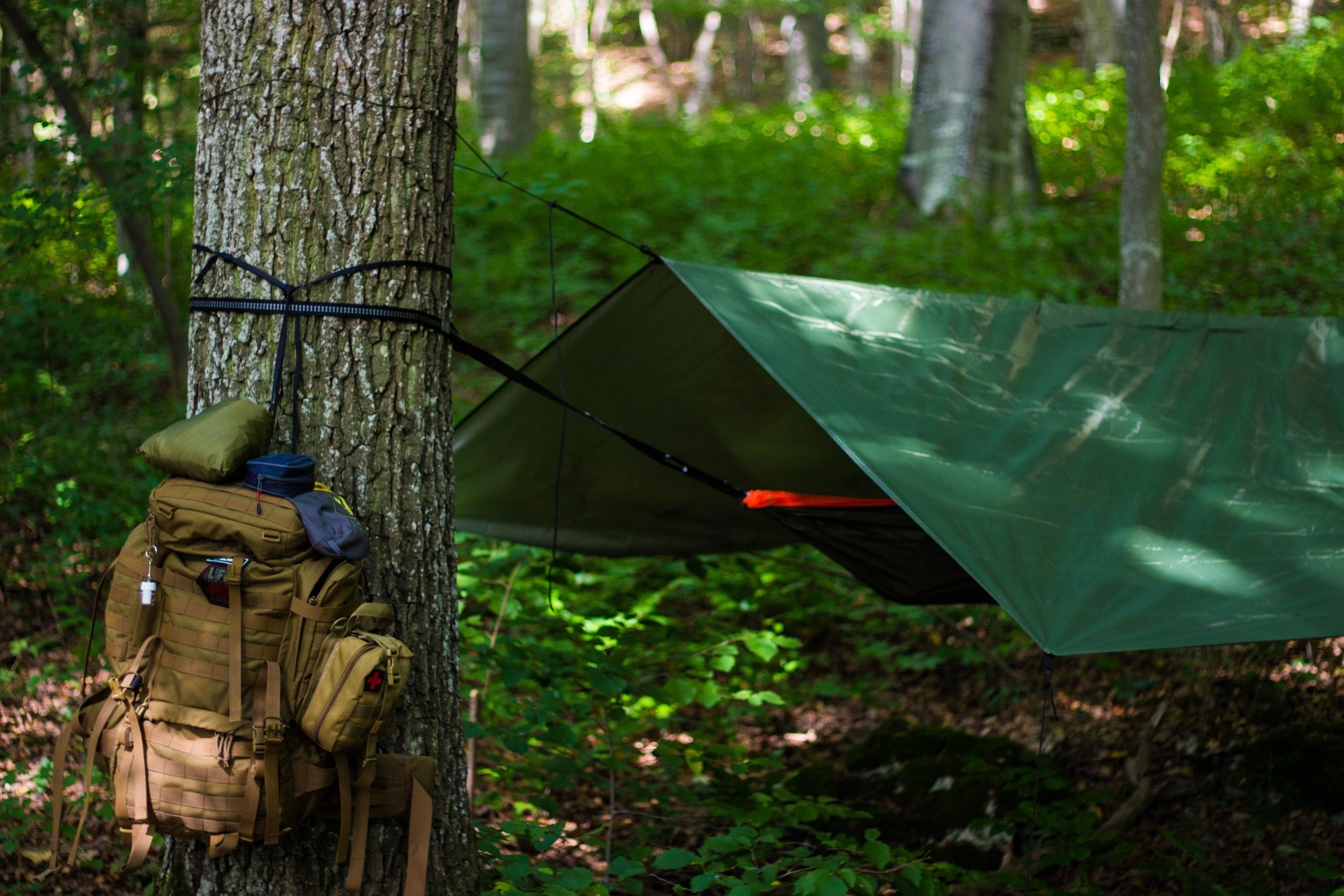
A tarp is one of the most useful pieces of emergency shelter equipment you can carry.
It can be used to create a roof, windbreak or simple sleeping shelter and can be adapted to different weather conditions.
A tarp is particularly useful because it is lightweight, reusable and can be packed into a rucksack without taking up much space.
Survival Shelters and Bivvy Bags
A bivvy bag is designed to provide an outer layer of protection around a sleeping bag.
Depending on the type, it can provide protection from wind and moisture while adding another layer around your sleeping system.
A bivvy bag isn’t necessarily a complete shelter on its own, particularly in heavy rain, so consider the weather conditions before relying on it.
Survival Blankets
A foil survival blanket can be useful for emergency shelter.
It can reflect radiant heat, provide some protection from wind and rain, and act as an additional barrier between you and the environment.
It is lightweight enough to carry as part of an emergency kit.
However, a survival blanket is not a substitute for a properly designed shelter in severe weather.
Paracord and Cordage
Cordage is extremely useful when building shelters.
It can be used to:
Carry suitable cordage rather than relying on finding it outdoors.
Clothing
Spare clothing can provide temporary insulation.
A fleece, jacket or other dry insulating layer can be used inside a shelter to help retain body heat.
Clothing should primarily remain available for keeping you warm, rather than being used as the main structural material of a shelter.
Rucksacks
Your rucksack can be useful in several ways.
It can help protect equipment from the weather, provide a windbreak when positioned appropriately and act as insulation between you and cold ground.
Don’t damage or unnecessarily expose important equipment just to improve a temporary shelter.
Sleeping Mats
A sleeping mat is particularly valuable because it reduces heat loss to the ground.
Even an excellent shelter won’t necessarily keep you warm if you’re lying directly on cold ground.
For camping and emergency situations, insulation underneath you can be just as important as protection above you.
Ground Sheets
A groundsheet can provide a barrier between you and damp ground.
It can help keep sleeping equipment cleaner and drier while providing another layer between your body and the surface.
Use it appropriately and avoid creating areas where rainwater can collect underneath you.
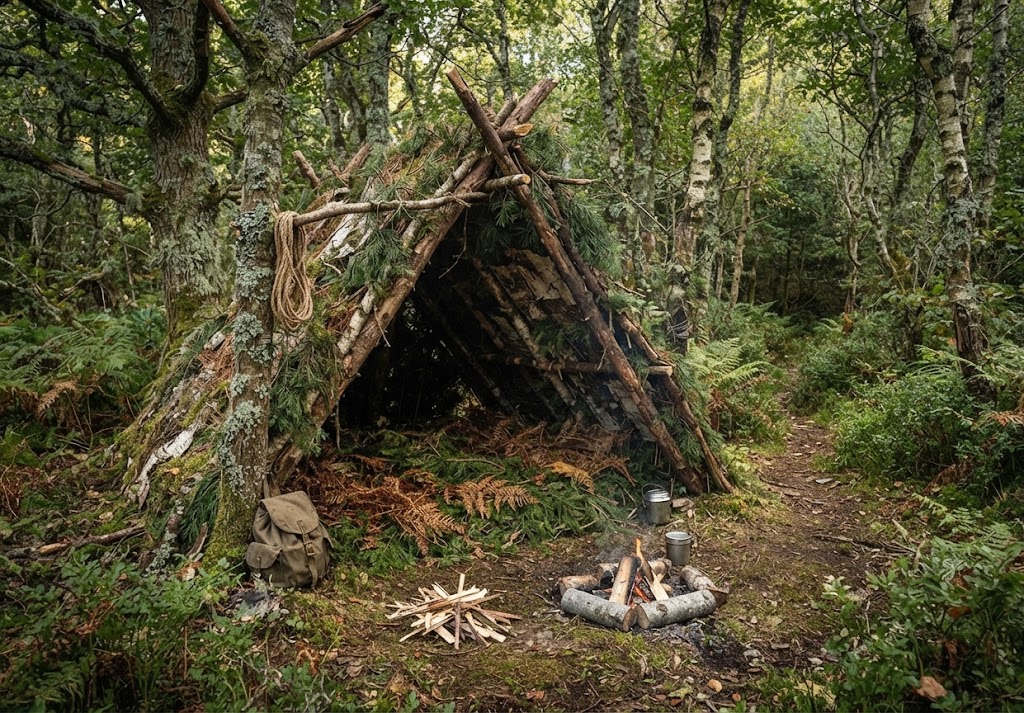
Natural Materials
If suitable natural materials are available, they can sometimes be used to improve an emergency shelter.
Examples include:
These materials can provide insulation or help fill gaps.
Avoid damaging living trees and plants unnecessarily.
Fallen Branches
Fallen branches can sometimes be useful for creating a basic shelter frame.
Choose stable, suitable branches rather than climbing trees or breaking live branches.
Check anything you use carefully for instability, sharp points and signs of decay.
Leaves and Leaf Litter
Dry leaves can provide useful insulation.
A thick layer underneath a shelter can reduce contact with cold ground, while leaves can also be used carefully as additional insulation around the outside of a simple natural shelter.
Keep the material dry where possible.
Dry Grass
Dry grass can provide insulation when used appropriately.
It can be placed underneath a shelter or used to fill gaps.
Don’t collect large amounts of living vegetation simply to build a shelter. Use existing fallen or naturally available material where practical.
Bark
Loose bark that has already fallen from trees can sometimes be useful as a natural shelter material.
Don’t strip bark from living trees.
Damaging trees can harm the tree and the surrounding habitat.
Snow
In appropriate environments, snow can sometimes be used as an insulating material.
However, this is not normally relevant to most UK Scout activities and requires proper knowledge of snow conditions and shelter construction.
Never assume snow is automatically safe or suitable for building a shelter.
Rocks and Stones
Rocks can sometimes help anchor a shelter or provide a windbreak.
Be careful when moving stones, particularly on slopes or near other people.
Don’t create unstable piles that could collapse.
Trees as Shelter Supports
Trees can provide convenient anchor points for tarps and cordage.
However, always assess the tree first.
Avoid dead, damaged or unstable trees and don’t position yourself underneath branches that could fall.
Don’t Break Live Branches
Breaking branches from living trees is unnecessary for most basic emergency shelters.
It can damage the tree and may also create unstable or awkward shelter materials.
Look for suitable fallen materials instead.
Waterproof Bags
Dry bags, rucksack liners and waterproof storage bags can protect important equipment.
They can also help keep spare clothing and sleeping equipment dry.
This is particularly important because wet insulation becomes much less effective.
Plastic Bags
Strong plastic bags can have several emergency uses.
They may help protect clothing or equipment from rain and moisture.
They aren’t a replacement for proper shelter equipment, but carrying a few robust bags can provide useful backup options.
Emergency Shelters and Available Equipment
When building an emergency shelter, think about what you already have.
A tarp, cordage, sleeping mat, survival blanket and waterproof clothing may provide far more protection when combined than any one item used alone.
Good shelter construction is often about using several simple resources together.
Choosing Materials Carefully
Before using any material, ask:
Will it keep me dry?
Will it reduce wind exposure?
Will it provide insulation?
Is it stable?
Could it injure someone?
Will using it damage the environment?
These simple questions can help you make better decisions.
Avoid Dangerous Materials
Don’t use materials that are unstable, rotten, sharp or contaminated.
Avoid leaning a shelter against unstable structures.
Don’t use damaged equipment that could fail unexpectedly.
If something doesn’t look safe, find another solution.
Think About the Weather
The best shelter material depends on the conditions.
A survival blanket may be useful in an unexpected situation, while a tarp and proper cordage are much better for longer exposure.
In heavy rain, keeping water out becomes a priority.
In cold weather, insulation and wind protection become particularly important.
Protect Your Insulation
Whatever shelter materials you use, try to keep your insulation dry.
This includes sleeping bags, spare clothing and sleeping mats.
A dry sleeping system can make a major difference during an overnight emergency.
Use What You Have Before Building From Scratch
If you already have a tent, tarp or emergency shelter in your equipment, use it.
Building a complicated shelter from natural materials takes time and energy.
In a genuine emergency, conserving energy and getting protected quickly may be more important than constructing an impressive shelter.
Don’t Build More Than You Need
A shelter doesn’t need to be large.
A smaller shelter can be easier to construct and may be easier to keep warm.
The aim is to provide appropriate protection from the conditions while allowing enough room to remain comfortable and safe.
Respect the Environment
Emergency shelter construction should have as little environmental impact as practical.
Don’t unnecessarily cut vegetation, strip bark or damage trees.
Use existing natural materials where appropriate and leave the area as tidy as possible afterwards.
Final Thought
Emergency shelter materials don’t have to be complicated.
A tarp, cordage, sleeping mat, waterproof clothing and survival blanket can provide a strong starting point, while suitable natural materials can sometimes improve a temporary shelter.
The most useful skill is knowing what each material can do and choosing the simplest safe solution for the conditions.
A good emergency shelter isn’t about using the most materials — it’s about using the right materials effectively.
🔒Ready to test your survival skills?
Join Survival Guides UK for free, complete challenges, earn badges and increase your Survival Level.
JOIN FREE →
CRAIG BURR
FOUNDER · SURVIVAL GUIDES UK
I'm Craig, the person behind Survival Guides UK. I created SGUK because I wanted somewhere people could learn real outdoor skills in a practical, straightforward way — from lighting a fire and tying knots to navigation, campcraft and everything in between.
You can read more about the story behind SGUK here as well as our approach here.