Campfire Safety Guide – Free Printable Poster
A campfire can be one of the best parts of a camping trip. It can provide warmth, light and a place to cook, but an open fire can also quickly become dangerous if it is poorly positioned, left unattended or not completely extinguished.
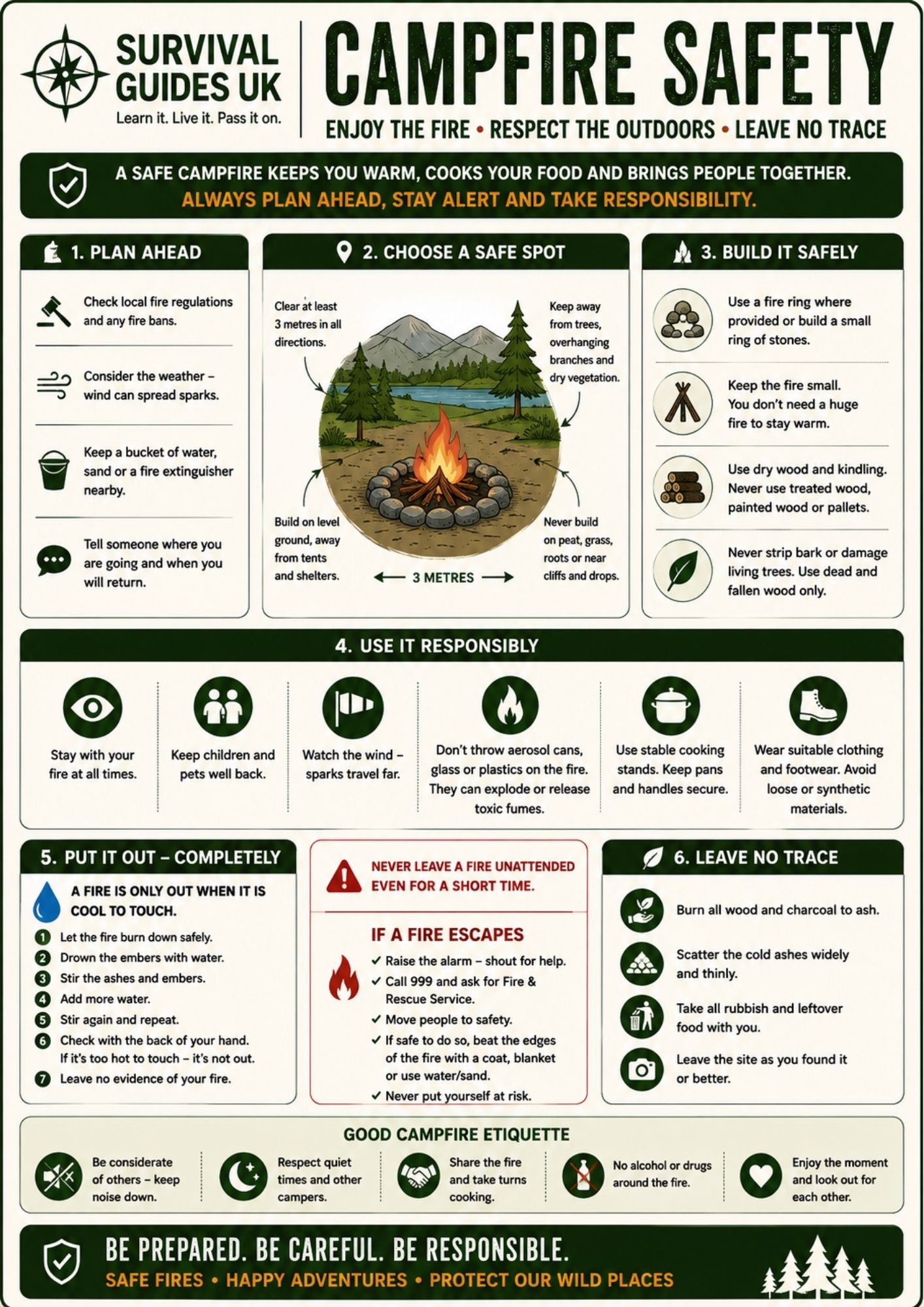
Our free printable Campfire Safety Poster provides a simple reference for Scouts, campers, outdoor groups and anyone learning responsible fire safety.
Download the Free Campfire Safety Poster
Restricted Content
Members Only
Join Survival Guides UK for free to access and download this resource.
JOIN FREE →Print it on A4 paper and keep it with your camping equipment, Scout resources, campcraft notes or outdoor activity materials.
For best results, print at 100% scale.
Before Lighting a Campfire
The safest campfire is one that is planned properly before it is lit.
First, check whether fires are actually permitted where you are camping. In England, GOV.UK advises avoiding open fires in the countryside and using them only in safe, designated areas. Local restrictions, campsite rules and periods of high wildfire risk may also apply.
Before lighting a fire:
Never assume that because you have permission to camp, you automatically have permission to light a fire.
Choose a Safe Location
Where you place a fire matters just as much as how you build it.
Avoid areas with:
If you’re at an organised campsite, use the designated fire area if one is provided.
Keep Your Campfire Small
A campfire doesn’t need to be enormous to be useful.
A smaller, controlled fire is generally easier to supervise and extinguish than a large fire.
Use suitable, dry fuel and don’t add more wood than you need.
Avoid burning:
Never use petrol or other inappropriate accelerants to start or revive a fire.
Never Leave a Campfire Unattended
This is one of the most important rules.
Someone should always be responsible for monitoring the fire while it is burning.
Wind can carry sparks and embers beyond the immediate fire area, potentially starting a much larger fire.
Keep children and pets at a safe distance and make sure everyone understands the boundaries around the fire.
Watch the Weather
Wind can dramatically increase the risk of a campfire spreading.
If conditions become unsuitable, don’t light the fire.
If you’ve already lit one and the wind increases, reduce or extinguish the fire safely.
Dry vegetation and windy conditions can allow outdoor fires to spread rapidly. UK fire-safety guidance specifically recommends avoiding outdoor fires in unsuitable conditions.
Putting Your Campfire Out
A campfire isn’t safely finished just because the flames have disappeared.
Before leaving the site or going to bed:
- Allow the fire to burn down safely where appropriate.
- Douse the fire thoroughly with water.
- Stir the ashes and embers.
- Add more water.
- Stir again.
- Continue until the fire and embers are completely extinguished.
Never leave a fire unattended while it is still hot.
The aim is to ensure there are no remaining hot embers capable of reigniting or spreading fire.
What If a Fire Gets Out of Control?
If a campfire begins spreading beyond your control:
Get people away from the fire first.
Don’t put yourself at risk trying to save equipment or belongings.
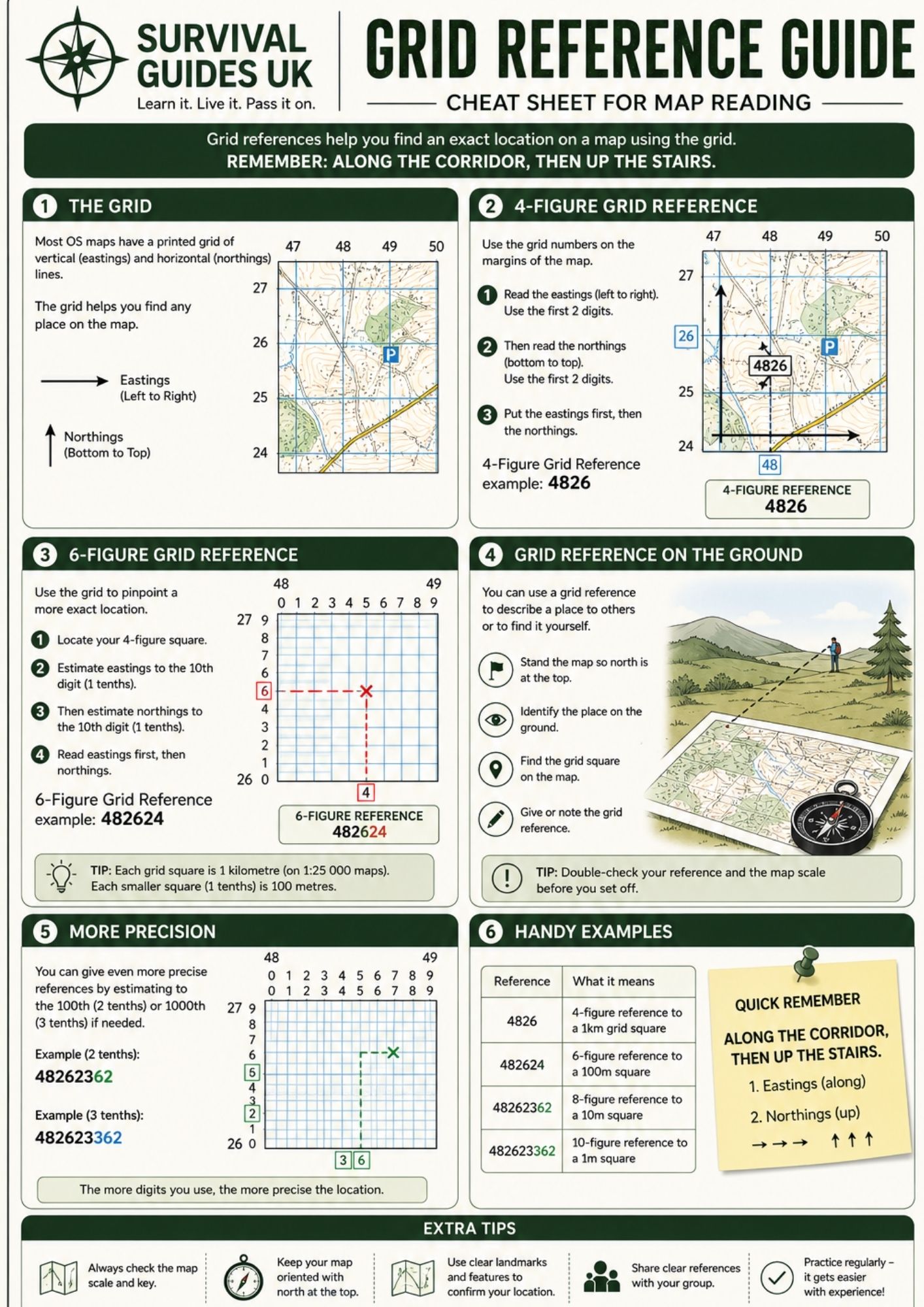
If there is a significant outdoor fire, move to a safe location and call 999 and ask for the Fire and Rescue Service. Give the exact location if possible, including a grid reference or identifiable landmark. GOV.UK specifically recommends giving a map reference or landmark when reporting a fire outdoors.
Never attempt to tackle a fire that is too large or spreading rapidly.
Campfires and Tents
A tent is particularly vulnerable to fire.
UK fire services advise keeping tents separated and away from vehicles to reduce the risk of a fire spreading. GOV.UK recommends at least 6 metres between tents/caravans and parked cars.
Remember:
- Never cook inside a tent.
- Never use candles in or near a tent.
- Keep cooking equipment away from tent walls.
- Keep flammable liquids and gas cylinders away from tents.
- Know how to escape from your tent in an emergency.
Leave No Trace
A responsible camper considers what happens after the fire is gone.
Don’t leave rubbish, packaging or food waste behind.
Where fires are permitted, follow the site’s instructions for dealing with ashes and leftover material. Don’t assume that scattering hot ashes is appropriate everywhere.
The best campsite is one that you leave as clean and safe as you found it.
Campfire Safety Checklist
Before lighting:
☐ Fires are permitted here
☐ Weather conditions are suitable
☐ The fire site is safe
☐ Flammable materials are cleared away
☐ Water or another means of extinguishing the fire is ready
☐ Someone is responsible for supervising the fire
While burning:
☐ Keep the fire controlled
☐ Keep children and pets away
☐ Watch the wind
☐ Don’t leave it unattended
☐ Don’t use inappropriate fuels
Before leaving:
☐ Fire is completely extinguished
☐ Ashes and embers are cold
☐ No rubbish has been left behind
☐ The site has been left safe
Download the Printable
Our Campfire Safety Poster is designed as a quick visual reminder for:
Keep it with your camping resources and use it as a reminder before lighting your next fire.
Important safety note
This resource is an independent educational guide from Survival Guides UK, not official fire-service advice. Always follow the rules of the landowner, campsite or local authority and current guidance from the relevant UK fire and rescue service. In England, GOV.UK’s outdoor fire guidance recommends avoiding open fires in the countryside except in safe, designated areas.
Be prepared. Be careful. Be responsible.
🔒Ready to test your survival skills?
Join Survival Guides UK for free, complete challenges, earn badges and increase your Survival Level.
JOIN FREE →
CRAIG BURR
FOUNDER · SURVIVAL GUIDES UK
I'm Craig, the person behind Survival Guides UK. I created SGUK because I wanted somewhere people could learn real outdoor skills in a practical, straightforward way — from lighting a fire and tying knots to navigation, campcraft and everything in between.
You can read more about the story behind SGUK here as well as our approach here.