Squirrels Badges Explained: A Guide for Parents and Leaders
🐿️ A QUICK NOTE FOR PARENTS
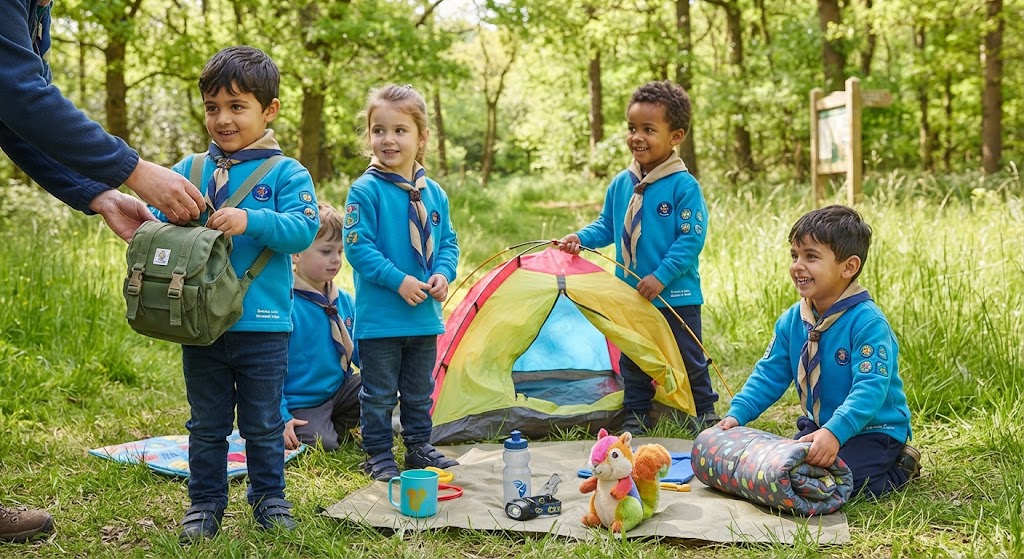
Squirrel Scouts have lots of opportunities to earn badges as they take part in activities, learn new skills and try new experiences.
Badges aren’t simply rewards for being the best at something. They recognise participation, learning, achievement and the experiences Squirrels have along the way.
Badge requirements and the official programme can change, so leaders and parents should always check the current guidance from The Scouts for the latest requirements.
What Are Squirrel Scout Badges?
Squirrel Scouts are the youngest section of the UK Scouts programme.
They are generally aged 4 to 6 years old and take part in activities designed to help them:
- Try new things
- Make friends
- Learn practical skills
- Explore the outdoors
- Develop confidence
- Work together
- Have adventures
Badges are one way of recognising the things Squirrels experience and learn as part of the programme.
For a parent seeing a Squirrel’s uniform gradually covered in colourful badges, it can sometimes be difficult to understand what all the badges mean.
So, what are Squirrel badges actually for?
How Do Squirrels Earn Badges?
Squirrels earn badges by taking part in activities and completing the relevant requirements.
Depending on the badge, this might involve:
- Learning a new skill
- Taking part in an activity
- Going on an adventure
- Helping others
- Exploring the outdoors
- Developing a personal interest
- Completing a challenge
The important thing is that the badge should represent something the Squirrel has actually experienced or achieved.
🐿️ BADGES ARE ABOUT PROGRESS
A Squirrel doesn’t need to be the fastest, strongest or most naturally talented member of the group.
The programme is about trying things, learning and developing.
That’s particularly important at this age, when children are developing at very different rates.
What Types of Badges Are There?
Squirrel badges can broadly be thought of as recognising different parts of the programme.
These include badges connected with:
Participation and Progression
These recognise a Squirrel’s journey through the section and their participation in the programme.
Activity and Skills
These allow Squirrels to develop particular skills or explore different subjects.
Outdoor and Adventure
These encourage Squirrels to experience the outdoors and try new adventures.
Challenges and Experiences
These give Squirrels opportunities to take part in activities covering different areas of learning and development.
The exact badge structure and requirements can change as The Scouts updates its programme, so it’s best to use the current official badge information rather than relying on an old list.
The Squirrel Scout Challenge Awards
Challenge awards are an important part of the Squirrel programme.
Rather than focusing on just one particular skill, a challenge can involve several different activities and experiences.
This makes them a good way of encouraging Squirrels to experience different parts of the programme.
For example, a challenge might involve a mixture of:
- Outdoor activities
- Helping others
- Trying something new
- Learning skills
- Taking part in adventures
The exact requirements should always be checked against the current official Squirrel programme.
Activity Badges
Activity badges are more focused on particular interests, skills or experiences.
They give Squirrels the opportunity to explore something in greater detail.
This could be an activity they already enjoy or something completely new.
That’s one of the strengths of the badge system.
A Squirrel who loves being outdoors can explore outdoor activities, while another might discover a completely new interest through a badge challenge.
💡 FOR PARENTS
You don’t need to turn badges into homework.
Many badge requirements are designed to be completed as part of the normal Squirrel programme.
If your child is interested in a particular badge, speak to their leader about how it could fit naturally into upcoming activities.
Do Squirrels Have to Earn Every Badge?
No.
There is no need for every Squirrel to collect every possible badge.
The programme is designed to provide a range of opportunities, and leaders choose activities that are appropriate for their group.
Some badges may be particularly relevant to a particular programme of activities, while others might not be.
The most important thing is that Squirrels are:
Taking part.
Learning.
Trying new things.
Having fun.
Where Do the Badges Go?
Squirrel badges are normally sewn onto the Scout uniform in the appropriate locations.
There are specific uniform badge positions, and these can vary depending on the type of badge.
If you’re unsure where a particular badge belongs, check the current uniform guidance from The Scouts or ask your Squirrel leader.
It’s worth checking before sewing everything on because badge positions can be surprisingly easy to get wrong!
What Happens When a Squirrel Moves Up?
Squirrels eventually move on to Beavers, normally around their sixth birthday.
Moving between sections is an important part of the Scouts journey.
Badges earned as a Squirrel help mark the experiences they had during that stage, but the move to Beavers also brings:
- New activities
- New skills
- New challenges
- New badges
- New opportunities
The progression continues.
You can read more in our Beavers Progression guide.
Do Squirrels Get Badges for Everything They Do?
No.
Not every activity needs to result in a badge.
Sometimes the value of an activity is simply:
“We tried something new and had fun.”
Badges are a useful way of recognising achievement, but they shouldn’t become the only reason a child takes part.
For young children especially, the experience itself is often the most important part.
Why Are Badges Useful?
Badges can provide several benefits.
They give children a sense of achievement
A Squirrel can look at their uniform and see a record of the things they’ve experienced.
They encourage trying new things
A badge can provide a reason to try something that a child hasn’t encountered before.
They help recognise progress
Children can see that they’ve developed new skills.
They create memories
Years later, a badge can remind someone of a particular activity, camp or adventure.
They support the programme
Badges give leaders a framework for providing varied activities.
🐿️ BADGES ARE MEMORIES
For a six-year-old, a badge might simply be a colourful patch on their uniform.
Years later, it can remind them:
“I did that.”
“I learned that.”
“I went there.”
“I was part of that.”
How Parents Can Help
Parents can support their Squirrel without turning the programme into a competition.
Good ways to help include:
- Asking what they did at Squirrels
- Encouraging them to try new activities
- Helping them practise a skill if appropriate
- Celebrating their achievements
- Asking their leader about upcoming badge opportunities
- Helping them look after their uniform
Try to avoid comparing the number of badges your child has with another Squirrel.
Every child develops differently.
A Note About Badge Lists
Official badge programmes can change. For that reason, instead of listing every Squirrel badge and its requirements, Survival Guides UK focuses on explaining how the programme works while directing our readers to the official Scouts information for the latest requirements.
If you’re looking for a particular badge, the best starting point is the current Squirrel Scout programme from The Scouts.
Frequently Asked Questions
How old are Squirrel Scouts?
Squirrel Scouts are generally 4–6 years old.
Do Squirrels get badges?
Yes. Squirrels have opportunities to earn badges through activities, challenges, skills and experiences.
Do Squirrels have to earn every badge?
No. There is no requirement for every Squirrel to earn every available badge.
Can parents complete badges at home?
Some activities may be suitable for completing outside the normal meeting programme, but parents should check with their Squirrel leader before assuming that an activity counts towards a particular badge.
Where can I find the current badge requirements?
The best source is the current official Squirrel information from The Scouts.
What happens to the badges when a Squirrel moves to Beavers?
The Squirrel period becomes part of their Scouting journey, while they move on to the Beavers programme and its own activities and badges.
Final Thoughts
Squirrel badges are about much more than filling up a uniform.
They’re a way of recognising the experiences, skills and adventures that children have as they begin their Scouting journey.
At this age, the most important things are simple:
Try something new.
Learn something.
Make friends.
Have an adventure.
Be proud of what you’ve achieved.
The badges are a reminder of all those things.
🐿️ THE BIG IDEA
Don’t measure a Squirrel’s Scouting journey by how many badges they have.
Measure it by how many new things they’ve tried, skills they’ve developed and adventures they’ve enjoyed.
🔒Ready to test your survival skills?
Join Survival Guides UK for free, complete challenges, earn badges and increase your Survival Level.
JOIN FREE →
CRAIG BURR
FOUNDER · SURVIVAL GUIDES UK
I'm Craig, the person behind Survival Guides UK. I created SGUK because I wanted somewhere people could learn real outdoor skills in a practical, straightforward way — from lighting a fire and tying knots to navigation, campcraft and everything in between.
You can read more about the story behind SGUK here as well as our approach here.