How to Treat Severe Bleeding: A First Aid Guide
Affiliate disclosure: This article contains affiliate links. If you purchase something through one of our links, we may earn a commission at no additional cost to you.
What Counts as Severe Bleeding?
Most cuts aren’t life-threatening.
Severe bleeding is different.
A wound may be particularly serious if:
- Blood is flowing continuously
- Bleeding is heavy
- Blood is rapidly soaking through dressings
- Blood is spurting or pulsing
- The wound is deep
- A major blood vessel may have been damaged
- The person is becoming pale, weak, confused or drowsy
Severe blood loss can lead to shock and can become fatal without prompt treatment.
REMEMBER
Don’t spend time trying to decide exactly which blood vessel has been injured.
If the bleeding looks severe, treat it as an emergency.
⚠️ SAFETY FIRST
Severe bleeding can be life-threatening.
If someone is bleeding heavily or the bleeding cannot be controlled, call 999 or 112 immediately.
Apply firm, direct pressure to the wound and follow the emergency call handler’s instructions.
Your own safety comes first. Wear disposable gloves if available and avoid unnecessary contact with blood.
The First Priority: Stay Safe
Before helping, look at the situation.
You could encounter hazards such as:
- Broken glass
- Knives
- Machinery
- Traffic
- Fire
- Electricity
- Dangerous animals
Don’t rush into an unsafe situation.
If possible, put on disposable gloves before dealing with blood.
Call for Help
If the bleeding is severe, call 999 or 112.
If you’re with other people, give someone a specific job:
“You call 999 and put the phone on speaker.”
This allows you to concentrate on treating the casualty while the emergency call handler provides instructions.
If you’re alone, call emergency services as soon as possible while beginning appropriate first aid.
Apply Direct Pressure
For serious external bleeding, apply firm, direct pressure to the wound.
Use:
Press firmly and continuously.
Don’t keep lifting the dressing to see whether the bleeding has stopped.
FIRST AID TIP
Pressure is more important than finding the perfect dressing.
If you don’t have a first-aid dressing immediately available, use suitable clean material and apply pressure.
Keep Applying Pressure
One of the most common mistakes is releasing pressure too soon.
If blood continues to flow, maintain pressure.
If blood soaks through the original dressing, don’t simply remove it.
Add additional dressing material over the top and continue applying pressure.
Follow the emergency call handler’s instructions.
What If Something Is Embedded in the Wound?
If an object is stuck in the wound:
Don’t pull it out.
An embedded object could be helping to reduce blood loss, and removing it can cause additional damage.
Instead, apply pressure around the object and seek urgent medical help.
Examples could include:
- Glass
- Metal
- Wood
- A knife or other sharp object
Don’t Push an Object Further Into the Wound
This may sound obvious, but it’s worth stating.
Don’t attempt to reposition or manipulate an embedded object.
Keep it as stable as possible while controlling bleeding around it.
Let medical professionals deal with its removal.
What About a Severed Finger or Limb?
A completely or partially severed body part requires urgent medical attention.
Call 999 or 112.
Control bleeding from the casualty first.
If the severed part can be safely recovered, protect it appropriately and take it with the casualty to hospital.
Don’t place it directly against ice or in water.
Follow the emergency call handler’s instructions.
Tourniquets
Tourniquets are specialised devices designed to control catastrophic bleeding from a limb.
They can be lifesaving in certain circumstances.
However, they are not a routine treatment for every cut or bleeding wound.
If you carry a tourniquet, you should receive appropriate practical training in its use and understand when it is indicated.
For a serious bleeding emergency, follow the instructions of the emergency call handler and use appropriate equipment if advised.
IMPORTANT
Do not improvise a tourniquet from rope, shoelaces or other unsuitable materials.
A poorly applied improvised tourniquet can cause serious harm.
Recognising Shock
Someone who has lost a significant amount of blood may develop shock.
Possible signs include:
- Pale skin
- Cold or clammy skin
- Weakness
- Dizziness
- Rapid breathing
- Rapid pulse
- Thirst
- Anxiety
- Confusion
- Drowsiness
Shock is a medical emergency.
Call 999 or 112 if serious bleeding is involved.
Keep the Person Warm
Someone experiencing significant blood loss can become cold quickly.
Protect them from:
- Wind
- Rain
- Cold ground
- Snow
- Wet clothing
Use a blanket or emergency foil blanket where appropriate.
Don’t allow keeping them warm to distract you from controlling the bleeding.
OUTDOOR FIRST AID
A casualty outdoors can have more than one problem.
Treat the bleeding while also protecting them from the environment.
Don’t Give Food or Drink
Don’t give food or drink to someone with severe bleeding.
They may need urgent surgery or other medical treatment.
If they’re thirsty, reassure them and explain that medical help is on its way.
Bleeding in the Wilderness
A bleeding injury can become more difficult to manage when you’re away from roads or buildings.
If you’re hiking or camping:
Your location information can be extremely important when calling for help.
If you’re in a remote location, tell emergency services about:
- Grid reference
- GPS coordinates
- Nearby landmarks
- Footpaths
- Campsites
- Roads
- Your planned route
Knife Injuries While Camping
Knives and axes can cause serious injuries if used incorrectly.
If someone suffers a serious cut while camping:
- Stop using the tool.
- Make the area safe.
- Put on gloves if available.
- Assess the bleeding.
- Apply direct pressure.
- Call 999 or 112 if the bleeding is severe.
- Keep the person warm.
- Monitor them while waiting for help.
Don’t allow other members of the group to continue using the equipment until the situation has been made safe.
Fire-Related Injuries
Campfires can cause both burns and cuts.
If someone is injured around a fire:
First make the scene safe.
Move away from flames and hot equipment.
Then assess the injury.
A serious burn and severe bleeding are both emergencies, but they require different first-aid treatment.
Don’t apply pressure directly over a serious burn simply because there is also bleeding unless appropriate first-aid guidance indicates it.
First Aid for Minor Cuts
Not every cut requires emergency treatment.
For a minor cut:
Seek medical advice if the wound is deep, heavily contaminated, won’t stop bleeding or develops signs of infection.
When Should You Go to Hospital?
Seek urgent medical attention when:
- Bleeding cannot be controlled
- The wound is deep
- There is significant tissue damage
- An object is embedded
- There is loss of sensation
- Movement is affected
- A major blood vessel may be involved
- The injury involves the face, neck or chest
- The person becomes unwell
- The injury was caused by a serious accident
If you’re unsure how serious an injury is, it’s safer to seek professional medical advice.
Common Mistakes When Treating Bleeding
Checking the Wound Too Often
Repeatedly lifting the dressing can interfere with clot formation.
Removing a Soaked Dressing
Add another dressing over the top rather than repeatedly removing the original one.
Washing a Severely Bleeding Wound First
For heavy bleeding, controlling the bleeding takes priority.
Pulling Out Embedded Objects
Leave them in place and control bleeding around them.
Forgetting About Shock
Someone can deteriorate even after the bleeding appears to be controlled.
Ignoring Your Own Safety
Protect yourself from blood and other hazards.
Delaying the Emergency Call
Don’t wait until the casualty looks seriously unwell before getting help if the bleeding is clearly severe.
What Should Be in Your First-Aid Kit?
For camping and outdoor activities, consider carrying:
Check your kit regularly and replace anything you’ve used or that has expired.
First Aid Training
Reading about bleeding control is useful, but practical first-aid training is even more valuable.
A recognised first-aid course can teach you how to:
- Assess an injured person
- Control bleeding
- Perform CPR
- Use an AED
- Deal with choking
- Recognise shock
- Respond to other common emergencies
For current UK first-aid information, the NHS, British Red Cross and St John Ambulance are useful sources.
St John Ambulance First Aid Advice
Severe Bleeding: Quick Reference
|
Situation |
What to Do |
|---|---|
|
Heavy external bleeding |
Apply firm direct pressure |
|
Dressing becomes soaked |
Add another dressing over it |
|
Embedded object |
Don’t remove it; apply pressure around it |
|
Person becomes weak/confused |
Treat as an emergency and call 999/112 |
|
Severe bleeding |
Call 999/112 |
|
Bleeding from a limb that cannot be controlled |
Follow emergency-service instructions regarding appropriate bleeding-control equipment |
|
Blood exposure |
Use gloves if available and wash hands afterwards |
Severe Bleeding Checklist
If you’re dealing with serious bleeding:
Final Thoughts
Severe bleeding is one of those emergencies where simple actions can make a significant difference.
You don’t need to know exactly what caused the bleeding or identify the damaged blood vessel.
Make the scene safe.
Call for help.
Apply firm pressure.
Keep applying it.
Protect the casualty from cold.
Watch for deterioration.
And follow the instructions of emergency professionals.
For Scouts, campers and anyone who spends time outdoors, bleeding control is one of the most worthwhile first-aid skills to learn.
THE GOLDEN RULE
When someone is bleeding heavily, don’t panic and don’t waste time. Get help and control the bleeding.
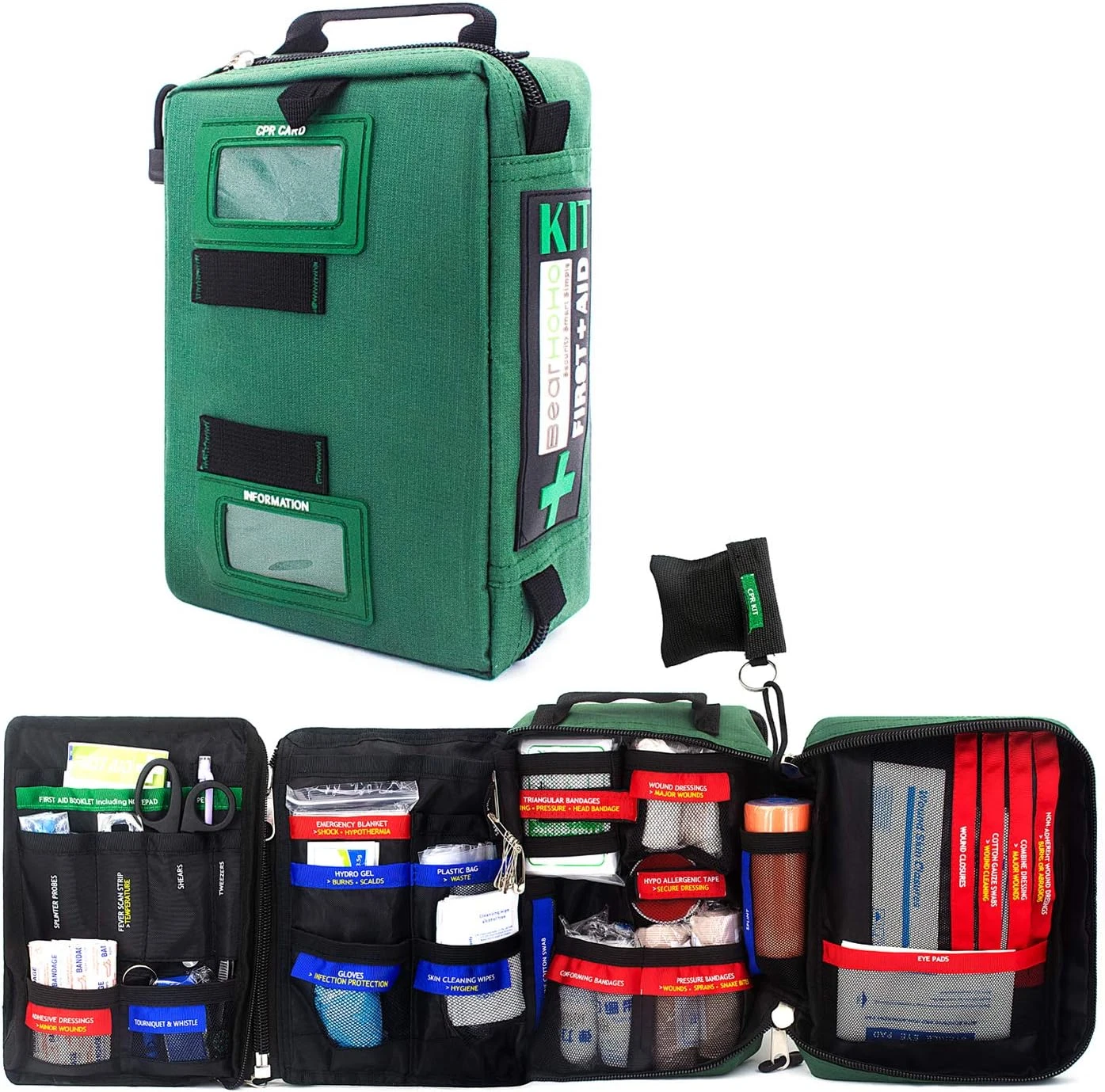
255Pcs Pro First Aid Kit Emergency Survival Trauma Kit
BearHoHo First Aid Kit is equipped with the first aid tools you need, supplies are ideal to treat pain and swelling, as well as cuts, scrapes, aches and burns.
Stay prepared when help is out of arm’s length.
🔒Ready to test your survival skills?
Join Survival Guides UK for free, complete challenges, earn badges and increase your Survival Level.
JOIN FREE →
CRAIG BURR
FOUNDER · SURVIVAL GUIDES UK
I'm Craig, the person behind Survival Guides UK. I created SGUK because I wanted somewhere people could learn real outdoor skills in a practical, straightforward way — from lighting a fire and tying knots to navigation, campcraft and everything in between.
You can read more about the story behind SGUK here as well as our approach here.