
Scouts Badges Explained: A Guide for Parents and Leaders
A QUICK NOTE FOR PARENTS
Scout badges recognise the skills, activities, challenges and experiences young people take part in during their time in Scouts.
They aren’t simply prizes for being the best. A badge can represent learning a new skill, developing an existing interest, completing a challenge or trying something completely new.
Badge requirements and the Scout programme can change, so always check the latest information from The Scouts when looking for current requirements.
What Are Scout Badges?
Scouts are generally aged 10½ to 14 years old and are an important stage in the Scouts journey.
During their time in the section, young people are encouraged to:
- Learn practical skills
- Explore the outdoors
- Take on challenges
- Develop independence
- Work as a team
- Help others
- Try new activities
- Develop their interests
- Go on adventures
Badges provide a way of recognising many of those experiences.
For parents and new leaders, however, the badge system can initially seem complicated.
There are activity badges, staged activity badges, challenge awards and other awards, all serving slightly different purposes.
So let’s break it down.
How Do Scouts Earn Badges?
Scouts earn badges by completing the relevant requirements.
Depending on the badge, this might involve:
- Learning a practical skill
- Taking part in an activity
- Completing a challenge
- Demonstrating knowledge
- Developing an interest
- Taking part in an expedition or adventure
- Helping others
- Working with other Scouts
- Demonstrating progression in a particular skill
Many requirements can be completed during normal Scout meetings, camps, expeditions and activities.
Others may be suitable for Scouts to work on outside their normal meetings.
The key is that the activity should provide a genuine learning or development opportunity.
🏕️ BADGES ARE ABOUT DEVELOPMENT
By the time young people reach Scouts, the programme is increasingly about independence, responsibility and developing practical skills.
Badges can help give Scouts a reason to challenge themselves and try something outside their comfort zone.
What Types of Scout Badges Are There?
The Scout badge programme includes several different types of awards.
The main categories you’ll come across include:
Activity Badges
These focus on a particular activity, interest or skill.
Staged Activity Badges
These allow Scouts to develop particular skills through progressively more difficult stages.
Challenge Awards
These encourage Scouts to experience a broad range of activities rather than focusing on just one subject.
Other Awards and Recognition
There are also awards connected with particular experiences, achievements and progression within Scouting.
The exact structure and requirements can change, so always refer to the current official programme when checking a specific badge.
Scout Activity Badges
Activity badges allow Scouts to explore particular interests.
This is particularly useful during the Scout years because young people are beginning to develop their own interests and identities.
A Scout might become interested in:
- Camping
- Hiking
- Navigation
- Water activities
- Climbing
- Cooking
- First aid
- Science
- Photography
- Sports
- Technology
- Environmental activities
- Outdoor skills
An activity badge can provide a structured way to develop that interest.
It can also introduce a Scout to something they’ve never tried before.
Staged Activity Badges
Staged activity badges are designed around progression.
Rather than completing a skill once and moving on, a Scout can develop their ability through increasingly advanced stages.
This is particularly useful for skills that take time to master.
For example, a young person might start with basic knowledge and later develop greater confidence and independence.
Staged badges can also span more than one Scout section, allowing the young person to continue developing the skill as they move from:
Beavers → Cubs → Scouts → Explorers
This creates continuity throughout their Scouting journey.
🌟 WHY STAGED BADGES ARE USEFUL
A young person doesn’t have to start from scratch every time they move sections.
They can build on skills they’ve already developed and gradually take on more challenging requirements.
Scout Challenge Awards
Challenge awards encourage Scouts to experience a broad range of activities.
Rather than focusing on one specific skill, challenges can bring together activities from different parts of the Scout programme.
This encourages Scouts to:
- Try new things
- Take on challenges
- Develop practical skills
- Work with others
- Explore the outdoors
- Help their community
- Develop independence
The exact requirements should always be checked against the current official Scout programme.
Do Scouts Have to Earn Every Badge?
No.
Scouts do not need to collect every available badge.
The programme is designed to offer choice and variety.
One Scout might be particularly interested in outdoor activities and earn several related badges.
Another might enjoy creative or technical activities.
Another might focus on a particular sport or hobby.
There is no need for every Scout to follow exactly the same path.
💡 FOR PARENTS
As Scouts get older, it’s particularly useful to let them develop their own interests.
If your Scout enjoys something, encourage them to explore it further.
If they aren’t interested in a particular badge, there’s no need to force it simply because someone else is working towards it.
Are Scout Badges a Competition?
They shouldn’t be.
It’s natural for Scouts to compare their uniforms with their friends.
But having more badges doesn’t necessarily mean someone is getting more out of Scouting.
A Scout who spends several months developing one difficult skill may have learned far more than someone who has collected several easier badges.
The important question is:
“What have you learned?”
rather than:
“How many badges do you have?”
Where Do Scout Badges Go?
Scout badges are sewn onto the Scout uniform in their appropriate positions.
Different badges have different locations.
If you’re unsure where a particular badge belongs, check the current uniform guidance from The Scouts or ask the Scout leader.
It’s always worth checking before sewing badges onto the uniform.
Can Scouts Work on Badges at Home?
Some requirements can be suitable for completing outside normal Scout meetings.
For example, a Scout might be able to practise a skill, work on a personal interest or complete part of a project at home.
However, don’t assume that every activity automatically counts.
The Scout leader should confirm what is required and whether the activity meets the badge criteria.
This is particularly important where a requirement needs to be:
- Demonstrated
- Assessed
- Witnessed
- Completed as part of a specific activity
Can Scouts Suggest Their Own Badge Activities?
Absolutely.
As Scouts become older and more independent, they can take a much greater role in shaping their own programme.
A Scout might say:
“I’d like to learn how to navigate properly.”
or:
“I’d like to improve my camping skills.”
A leader can then help identify suitable activities, badges or challenges that support that interest.
This is one of the major differences between simply doing badge requirements and actually using the badge programme to support personal development.
Scout Badges and Outdoor Skills
For a website focused on survival, outdoor skills and Scouting, this is an especially useful area.
Many Scout activities naturally connect with practical outdoor skills.
These might include:
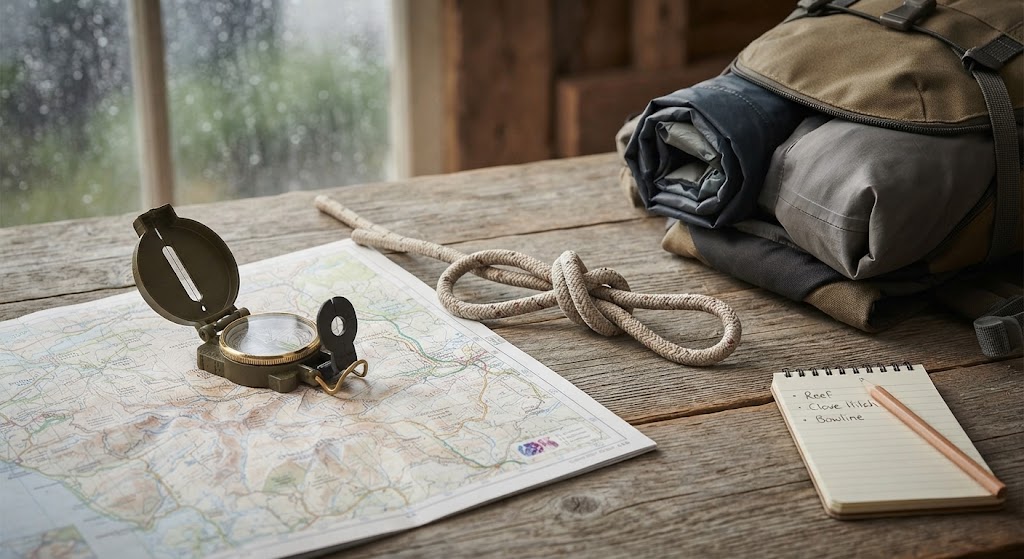
Navigation
Map reading, compass work, bearings and route planning.
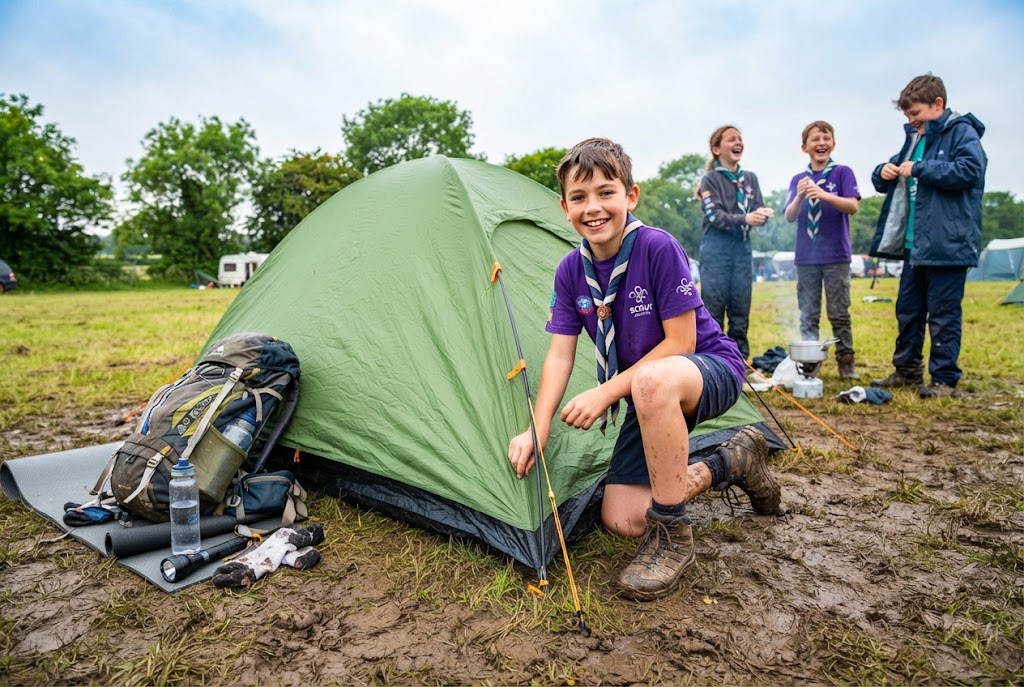
Camping
Choosing a campsite, shelter, cooking and campcraft.
Fire Skills
Fire safety, fire lays and responsible campfire management.
Knots
Learning and applying appropriate knots.
First Aid
Understanding how to respond when someone is injured or unwell.
Survival Skills
Learning how to respond to challenging outdoor situations.
These skills aren’t just useful for earning badges.
They’re useful for life.
🧭 BADGES SHOULD SUPPORT REAL SKILLS
A good badge activity shouldn’t feel like ticking a box.
It should leave the Scout thinking:
“I can actually do something now that I couldn’t do before.”
Why Are Scout Badges Useful?
Badges can provide several benefits.
Recognition
They give Scouts something tangible to show for their achievement.
Motivation
A badge can encourage a Scout to try something unfamiliar.
Progression
Staged badges demonstrate how skills can develop over time.
Independence
Some badges encourage Scouts to take responsibility for their own learning.
Memories
A badge can remind someone of a particular camp, expedition or adventure years later.
Direction
Badges can help Scouts discover interests that they may want to pursue further.
Badges and Personal Development
The Scout section is an important time for developing independence.
A young person might start Scouts needing considerable support with a particular skill.
Over time, they may be able to:
- Plan an activity
- Prepare their own equipment
- Solve problems
- Teach another Scout
- Take responsibility
- Make decisions
- Assess risks
- Work independently
A badge can be a useful marker of that development.
But the confidence behind the badge is often more important than the badge itself.
What Happens When Scouts Move to Explorers?
Scouts generally move on to Explorers around their fourteenth birthday.
This is another significant step in their Scouting journey.
Explorers offer greater opportunities for:
- Independence
- Adventure
- Leadership
- Skills development
- Expeditions
- International experiences
- Personal challenges
You can read more in our Explorers Progression guide.
What Happens to Scout Badges When They Move to Explorers?
The badges earned during the Scout years remain a record of that part of their journey.
When a young person moves to Explorers, they begin working through the Explorer programme.
Some skills can continue through staged activity badges, while other awards are specific to the new section.
The important thing is that progression continues.
How Parents Can Support Scouts
As young people become more independent, the role of parents naturally changes.
Rather than doing things for them, parents can encourage Scouts to take ownership.
You can:
- Ask what they’re learning
- Encourage them to try new things
- Help them practise skills where appropriate
- Support their interests
- Help them organise equipment
- Celebrate achievements
- Encourage them to take responsibility
- Ask leaders about opportunities
A useful question isn’t:
“Have you done your badge yet?”
Instead try:
“What are you working on at Scouts?”
That can lead to a much more meaningful conversation.
A Note About Current Badge Requirements
Scout badge requirements and programme details can change.
This means old badge lists found online may no longer be accurate.
For current requirements, use the official Scout programme from The Scouts.
This is especially important if you’re using a badge requirement to plan an activity.
Frequently Asked Questions
How old are Scouts?
Scouts are generally 10½ to 14 years old.
Do Scouts get badges?
Yes. Scouts can earn activity badges, staged activity badges, challenge awards and other awards.
Do Scouts have to earn every badge?
No. The programme provides a wide range of opportunities and Scouts can develop their own interests.
Can Scouts earn badges at home?
Some requirements may be suitable for completing at home, but check with the Scout leader first.
Where can I find current Scout badge requirements?
The official Scout programme from The Scouts is the best source for current requirements.
What happens when Scouts move to Explorers?
They move into the Explorer section and begin working through a new programme with further opportunities for development, adventure and achievement.
Do Scout badges carry over to Explorers?
Badges earned as a Scout remain part of the young person’s Scouting history. The Explorer section then provides new opportunities for progression.
How Many Badges Should a Scout Have?
There’s no correct number.
Some Scouts will have lots.
Others will have fewer.
One Scout may concentrate on a particular interest, while another may try something different every few months.
The number of badges shouldn’t be used as a measure of success.
Instead, think about:
What skills have they developed?
What challenges have they overcome?
What experiences have they had?
What are they capable of now?
Those questions tell you much more about a Scout’s progress.
🏕️ THINK BEYOND THE BADGE
A Scout who earns a camping-related badge might not simply have learned how to camp.
They may have learned:
Planning.
Responsibility.
Teamwork.
Problem-solving.
Independence.
Those are skills they can take far beyond Scouting.
Final Thoughts
Scout badges provide a structured way for young people to explore interests, develop skills and challenge themselves.
But they are only one part of the wider Scout experience.
The most valuable outcome isn’t necessarily the badge sewn onto the uniform.
It’s the skill, confidence or experience represented by that badge.
A young person who learns to navigate, cook outdoors, administer first aid, camp independently or take responsibility for a team has gained something that can stay with them for life.
🏕️ THE BIG IDEA
Scout badges aren’t about collecting the most badges.
They’re about learning useful skills, trying new things, developing independence and having adventures along the way.
🔒Ready to test your survival skills?
Join Survival Guides UK for free, complete challenges, earn badges and increase your Survival Level.
JOIN FREE →
CRAIG BURR
FOUNDER · SURVIVAL GUIDES UK
I'm Craig, the person behind Survival Guides UK. I created SGUK because I wanted somewhere people could learn real outdoor skills in a practical, straightforward way — from lighting a fire and tying knots to navigation, campcraft and everything in between.
You can read more about the story behind SGUK here as well as our approach here.