How to Recognise When Someone in Your Group Is Struggling
Pay Attention to the Person, Not Just the Pace
When you are walking with other people, it is easy to concentrate on your own pace, the route ahead or how far you have left to go. Someone who is struggling might not immediately say anything, though, and sometimes the first signs are quite subtle.
They may start falling behind, stop talking as much, repeatedly adjust their rucksack or simply look less comfortable than they did earlier. None of these things automatically mean there is a problem, but a change from how someone was behaving before is worth noticing.
You don’t need to constantly monitor everyone. Just stay aware of the people around you.
Notice Changes in Their Walking
A change in someone’s walking can be one of the easiest signs to spot.
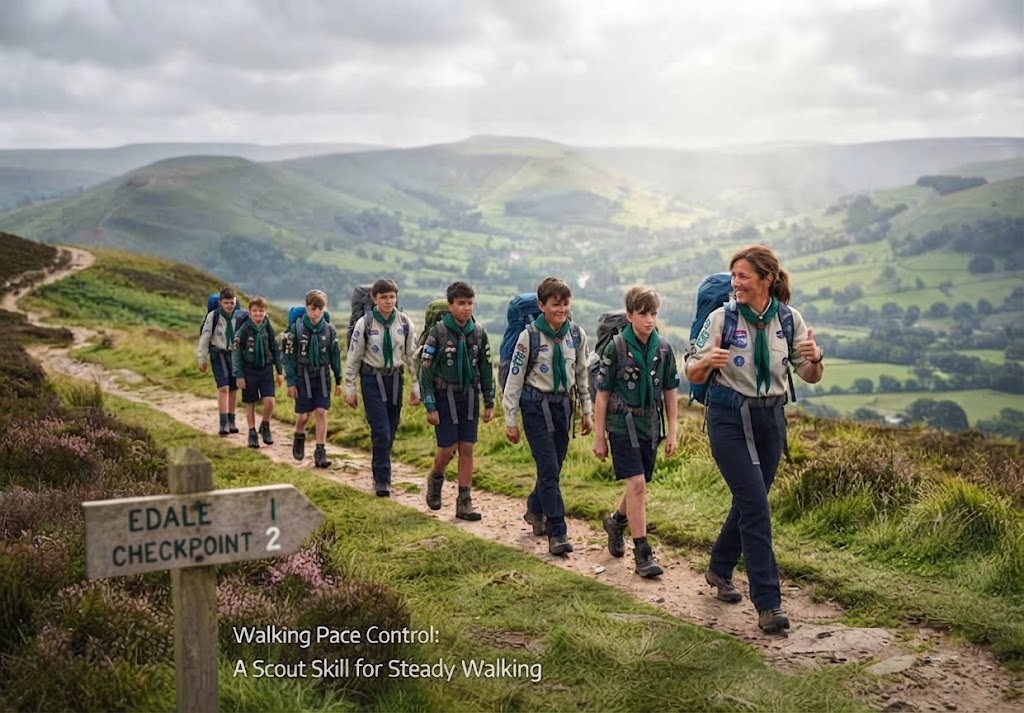
Perhaps they were keeping up easily an hour ago but are now several metres behind. They might be taking much shorter steps, stopping more often or struggling on ground that they were managing comfortably earlier.
Look for a pattern rather than one slow section. Everyone has moments where they slow down, particularly on hills or rough ground. It is when the change continues, or becomes more noticeable as the day goes on, that it is worth checking in.
Listen to What They Are Saying
Sometimes people will tell you they are struggling without saying it directly.
They might start saying things like, “I’m really tired”, “How much further is it?” or “Can we stop for a minute?” They might repeatedly ask how long is left or become unusually quiet.
Don’t automatically dismiss these comments as complaining. They may simply be tired, but they are also useful clues about how someone is coping with the walk.
A simple “How are you doing?” can give them an opportunity to tell you what is actually going on.
Notice When Someone Becomes Very Quiet
A quiet person isn’t necessarily struggling. Some people naturally talk less when they are concentrating, tired or enjoying being outside.
What matters is a change in their normal behaviour.
If someone who has been chatting throughout the day suddenly becomes very quiet, stops joining in with conversations or seems withdrawn, it is worth checking on them. They may simply need a break, or there may be something else making the day harder for them.
You won’t know unless you ask.
Watch How They Deal With Their Equipment
Repeatedly stopping to adjust a rucksack, taking boots off, changing layers or struggling with equipment can be another clue.
Their equipment might be causing discomfort, or they may simply be getting tired. A poorly adjusted rucksack can become increasingly uncomfortable over several hours, so a quick check can sometimes solve a problem before it becomes much bigger.
Don’t assume they have done something wrong. Ask what is uncomfortable and see whether there is a practical way to help.
Pay Attention on Uphill Sections
Hills naturally make people work harder, so struggling on an uphill section isn’t unusual.
The important thing is whether someone is recovering once the terrain becomes easier. If they remain unusually slow, breathless, unsteady or exhausted after the difficult section has passed, they may need a proper break rather than simply being told to keep going.
Sometimes the best thing you can do is slow the whole group down.
Look for Changes in Confidence
Someone who is struggling may become less confident as well as physically tired.
They might hesitate on uneven ground, become nervous about a descent or repeatedly ask whether they are going the right way. They may start saying that they can’t manage something they were comfortable doing earlier.
Confidence can drop when someone is cold, tired, uncomfortable or simply having a difficult day. Give them time rather than making them feel like they are holding everyone else back.
Don’t Make Someone Feel Like a Problem
This is particularly important in groups.
If someone is struggling, comments such as “Come on, we’re all waiting for you” or “You need to keep up” are unlikely to help. They can make the person reluctant to admit that they are having difficulties.
Instead, make stopping and checking on people feel normal. Everyone gets tired. Everyone has days when things don’t go to plan.
A group that can talk openly about problems is much easier to look after than one where people feel they have to hide them.
Check the Simple Things First
If someone isn’t coping well, start with the basics.
Are they thirsty? Have they eaten? Are they too hot or too cold? Are their boots uncomfortable? Is their rucksack causing a problem? Do they need to sit down for a few minutes?
Sometimes a small problem has been quietly building for several hours. Dealing with it early can prevent it turning into something much more serious.
Be More Careful When the Weather Is Difficult
Weather can change how quickly someone becomes tired or uncomfortable.
Heat, cold, rain, strong wind and poor visibility can all make a normal walk much harder. Someone who was coping perfectly well earlier may struggle once conditions deteriorate.
This is another reason to keep an eye on the group rather than assuming that everyone will continue at the same level throughout the day.
Give People Permission to Speak Up
One of the best things a group can do is make it completely acceptable to say, “I need a break.”
People sometimes keep going because they don’t want to disappoint everyone else. They may worry about slowing the group down or appearing unfit, inexperienced or incapable.
Make it clear that speaking up early is sensible. It is much easier to deal with tiredness, thirst, discomfort or a minor problem when someone mentions it early than when they have pushed themselves to the point where they can no longer cope.
Know When It Is More Than Tiredness
Normal tiredness is part of many outdoor activities, but there are situations where you need to take a problem more seriously.
If someone becomes confused, very unsteady, unusually drowsy, severely short of breath, collapses, cannot keep warm or shows other worrying symptoms, stop treating it as simply a matter of being tired. The appropriate response will depend on the circumstances, and serious concerns may require first aid or emergency assistance.
If you are unsure, don’t encourage the person to simply carry on and hope it improves.
Don’t Leave Someone Behind
A group should have a clear idea of where everyone is, particularly on unfamiliar routes or in difficult conditions.
If someone starts falling significantly behind, don’t simply assume they will catch up. Slow down, stop at a sensible point or make sure someone stays with them according to the group’s plan.
The exact approach will depend on the size and experience of the group, the route and the conditions, but nobody should quietly disappear from the back of the group without anyone noticing.
Look After Each Other
Good group skills aren’t just about navigation and keeping everyone on the right path. They are also about noticing when someone isn’t having a good day.
You don’t need to be an expert at reading people. Pay attention to changes, ask simple questions and take concerns seriously. A person who is struggling will often give you several small clues before they actually say that something is wrong.
The earlier you notice those clues, the more options you have. A short break, some food or water, an adjustment to someone’s equipment or a change to the plan might be all that is needed to get the group moving comfortably again.
🔒Ready to test your survival skills?
Join Survival Guides UK for free, complete challenges, earn badges and increase your Survival Level.
JOIN FREE →
CRAIG BURR
FOUNDER · SURVIVAL GUIDES UK
I'm Craig, the person behind Survival Guides UK. I created SGUK because I wanted somewhere people could learn real outdoor skills in a practical, straightforward way — from lighting a fire and tying knots to navigation, campcraft and everything in between.
You can read more about the story behind SGUK here as well as our approach here.