Mini Shelter Challenge
Activity Overview
Difficulty: Beginner
Time: 60 minutes
Group size: 6-10
Best for: Beavers
Skills: Shelter building, teamwork, problem solving, communication, outdoor awareness
Quick Answer
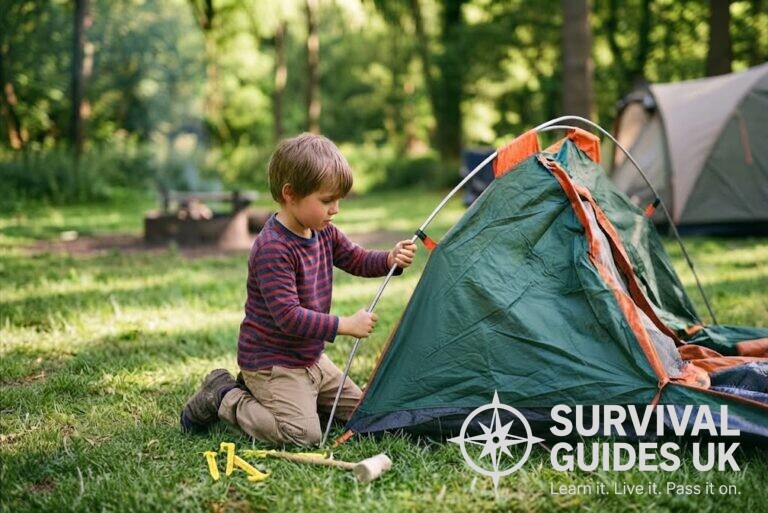
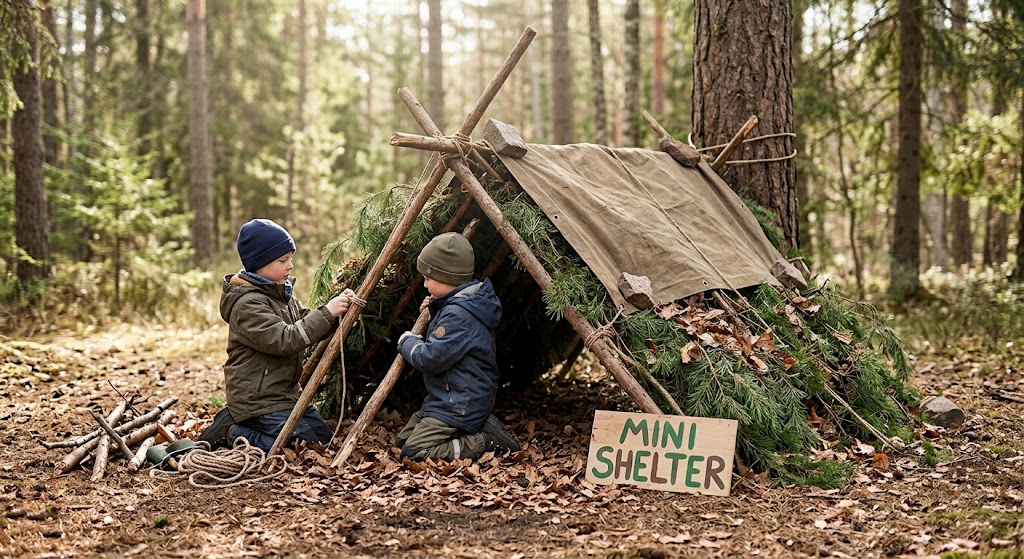
Challenge Beavers to work together to build a small shelter using simple materials such as tarpaulins, rope and natural materials.
The aim is not to build a full-size survival shelter. Instead, the activity introduces the basic idea that a good shelter should provide protection from wind and rain while giving the team somewhere safe and comfortable to shelter.
What You’ll Learn
Beavers will learn:
- Why shelter is important outdoors
- How different materials can provide protection from weather
- Basic ways of securing a shelter
- How to work together on a practical task
- How to improve a design when something does not work
- Why shelter location is important
🟢 SAFETY – LOW RISK
Choose a suitable area with firm ground and plenty of space.
Consider:
- Uneven or slippery ground
- Low branches
- Trips over rope or equipment
- Falling branches
- Sharp sticks or other natural materials
- Weather conditions
- Stray or poorly secured shelter materials
Do not allow Beavers to climb on the shelter or use unstable structures.
Check the area before the activity and maintain appropriate supervision throughout.
Equipment
For each team:
- 1 tarpaulin or large sheet
- Rope or cord
- Pegs
- A few lightweight poles or suitable sticks
- Optional: groundsheet
- Optional: blankets for testing comfort
Natural materials can be used where appropriate, but there is no need to damage living plants or trees.
Prerequisites
No previous shelter-building experience is required.
Before starting, explain how to handle the equipment safely and establish the boundaries of the activity area.
Instructions
- Divide the Beavers into teams of 2–5.
- Give each team the same basic equipment.
- Explain that they have been caught outside and need to create a small shelter to protect themselves from the weather.
- Show the group the basic materials but don’t build the shelter for them.
- Give the teams around 25 minutes to plan and build.
- Encourage them to think about:
- Which direction the wind is coming from
- How they will keep the shelter off wet ground
- How they will stop the tarp from blowing away
- Where they would sit inside
- Once the shelters are complete, visit each one with the team.
- Ask simple questions such as:
- Where would the rain go?
- Which way would the wind come from?
- What would you change?
- What makes your shelter strong?
- Give teams another 10 minutes to make improvements.
- Finish by comparing the different designs and discussing what made some shelters more effective than others.
Make It Harder
Give each team fewer materials or introduce a simple challenge such as:
“Your shelter must protect two people from wind and rain.”
You can also test the shelters by lightly sprinkling water over the outside, provided the area and equipment are suitable.
Make It Easier
Provide a basic shelter frame and ask the Beavers to work out how to attach the tarp and make the inside more protected.
Final Tip
Let the Beavers solve the problem themselves. A shelter that isn’t perfect at first gives them an opportunity to spot the problem, change their design and try again.
🔒Ready to test your survival skills?
Join Survival Guides UK for free, complete challenges, earn badges and increase your Survival Level.
JOIN FREE →
CRAIG BURR
FOUNDER · SURVIVAL GUIDES UK
I'm Craig, the person behind Survival Guides UK. I created SGUK because I wanted somewhere people could learn real outdoor skills in a practical, straightforward way — from lighting a fire and tying knots to navigation, campcraft and everything in between.
You can read more about the story behind SGUK here as well as our approach here.