The Outdoor Skills Expedition
🧭 Intermediate Challenge: The Outdoor Skills Expedition
Can you put your outdoor skills together and complete a real adventure challenge?
This challenge is designed for people who already know the basics and are ready to use them in a more realistic outdoor situation.
You’ll need to think about:
- Navigation
- Route planning
- Weather
- Equipment
- Nature
- Problem-solving
- Emergency planning
The aim isn’t to rush.
It’s to make good decisions from start to finish.
⚠️ Safety First
Complete this challenge in an area appropriate to your experience and with the level of supervision required for your age and activity.
Don’t attempt unfamiliar terrain, river crossings, fire activities or other higher-risk tasks unless they’re part of a properly supervised activity.
If conditions change or you’re unsure about something, stop and reassess your plan.
🎯 Your Mission
Plan and complete a 2–5 km outdoor route (or an equivalent route suitable for your age and ability).
Along the way, complete eight skill missions.
You can do this during a Scout activity, with a responsible adult, or as part of a properly planned outdoor walk.
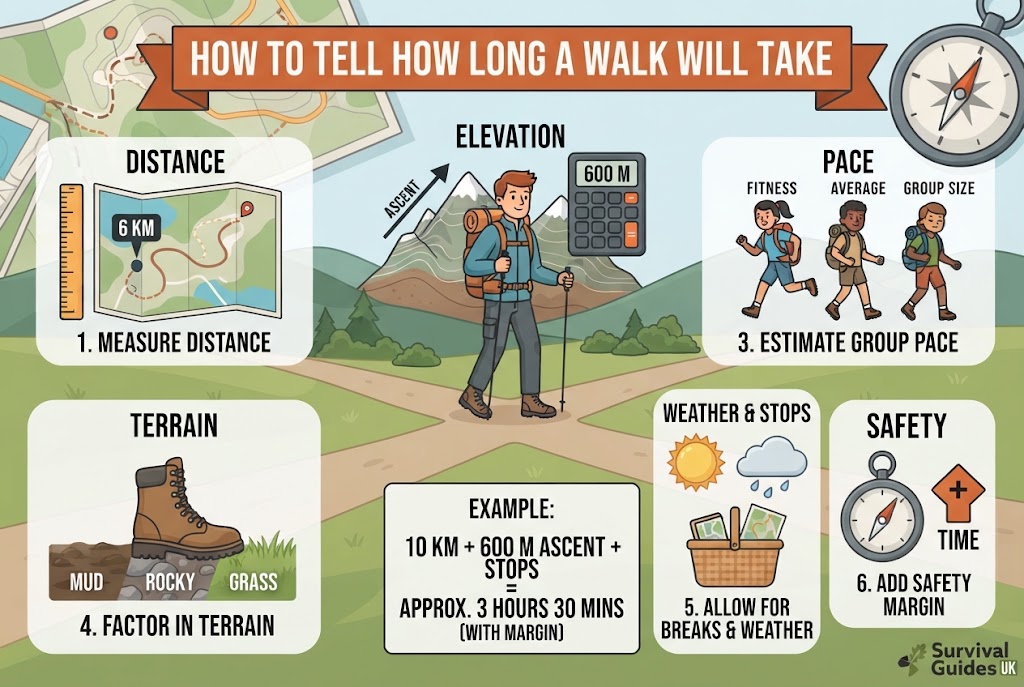
🗺️ Mission 1: Plan Your Route
Before setting off, study your map.
Record:
Starting point: __________
Destination: __________
Distance: __________
Estimated time: __________
Choose at least four checkpoints.
For example:
- Woodland edge
- Bridge
- Hill
- Stream
- Road junction
Your challenge:
Explain why you chose each checkpoint.
🗺️ SKILL BUILDER
A good checkpoint is easy to recognise and helps confirm that you’re where you expect to be.
🧭 Mission 2: Navigate Yourself
Don’t simply follow someone else.
At each checkpoint, answer:
- Where am I?
- Where have I come from?
- Where am I going next?
Use your map and the landscape together.
If something doesn’t match your map:
STOP.
Work out the problem before continuing.
🧭 NAVIGATION TIP
Small mistakes are easier to fix than big ones.
Check your position regularly instead of waiting until you’re unsure.
🌦️ Mission 3: Watch the Weather
Before leaving, check the forecast.
Write down:
Temperature: ______
Rain: ______
Wind: ______
Visibility: ______
During the route, make at least three observations.
For example:
- Wind increasing
- Cloud thickening
- Temperature dropping
- Rain starting
- Visibility changing
At the end, compare the forecast with what actually happened.
Were there any differences?
🌦️ WEATHER WATCH
Don’t just ask whether the forecast was correct.
Ask how the weather affected your route, clothing and decisions.
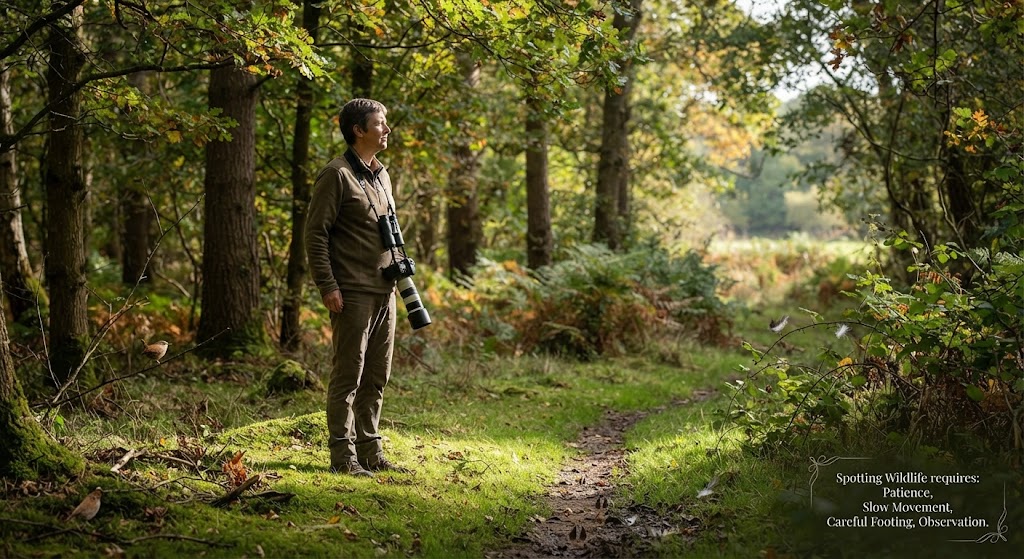
🌿 Mission 4: Nature Detective
While walking, find evidence of five different natural features or wildlife signs.
Examples include:
- Animal tracks
- Feathers
- Different trees
- Fungi
- Bird calls
- Insect activity
- Streams
- Rock formations
Record what you found.
Bonus:
Choose one item and explain how it helped you understand the environment.
🔍 DID YOU KNOW?
Good outdoor observation isn’t just about spotting things.
It’s about asking what those things tell you about the place you’re in.
🎒 Mission 5: Equipment Check
Halfway through your route, stop and look at your kit.
Choose five items.
For each one, explain:
- Why did I bring it?
- Have I used it?
- Could I still need it?
- What would happen if I didn’t have it?
This helps you understand the difference between carrying equipment and actually planning your kit.
🎒 KIT THINKER
Every item should have a reason for being in your pack.
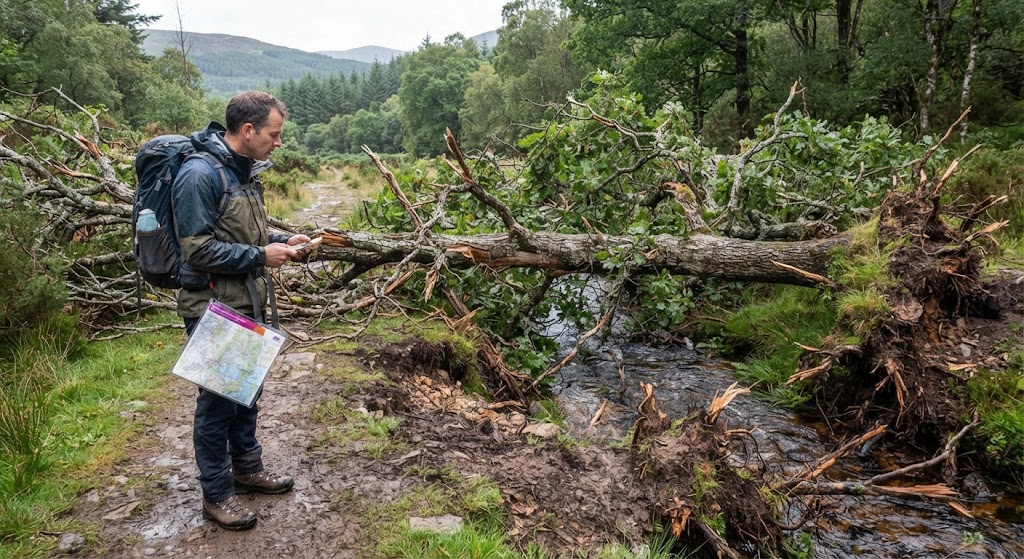
🧠 Mission 6: The Unexpected Problem
Before starting, ask a leader, parent or friend to give you one unexpected scenario.
Examples:
- The path ahead is closed.
- It starts raining heavily.
- Someone in the group is getting tired.
- You realise you’re behind schedule.
- Visibility starts to decrease.
- You’ve missed a checkpoint.
You must explain:
What has changed?
How does it affect your plan?
What options do you have?
What would you choose to do?
Why?
You don’t have to continue the route if your new plan says you shouldn’t.
🧩 PROBLEM SOLVER
A good outdoor decision isn’t always “carry on.”
Sometimes changing the plan is the smartest choice.
🆘 Mission 7: Emergency Information
At one point on your route, stop.
Imagine someone needs help.
Without looking at your phone first, write down:
Where are you?
What nearby landmark could help identify your position?
What grid reference or map information could you provide?
How would emergency services reach you?
Then check your answer using your map.
📞 EMERGENCY TIP
Being able to explain where you are is one of the most useful outdoor skills you can develop.
🔄 Mission 8: Review Your Plan
When you’ve finished, compare your plan with what actually happened.
|
Planned |
(Fill in) |
Actual |
|---|---|---|
|
Distance |
||
|
Time |
||
|
Weather |
||
|
Route |
||
|
Equipment used |
||
|
Problems encountered |
Then answer:
What went well?
What surprised you?
What would you change next time?
This final part is one of the most important parts of the challenge.
🏆 Scoring
Give yourself one point for each mission completed.
⭐⭐⭐⭐ 4–5 Points
Developing Adventurer
You’re starting to combine different outdoor skills.
⭐⭐⭐⭐⭐⭐ 6–7 Points
Confident Explorer
You’re making thoughtful decisions and using several skills together.
🏆 8 Points
Outdoor Skills Expedition Complete!
You’ve planned, navigated, observed, adapted and reviewed your adventure.
⭐ Make It Harder
Once you’ve completed the challenge, try one of these upgrades.
Level 2
Increase the distance.
Level 3
Take responsibility for navigating the whole route.
Level 4
Plan two alternative routes before leaving.
Level 5
Teach another person one of the skills you used.
⭐ LEVEL UP
The next step isn’t just doing a harder route.
It’s becoming better at planning and making decisions.
🧑🤝🧑 Team Version
This challenge works especially well with a Scout group.
Split into small teams.
Give each team the same route.
Each person takes responsibility for one area:
- Navigation
- Weather
- Equipment
- Nature observations
- Emergency planning
Swap roles halfway through.
At the end, discuss:
- Did everyone notice the same things?
- Were there different route choices?
- Did anyone spot something the others missed?
- What made the best decisions work well?
This helps everyone see how different skills combine into a successful outdoor activity.
⚠️ SurvivalGuidesUK Safety Notice
This challenge is designed for educational outdoor skills development.
Choose a route that matches your experience, fitness, weather conditions and the level of supervision appropriate to your age and activity.
Do not continue with a route simply to complete the challenge if conditions become unsuitable.
For Scout activities, always follow your leader’s instructions, the activity’s risk assessment and current official Scouts safety guidance.
🔒Ready to test your survival skills?
Join Survival Guides UK for free, complete challenges, earn badges and increase your Survival Level.
JOIN FREE →
CRAIG BURR
FOUNDER · SURVIVAL GUIDES UK
I'm Craig, the person behind Survival Guides UK. I created SGUK because I wanted somewhere people could learn real outdoor skills in a practical, straightforward way — from lighting a fire and tying knots to navigation, campcraft and everything in between.
You can read more about the story behind SGUK here as well as our approach here.