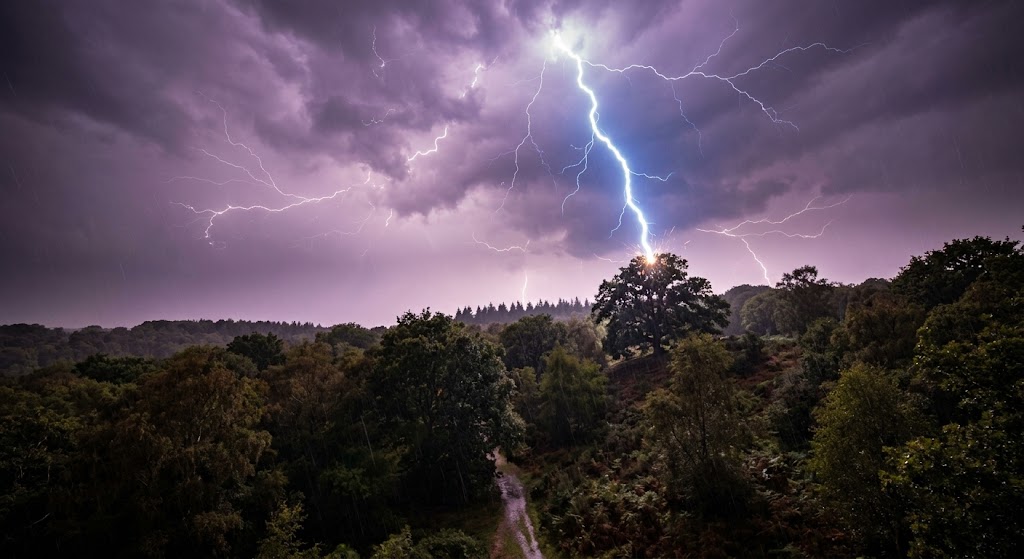
How to Stay Safe in Lightning While Camping
A thunderstorm can turn an enjoyable camping trip into a serious situation surprisingly quickly. The rain itself might not be the biggest problem. Lightning, sudden gusts of wind, falling branches and rapidly changing conditions can all make being outdoors hazardous.
The good news is that you don’t need to be able to predict exactly where lightning will strike. The important thing is recognising when a storm is approaching and being prepared to stop camping and get somewhere safer.
Check the Forecast Before You Go
The best time to deal with a thunderstorm is before you’re sitting in a tent listening to the thunder.
Check the weather forecast and any relevant warnings before setting off, particularly if you’re camping somewhere exposed such as a hillside, moorland or open field. Thunderstorms can develop quickly, and weather conditions can vary considerably over quite short distances. The Met Office recommends checking the forecast before outdoor activities and reconsidering your plans if thunderstorms are expected.
If thunderstorms are forecast for the period you’re planning to camp, changing the date may be the sensible decision. There’s no prize for sitting in a tent during a storm simply because you’ve already arrived.
Know Where You Can Shelter
Before pitching your tent, think about where you would go if a thunderstorm arrived.
A tent is not a safe shelter from lightning. Neither is a picnic shelter, open-sided shelter or the space underneath a tree. If you hear thunder while camping, you should look for a substantial enclosed building or, where appropriate, a hard-topped vehicle.
This is worth considering before you pitch. If the nearest suitable shelter is a long way away, you may need to change your plans before the weather becomes threatening.
At an organised campsite, find out where the buildings are and how you would get there. If you’re camping somewhere remote, think about the nearest realistic place of shelter before you settle down for the night.
Don’t Stay in the Tent
One of the easiest mistakes to make is assuming that being inside a tent means you’re protected from lightning.
It doesn’t.
If you can hear thunder, lightning is already close enough to be a concern. The Met Office advises getting to a safe enclosed shelter when you hear thunder, rather than waiting for the storm to get closer.
That means packing up your important belongings and moving before the storm reaches you is far better than deciding to wait it out inside the tent.
You may lose some sleep. Your tent may get wet. You may have to leave some camping equipment behind temporarily. Those are much better problems to have than taking unnecessary risks with lightning.
Get Off High Ground
If you’re camping on exposed high ground, don’t wait until the storm is directly overhead before deciding to move.
Hills, ridges and peaks are particularly poor places to be during thunderstorms. Move towards lower ground and away from exposed locations as soon as it is safe to do so.
Don’t make the mistake of heading towards an isolated tree because it appears to offer shelter from the rain. A lone tall tree can be particularly dangerous during a thunderstorm.
You’re looking for somewhere safer, not simply somewhere that keeps you dry.
Stay Away From Trees and Metal Objects
Trees can be tempting when you’re camping because they provide shade and some protection from rain, but they are not suitable lightning shelters.
Keep away from isolated tall trees and other prominent objects that could be struck. You should also avoid metal fences, railings, poles and similar objects that can conduct electricity.
If you’re in a tent while arranging your escape, try to keep away from the tent’s metal poles as far as practical. But remember that the main priority is getting to proper shelter rather than trying to make a tent safe.
Stay Away From Water
Thunderstorms are a particularly bad time to be near water.
If you’re camping beside a lake, river or other body of water, get away from it when a storm approaches. Don’t continue swimming, fishing or boating while lightning is in the area.
Wet ground and water can conduct electrical current, so move away from the water and towards safer shelter.
What If There Is Nowhere to Shelter?
Sometimes you may be genuinely caught out. Perhaps you’re walking back to camp when the storm arrives, or you’re camping somewhere remote and cannot reach a building or vehicle quickly.
There is no completely safe place outdoors during a thunderstorm. The aim is to reduce your risk as much as possible.
Get away from exposed high ground, isolated trees, water and other prominent objects. Find a lower area where possible, but avoid places that could flood or become dangerous because of rapidly rising water.
If you are still caught in an exposed location, the Met Office advises crouching low with your head tucked down and keeping as little of your body in contact with the ground as possible. Do not lie flat on the ground.
If you’re camping with other people, don’t bunch everyone together. Keeping some distance between people reduces the chance of multiple people being affected by a single strike.
Don’t Wait for the Storm to Pass Immediately
Once the worst of the rain has stopped, it can be tempting to return to the tent straight away.
Give the storm time to move away. Lightning can still be a danger after the rain has eased and while thunder can still be heard. The Met Office specifically advises caution while the storm is still active, rather than assuming that the danger has disappeared simply because the weather looks better.
Use the time to check the weather and make sure conditions are genuinely improving before returning to the campsite.
Remember That a Thunderstorm Brings Other Hazards
Lightning isn’t the only thing to think about.
Thunderstorms can bring sudden heavy rain, hail, strong gusts of wind and rapidly changing visibility. A campsite that was perfectly comfortable half an hour earlier can become very different during a storm.
Trees and branches may become dangerous in strong winds, tents can be damaged and paths can become slippery or flooded. Don’t focus so much on the lightning that you ignore everything else happening around you.
If conditions are deteriorating, moving to a safer location early is usually much easier than trying to do it once the storm is at its worst.
Make a Thunderstorm Plan Before Camping
You don’t need a complicated emergency plan. Before you pitch your tent, simply ask yourself a few questions.
Where is the nearest substantial building? Is there a suitable vehicle nearby? What would you do if a storm arrived during the night? Is the campsite exposed? Are there trees, water or steep ground nearby?
These questions take very little time, but they can make a big difference when the weather changes.
A good camping habit is to think about what you would do before you need to do it.
The Most Important Rule
If you remember only one thing, remember this:
A tent is not a safe place during a thunderstorm.
If you hear thunder while camping, don’t sit inside hoping the storm will pass. Get to a substantial enclosed building or suitable vehicle if one is available. If there is no safe shelter nearby, move away from exposed high ground, water, isolated trees and other prominent objects, and reduce your exposure as much as possible.
Good camping isn’t about refusing to change your plans when the weather turns bad. It’s about recognising when conditions have changed and making the sensible decision before a minor inconvenience becomes a serious problem.
🔒Ready to test your survival skills?
Join Survival Guides UK for free, complete challenges, earn badges and increase your Survival Level.
JOIN FREE →
CRAIG BURR
FOUNDER · SURVIVAL GUIDES UK
I'm Craig, the person behind Survival Guides UK. I created SGUK because I wanted somewhere people could learn real outdoor skills in a practical, straightforward way — from lighting a fire and tying knots to navigation, campcraft and everything in between.
You can read more about the story behind SGUK here as well as our approach here.