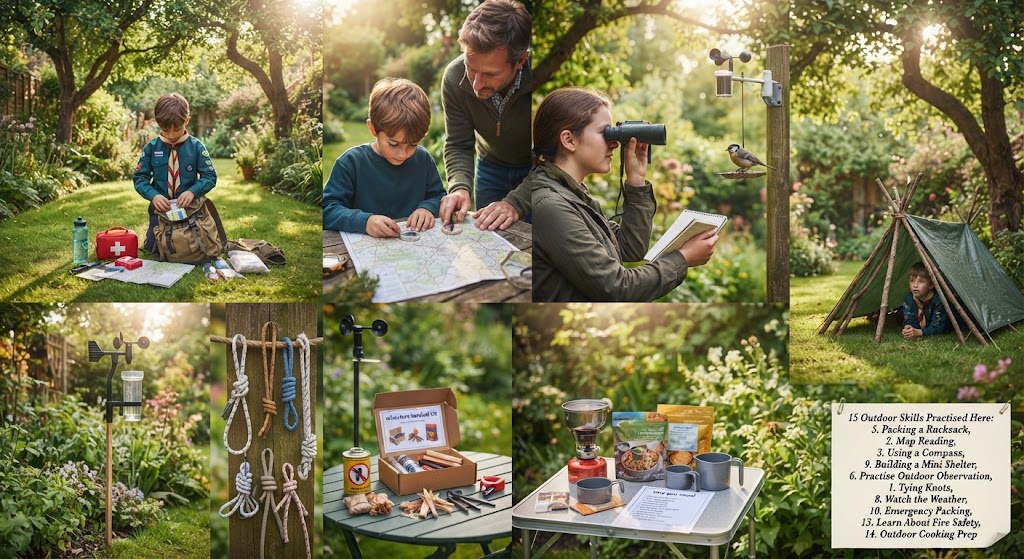
How to Make Outdoor Skills Fun
⚠️ SAFETY FIRST
Outdoor skills should always be taught in a way that matches the age, ability and experience of the group. Activities involving fire, tools, water, heights or other hazards need appropriate supervision and safety controls.
Making an activity fun should never mean making it unnecessarily risky.
Outdoor skills are some of the most rewarding things you can teach children.
Learning to read a map, light a fire safely, build a shelter or tie a knot gives young people skills they can actually use.
But there’s a problem.
If you simply stand in front of a group and explain how something works, it can start to feel like a lesson.
And outdoor skills are much more enjoyable when children are doing rather than simply listening.
The secret is to turn the skill into a challenge, a game or a problem that needs solving.
Don’t Just Teach the Skill — Give It a Purpose
Instead of saying:
“Today we’re learning how to tie a bowline.”
Give the group a problem.
“You’ve got a piece of rope. You need to create a fixed loop. Can you work out how?”
Now there’s a reason to learn the knot.
The same principle works with almost every outdoor skill.
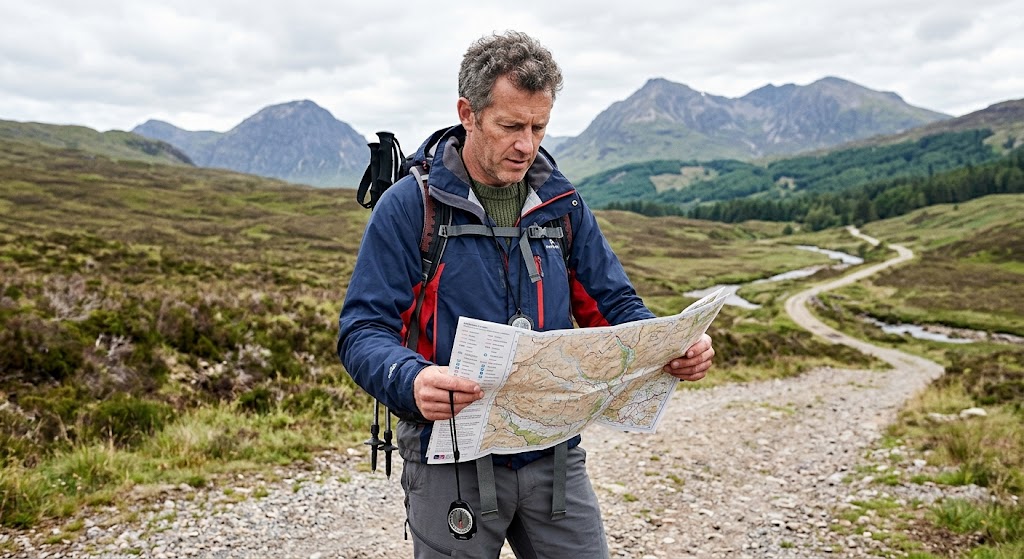
Instead of teaching map reading as symbols and grid references, give them a destination.
Instead of explaining shelter building, challenge them to make somewhere that would keep them dry.
Instead of talking about survival priorities, give them a scenario and ask what they would do first.
The skill becomes the solution to a problem.
Turn Learning Into a Challenge
Children naturally enjoy challenges.
That doesn’t mean everything has to become a competition.
You could challenge a group to:
Find a particular location using a map.
Build the most stable shelter.
Tie three knots correctly.
Identify five natural materials.
Navigate between several checkpoints.
Prepare a safe campsite.
The important part is that the challenge should reward good decisions, not simply speed.
Don’t Make Everything a Race
Speed can be fun, but it isn’t always the best measure of an outdoor skill.
If you tell Scouts to tie a knot as quickly as possible, some may rush and produce a poorly tied knot.
If you turn navigation into a race, they may stop checking their position and simply follow whoever is in front.
Instead, introduce challenges based on:
Accuracy.
Teamwork.
Problem-solving.
Creativity.
Good decision-making.
A Scout who takes an extra minute to produce the correct answer has probably learned more than someone who finishes first by guessing.
Use Stories
A story can transform a simple activity.
Instead of:
“We’re going to practise navigation.”
Try:
“Your group has become separated from the main team. You know the next meeting point is somewhere on the map. Can you find it?”
Suddenly the map has a purpose.
You can create scenarios around almost anything.
A lost expedition.
A storm approaching.
A campsite that needs organising.
A rescue team searching for someone.
A fictional survival challenge.
The story doesn’t need to be complicated.
It simply gives the activity a reason.
Let Children Make Decisions
One of the easiest ways to make outdoor learning more interesting is to stop giving children every answer.
Give them choices.
“Which route would you take?”
“Where would you pitch the tent?”
“Which knot would work best?”
“What should you do first?”
“What equipment would you take?”
Then ask:
“Why?”
There may be several reasonable answers.
That’s fine.
The important thing is getting children to think about their decisions.
Use Competition Carefully
A little competition can add energy to an activity.
Teams can compete to complete a challenge or earn points.
But try to avoid making the same children win every time.
Rotate roles and vary the challenges.
One team might be fastest at navigation.
Another might be better at knots.
Another might be excellent at observation.
You can also award points for things such as:
Best teamwork
Best communication
Most accurate navigation
Best safety decision
Most creative solution
This gives different children opportunities to succeed.
Make Mistakes Part of the Game
Outdoor skills involve mistakes.
A child will tie a knot incorrectly.
Someone will read the map backwards.
A shelter will collapse.
A fire won’t light.
That’s actually useful.
Don’t immediately step in and fix everything.
Ask:
“What went wrong?”
“What could you change?”
“Why do you think that happened?”
The failure becomes part of the learning.
In many cases, children remember the lesson from a failed attempt much longer than they remember a perfect demonstration.
Create Mystery
Children love discovering things.
Instead of telling them exactly what they’re looking for, give them clues.
For example:
“Find something that shows which direction the water is flowing.”
Or:
“Find the feature on the map that matches what you can see in front of you.”
Or:
“There are three things wrong with this campsite. Can you find them?”
This turns observation into detective work.
Turn Navigation Into an Adventure
Navigation can become dry if it’s taught entirely from a worksheet.
Take it outside.
Give the group a map and a series of clues.
Each checkpoint can reveal the next clue.
The final checkpoint could contain a simple challenge.
This creates a mini expedition rather than a map-reading lesson.
You can introduce bearings, grid references and route planning gradually as the group progresses.
Turn Knots Into Problems
Instead of sitting around tying knots for half an hour, give the group practical problems.
“You need to attach this rope to a post.”
“You need a fixed loop.”
“You need to join these two ropes.”
“You need to stop this rope from slipping.”
Ask them which knot might work.
This teaches children something much more useful than simply memorising knot names.
Make Fire Skills About Responsibility
Fire can be exciting, but it should never be treated as a toy.
That doesn’t mean fire safety has to make the activity boring.
Give Scouts responsibility within a controlled activity.
They might need to identify a suitable fire area, choose appropriate fuel, prepare a safe fire lay and explain how the fire will eventually be extinguished.
The challenge becomes:
“Can your team manage this fire safely from beginning to end?”
That teaches much more than simply seeing who can light one fastest.
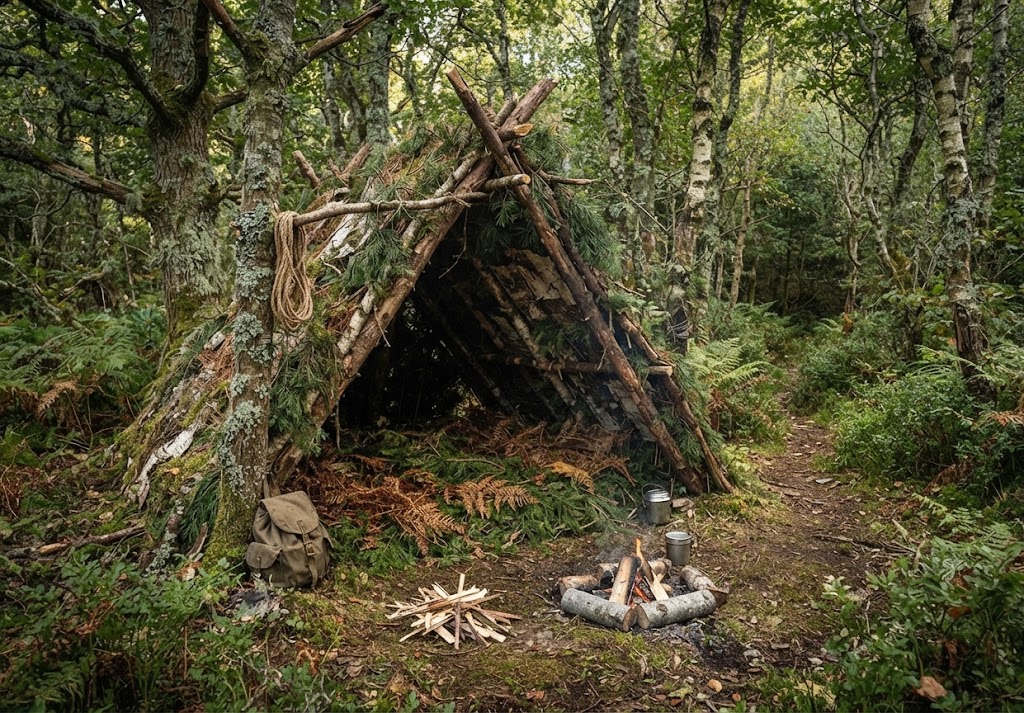
Turn Shelter Building Into Engineering
Shelter building is perfect for challenges.
Give each team a location and a set of limitations.
For example:
“Build a shelter that could keep one person reasonably protected from rain.”
Or:
“Your shelter needs to be stable enough to withstand someone gently testing it.”
The emphasis should be on design and problem-solving, rather than creating an unnecessarily elaborate structure.
Afterwards, ask each team to explain why they built it the way they did.
Use the Environment
The outdoors already provides an enormous amount of material for activities.
Trees become navigation landmarks.
Leaves become identification challenges.
Natural features become map-reading checkpoints.
Shadows become part of observation games.
Different ground surfaces become clues.
You don’t always need to bring more equipment.
Sometimes you just need to encourage children to look more carefully at what’s already around them.
Build in Movement
Children aren’t always at their best sitting still.
If you’re teaching something that could be done sitting down, ask whether it could be moved outside.
A navigation lesson can become a walk.
A knot lesson can become a relay.
A nature lesson can become a treasure hunt.
A survival lesson can become a scenario.
Movement keeps energy levels up and makes the learning feel less like classroom work.
Keep Explanations Short
One of the biggest mistakes leaders can make is explaining an activity for too long.
Children don’t need a ten-minute speech before every game.
Explain the objective.
Explain the important safety rules.
Show an example.
Then let them have a go.
You can teach the finer details while they’re actually doing the activity.
🧑🏫 LEADER TIP
Explain less. Do more.
If children are asking questions because they’re trying to solve the problem, you’ve probably created a better learning environment than if everyone is sitting silently listening to instructions.
Give Children Leadership Opportunities
Once children understand a skill, let them teach it.
Ask an older Scout to demonstrate a knot.
Let a patrol plan the route.
Ask a young person to explain a fire-safety rule.
Give a group responsibility for designing a game.
Teaching others reinforces their own understanding and builds confidence.
It also takes some of the responsibility for the session away from the leader.
Use Progressive Challenges
A good activity can become harder as the group improves.
Start with something simple.
Then introduce another challenge.
For example, with navigation:
Find a checkpoint.
Then:
Find three checkpoints.
Then:
Choose your own route between them.
Then:
Complete the route with limited instructions.
Then:
Plan a route for another team.
The children can see their own progress.
Let Them Create the Activity
One of the most effective ways to make outdoor skills fun is to let young people design their own challenges.
Ask:
“You’ve got ten minutes to create a navigation game for another team.”
Or:
“Can you invent a knot challenge?”
Or:
“Design a survival scenario and decide what equipment the group should have.”
Now they’re not just learning outdoor skills.
They’re using them creatively.
Use Realistic Scenarios
Scenarios make outdoor skills feel relevant.
You could give the group situations such as:
You’ve become separated from your group.
Your tent has become damaged.
The weather has suddenly changed.
You’ve lost your planned route.
Someone has become cold.
You need to find a safe campsite.
Ask the group what they would do.
There’s no need to make the scenario frightening.
The objective is simply to practise making sensible decisions.
Finish With a Debrief
Don’t rush straight from the end of the game to the next activity.
Take a few minutes to ask:
“What worked?”
“What didn’t?”
“What would you do differently?”
“What did you learn?”
This is where the fun activity becomes meaningful learning.
Children often come up with observations that leaders hadn’t considered.
Make Outdoor Skills Something to Look Forward To
The best outdoor skills sessions don’t feel like compulsory lessons.
They feel like adventures.
Children should leave thinking:
“What are we doing next week?”
rather than:
“I’m glad that’s over.”
You don’t need expensive equipment or elaborate setups to achieve that.
A good challenge, a safe environment and a leader willing to let children experiment can be enough.
A Simple Formula for Fun Outdoor Skills
When planning your next session, try this:
Skill → Challenge → Choice → Action → Reflection
Teach just enough of the skill for children to get started.
Give them a problem to solve.
Let them make decisions.
Let them have a go.
Then talk about what happened.
It’s a simple approach, but it works across almost every outdoor skill.
Final Thoughts
Outdoor skills don’t have to be taught as formal lessons.
The best learning often happens when children are busy trying to achieve something.
They learn knots because they need one.
They learn navigation because they need to find somewhere.
They learn shelter building because they need somewhere to shelter.
They learn fire safety because they’re responsible for managing a fire safely.
And they learn survival skills because they’re faced with a problem that needs solving.
🌲 THE BIG IDEA
Don’t ask, “How can I teach this skill?”
Ask:
“What fun problem could make them want to learn this skill?”
Once children are interested in solving the problem, the learning becomes part of the adventure.
🔒Ready to test your survival skills?
Join Survival Guides UK for free, complete challenges, earn badges and increase your Survival Level.
JOIN FREE →
CRAIG BURR
FOUNDER · SURVIVAL GUIDES UK
I'm Craig, the person behind Survival Guides UK. I created SGUK because I wanted somewhere people could learn real outdoor skills in a practical, straightforward way — from lighting a fire and tying knots to navigation, campcraft and everything in between.
You can read more about the story behind SGUK here as well as our approach here.