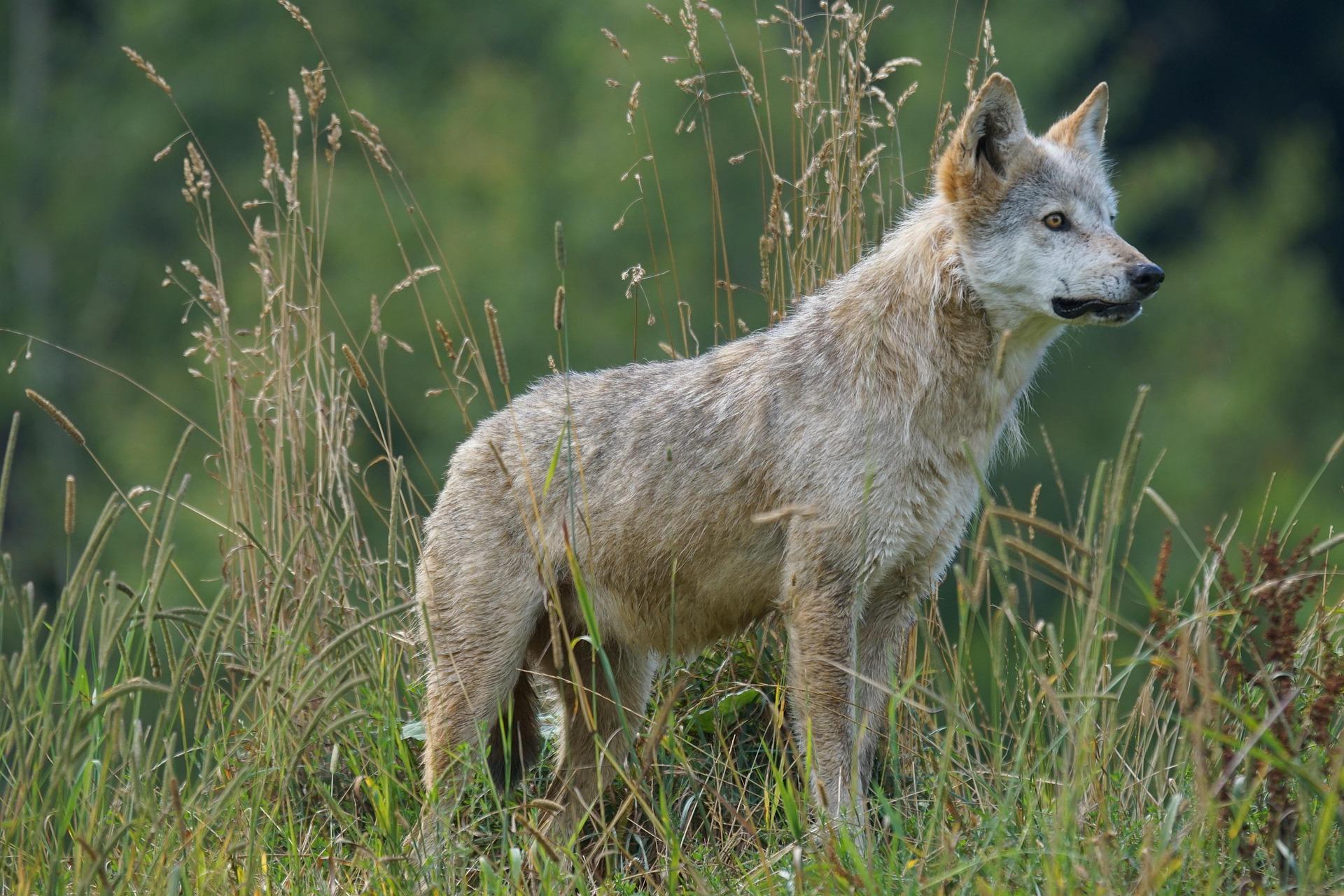
Cubs Outdoor Skills
🐺 Cub Scouts: Become a Confident Adventurer
Welcome, Cub!
By now you’ve probably discovered that the outdoors is full of adventures.
But being an adventurer isn’t just about going outside.
It’s about learning how to:
🧭 Find your way
🏕️ Look after yourself outdoors
🎒 Prepare your equipment
🔥 Use outdoor skills safely
🌿 Understand nature
🌦️ Read the weather
🩹 Help when something goes wrong
🤝 Work as a team
🧠 Solve problems
The more you practise, the more confident you become.
And that’s what being a Cub is all about.
💡 Cub Tip
Don’t just ask:
“Can I do it?”
Ask:
“How can I learn to do it?”
Every skill gets easier with practice.
🧭 Start Thinking Like an Explorer
A good explorer doesn’t simply follow someone else.
They start thinking for themselves.
When you’re outdoors, ask:
Where am I?
Where am I going?
What can I see?
What could change?
What could go wrong?
What should I do if it does?
These questions help you become a better outdoor adventurer.
SKILL BUILDER
You’re practising situational awareness.
That means noticing what is happening around you and thinking about what it means.
🗺️ Plan Before You Go
One of the biggest differences between a beginner and a confident adventurer is planning.
Before an activity, think about:
📍 Where are you going?
📏 How far is it?
⏱️ How long might it take?
⛰️ What is the terrain like?
🌦️ What will the weather be like?
🎒 What equipment will you need?
🆘 What happens if something goes wrong?
You don’t need to plan everything yourself.
Your leader will make the appropriate arrangements for Scout activities.
But learning to think about these questions is an important skill.
🗺️ PLANNING CHALLENGE
Take a familiar walk you’ve done before.
Try to plan it on a map.
Mark:
Start → Checkpoints → Destination
Then estimate how long you think it will take.
Compare your estimate with the actual time afterwards.
How close were you?
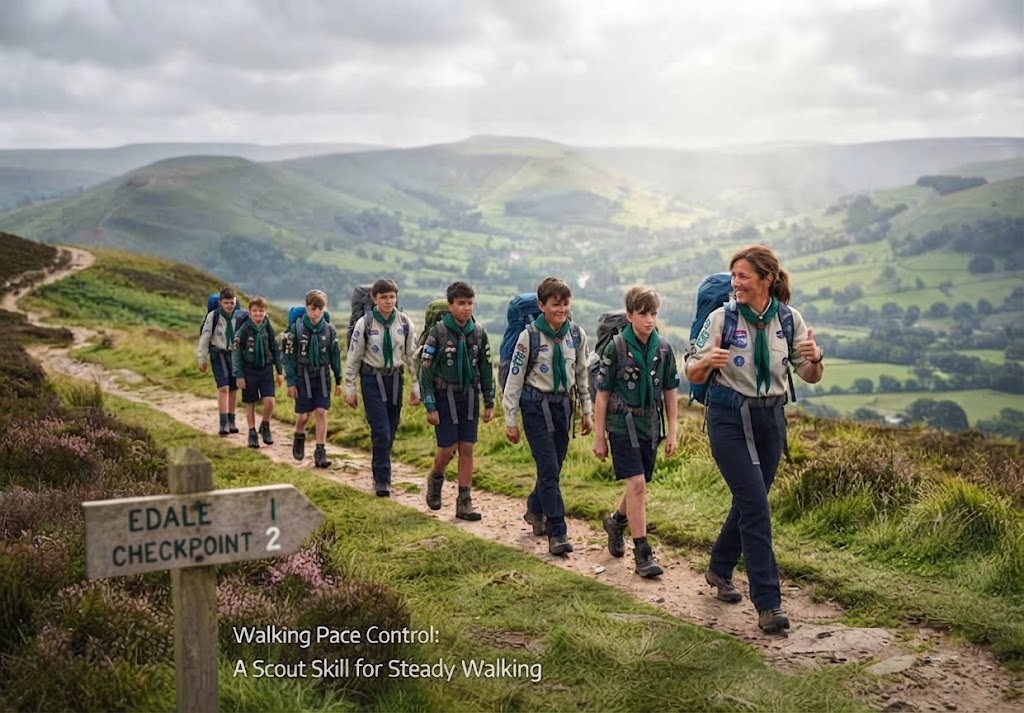
🧭 Learn to Navigate
Navigation becomes more interesting when you stop simply following someone.
Try to work out where you are yourself.
Look for:
🌳 Woodland
⛰️ Hills
💧 Streams
🛣️ Roads
🏠 Buildings
🌉 Bridges
These features can help you match the real world to your map.
🧭 NAVIGATION TIP
Don’t wait until you’re lost before checking your map.
Check regularly.
Knowing where you are makes it much easier to stay on route.
🗺️ Use Checkpoints
Break your route into smaller sections.
For example:
START
↓
🌲 Woodland
↓
🌉 Bridge
↓
⛰️ Hill
↓
🛣️ Road
↓
🏁 DESTINATION
Each feature gives you a point where you can check:
“Am I where I expected to be?”
This makes navigation much easier than trying to think about the entire route at once.
🧠 The 3-Question Navigation Check
Whenever you stop, ask yourself:
1️⃣ Where am I?
2️⃣ Where have I just come from?
3️⃣ Where am I going next?
If you can answer all three, you’re thinking like a navigator.
⭐ CUB SKILL
Try answering those three questions without immediately asking someone else.
You might surprise yourself!
📏 Learn to Estimate Distance
Distance isn’t always easy to judge.
Try this experiment.
Walk 100 metres somewhere safe.
Before walking, guess how many steps you’ll take.
Then count them.
Were you close?
Now try it again.
You may discover that your step length changes depending on:
- Walking speed
- Terrain
- Uphill or downhill
- Whether you’re carrying a backpack
This is the beginning of understanding pacing and distance estimation.
⛰️ Look at the Terrain
A route isn’t just a line on a map.
Look at what’s between the start and finish.
Ask:
Is there a steep hill?
Is the ground likely to be muddy?
Are there streams?
Is there exposed ground?
Is there difficult terrain?
A short route isn’t necessarily an easy route.
🧠 THINK LIKE AN EXPLORER
Imagine you’re looking at a route on a map.
Before walking it, ask:
“What will this route actually feel like on the ground?”
🌦️ Become a Weather Expert
Weather can change an outdoor adventure dramatically.
Learn to look beyond:
“Is it raining?”
Think about:
🌡️ Temperature
💨 Wind
🌧️ Rain
🌫️ Visibility
☀️ Sun
⛈️ Storms
Weather affects:
- Clothing
- Route choice
- Visibility
- Safety
- How much water you need
- How long your activity may take
🌦️ WEATHER CHALLENGE
Check the forecast before an outdoor activity.
Write down what you expect.
When you return, compare the forecast with what actually happened.
Was it accurate?
🎒 Master Your Equipment
Experienced adventurers don’t just own equipment.
They understand why they’re carrying it.
Take your backpack.
Ask yourself:
What is this?
Why am I carrying it?
When might I need it?
Do I know how to use it?
For example:
🔦 Torch — what if it gets dark?
🧥 Waterproof — what if it rains?
💧 Water — how long will I be outside?
🧭 Compass — can I actually use it?
🎒 PACKING CHALLENGE
Empty your outdoor bag.
Pick three items.
Explain to someone:
What is it for?
When might you need it?
What would happen if you didn’t have it?
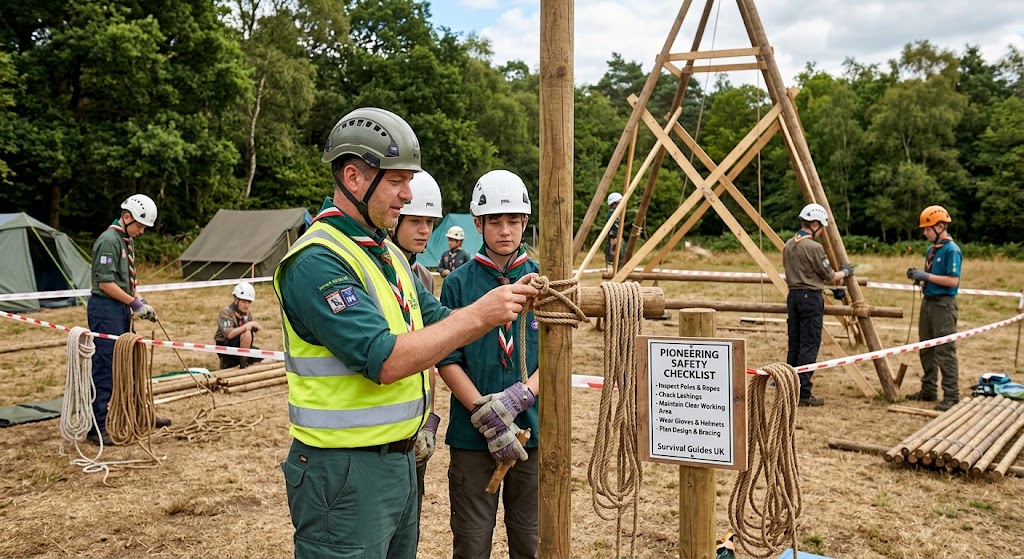
Develop Your Rope Skills
Rope skills are useful in camping, pioneering and many other outdoor activities.
Start by learning a few basic knots.
But don’t just memorise them.
Learn:
What is this knot called?
What is it used for?
How do I tie it?
How do I check it is secure?
Understanding why you’re tying a knot is more useful than simply being able to copy one.
SKILL BUILDER
Challenge yourself:
Teach someone else how to tie a knot.
If you can explain it clearly enough for someone else to understand, you’ve probably learned it properly.
🔥 Learn to Respect Fire
Fire is a useful outdoor skill, but it requires responsibility.
You may learn how to:
🔥 Prepare a safe fire area
🔥 Understand different fuels
🔥 Build a suitable fire under supervision
🔥 Cook outdoors
🔥 Extinguish a fire safely
The important part isn’t simply learning how to make a fire.
It’s learning when a fire should and shouldn’t be used.
🚨 FIRE RULE
Never start or use a fire independently unless you’re in an appropriately supervised activity and have been told it is safe to do so.
A good fire-user knows when not to light one.
💧 Understand Water
Water is one of the most important things you need outdoors.
Learn to think about:
How much water do I need?
Where could I safely refill?
Is the water safe to drink?
What would I do if I ran out?
Never assume that a stream, lake or river contains safe drinking water.
If water from the environment is going to be used for drinking, it needs appropriate treatment.
💧 DID YOU KNOW?
Clear-looking water isn’t necessarily safe to drink.
Some harmful organisms can’t be seen, tasted or smelled.
Never drink untreated natural water simply because it looks clean.
🩹 Build Your First-Aid Skills
As you get older, you can start developing a wider range of first-aid knowledge.
You should know:
🩹 Where the first-aid kit is
📢 Who to tell
🆘 How to get help
🩸 How serious bleeding should be dealt with if you’ve been trained
🔥 How burns are treated
🦴 What to do with suspected injuries
You should also understand an important rule:
Only perform first aid that you have been properly taught to do.
🩹 FIRST-AID CHALLENGE
Ask your leader to give you a fictional emergency.
Explain:
What would you do first?
Who would you tell?
What information would you give them?
What would you do while waiting for help?
🆘 Know How to Call for Help
Being able to call for help is an important outdoor skill.
You should be able to explain:
📍 Where you are
👥 How many people need help
🩹 What has happened
⚠️ Any hazards
Your navigation skills can help enormously here.
A map reference or identifiable location can help rescuers find you.
🆘 REMEMBER
If you need emergency help in the UK:
999 or 112
Listen carefully to the operator and answer their questions.
Don’t hang up until you’re told to.
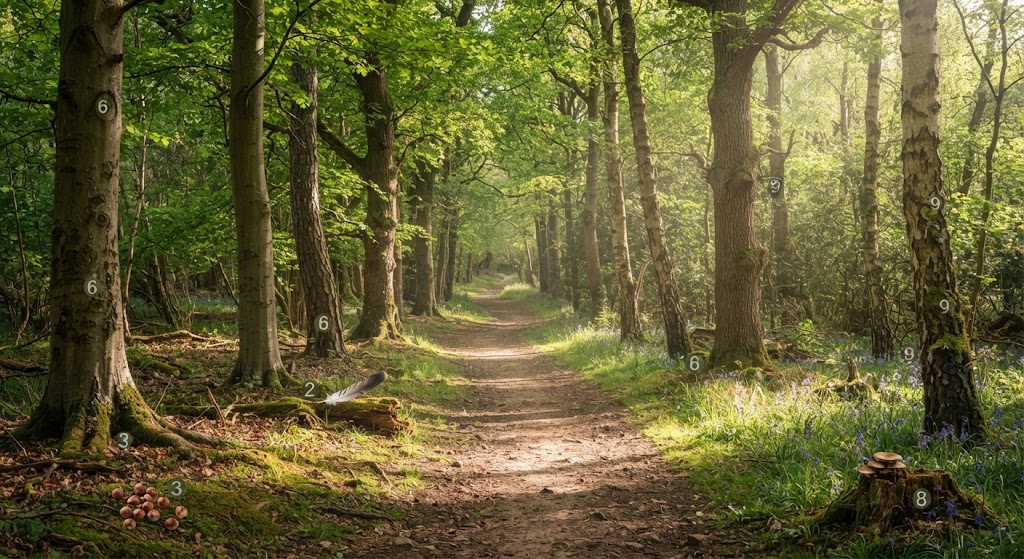
🌿 Become a Wildlife Detective
By now, you can start looking beyond simply spotting animals.
Try to understand their behaviour.
Look for:
- Tracks
- Feathers
- Food remains
- Burrows
- Gnaw marks
- Droppings
Listen for:
🐦 Bird calls
🦉 Nocturnal sounds
🍃 Movement in vegetation
Try to work out:
What animal could have made this?
🔍 DETECTIVE CHALLENGE
Find three different animal signs.
Don’t disturb them.
Photograph or sketch them.
Research what animal might have made each one.
Can you explain how you know?
🌍 Become a Responsible Explorer
As you become more experienced outdoors, your responsibilities increase too.
Think about your impact.
Could I damage this?
Could I disturb wildlife?
Could I leave rubbish?
Could I cause erosion?
Could I start a fire that spreads?
Being a good adventurer means leaving the environment in good condition.
🌍 LEAVE IT BETTER
Before leaving an area, look around.
Is there anything you’ve left behind?
Is there anything you can safely do to improve the area?
Pack it in → Pack it out.
🧠 What Would You Do?
Here’s where Cub skills become really useful.
Imagine:
You’re halfway through a walk when heavy rain starts.
One person is getting tired.
You realise you’re behind schedule.
What should you think about?
🌦️ Weather
Is the route still suitable?
🥾 Group
Is everyone coping?
⏱️ Time
Will you finish safely?
🗺️ Route
Is there a shorter alternative?
🆘 Safety
Do you need help?
There isn’t necessarily one answer.
The important thing is learning to stop, assess the situation and make a sensible decision.
🧠 PROBLEM-SOLVING TIP
Don’t feel that you have to continue with the original plan.
Changing the plan can be the smartest decision.
🏆 Your Cub Skills Challenge
Complete these eight missions.
🧭 Mission 1 — Navigator
Plan and follow a short route using a map.
📏 Mission 2 — Distance
Estimate the distance of part of your route and compare it with the actual distance.
🌦️ Mission 3 — Weather Watcher
Compare a forecast with the weather you actually experience.
🎒 Mission 4 — Kit Expert
Explain why five pieces of outdoor equipment are useful.
➰ Mission 5 — Knot Master
Learn and demonstrate a useful knot.
🌿 Mission 6 — Wildlife Detective
Identify three signs of wildlife.
🩹 Mission 7 — First-Aid Thinker
Explain what you would do in an emergency scenario.
🧠 Mission 8 — Problem Solver
Work out what you would do if your planned route became unsuitable.
⭐ The Ultimate Cub Challenge
Plan Your Own Adventure
With your leader’s help, choose a suitable outdoor activity.
Now create a simple adventure plan.
Include:
📍 Where are you going?
🗺️ What route will you take?
📏 How far is it?
⏱️ How long might it take?
🌦️ What could the weather do?
🎒 What equipment will you need?
🧭 How will you navigate?
🆘 What could go wrong?
🔄 What’s your Plan B?
🌍 How will you look after the environment?
Now explain your plan to someone else.
Can they understand it?
Can they spot anything you’ve forgotten?
🏆 CUB CHALLENGE
A great adventurer isn’t someone who never has problems.
It’s someone who can spot problems early and make good decisions.
🐺 What Have You Learned?
You’re becoming a much more capable outdoor adventurer.
You can:
Most importantly:
You’re learning to think for yourself.
That’s one of the most important skills you can develop.
🐺 A Note for Parents & Leaders
The content in this section is written directly for Cubs and is intended to encourage practical learning, problem-solving and outdoor confidence.
Activities involving fire, knives/tools, water, heights, roads, remote areas, cooking or other hazards require appropriate adult supervision and risk assessment.
Cubs should follow the instructions of their leaders and should not attempt activities independently that require supervision.
SurvivalGuidesUK is an independent educational resource and isn’t an official Scouts website.
🔒Ready to test your survival skills?
Join Survival Guides UK for free, complete challenges, earn badges and increase your Survival Level.
JOIN FREE →
CRAIG BURR
FOUNDER · SURVIVAL GUIDES UK
I'm Craig, the person behind Survival Guides UK. I created SGUK because I wanted somewhere people could learn real outdoor skills in a practical, straightforward way — from lighting a fire and tying knots to navigation, campcraft and everything in between.
You can read more about the story behind SGUK here as well as our approach here.