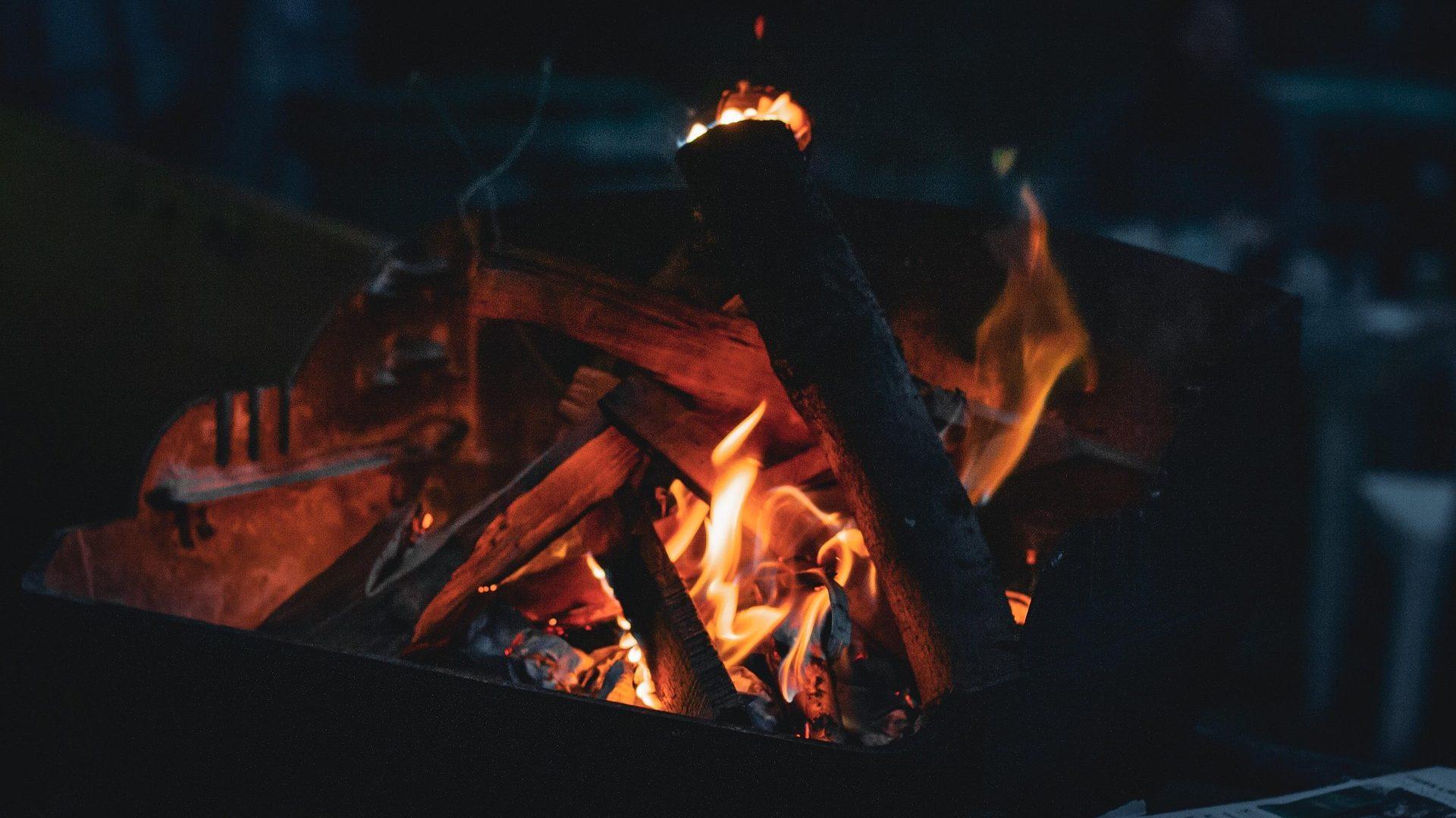
Teepee Fire Lay: A Simple Fire Lay for Scouts
The teepee fire lay is one of the simplest and most recognisable ways to arrange tinder, kindling and fuel when preparing a fire.
It gets its name from its shape. Smaller pieces of wood are arranged around the tinder to create a roughly cone-shaped structure, similar to a traditional teepee.
For Scouts learning about fire lighting, the teepee fire lay is useful because its design clearly demonstrates several important principles: heat rises, flames need oxygen and a fire needs a gradual progression from tinder to larger fuel.
Although it is simple to build, it still needs to be constructed carefully. The aim isn’t simply to make a pile of wood shaped like a cone. The arrangement needs to allow the fire to develop naturally.
What Is a Teepee Fire Lay?
A teepee fire lay is a fire lay where tinder is placed at the centre and progressively larger pieces of kindling are arranged around it to create a cone or teepee shape.
The pieces are normally positioned so that there are gaps between them.
These gaps allow air to reach the centre of the fire and give the flames room to develop.
Once the tinder has been lit and begins burning, the flames should reach the surrounding kindling. As the kindling catches, the heat increases and the larger pieces of fuel can begin to burn.
The structure is therefore designed around a simple progression:
Tinder → kindling → larger fuel
Why Is the Teepee Fire Lay Useful?
The teepee fire lay is particularly useful for teaching basic fire-lighting principles.
It is relatively easy to understand and construct, making it a good introduction for Scouts who are learning how different materials and arrangements work together.
The structure also provides a clear demonstration of airflow.
Because the wood is arranged around the centre rather than packed tightly together, air can reach the burning tinder.
The cone shape also encourages flames and heat to rise through the structure.
Tinder Goes in the Centre
The centre of the teepee is where the fire begins.
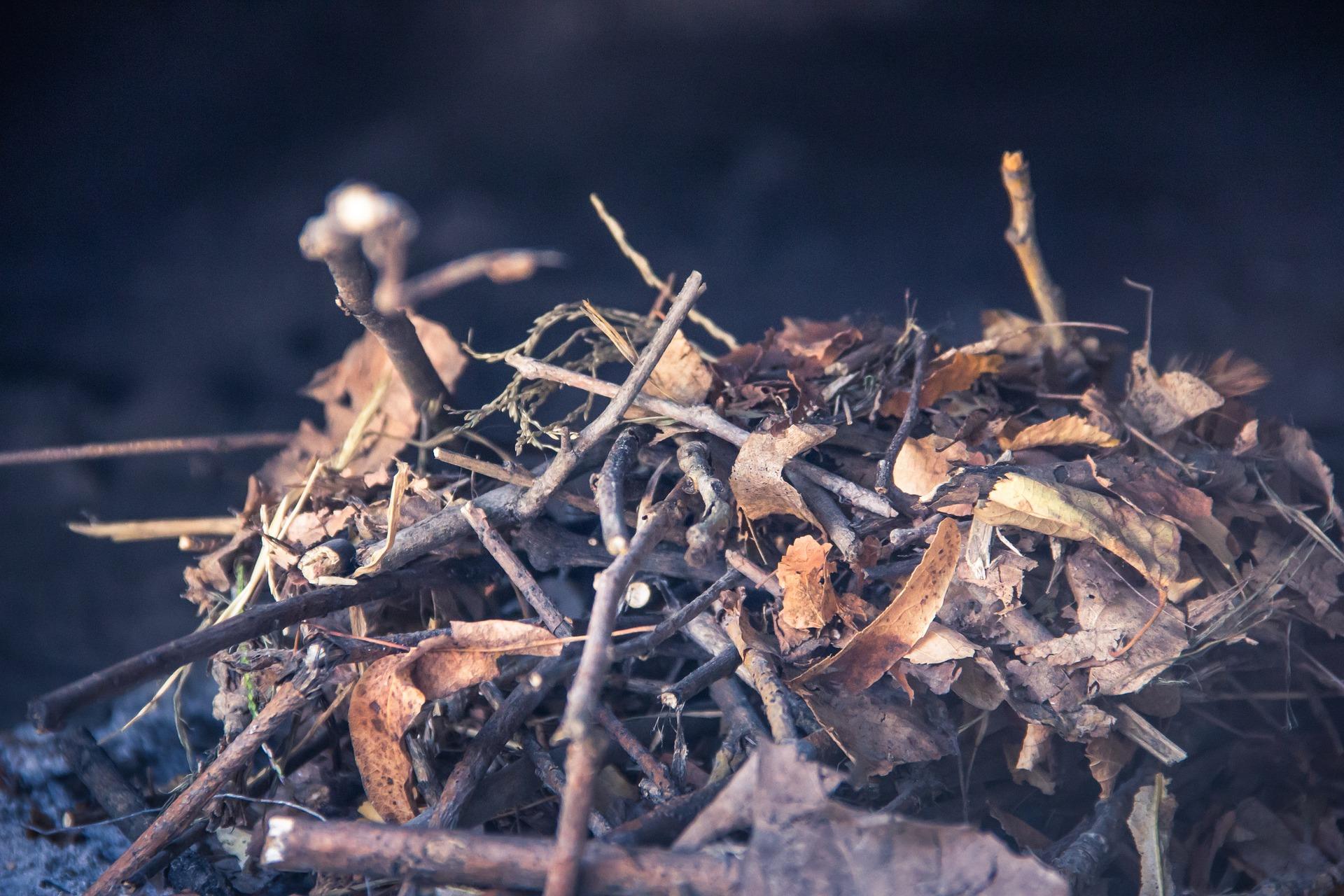
This area should contain suitable tinder that can catch from the chosen ignition method.
The tinder needs enough space to burn and should not be buried underneath heavy pieces of wood.
A common mistake is to place too much kindling over the tinder before it has had an opportunity to catch.
The initial flame needs to be able to grow.
Adding Kindling
Kindling forms the next stage of the fire.
It should generally be smaller and easier to ignite than the larger fuel.
Arrange the kindling around the tinder rather than simply throwing it on top.
The pieces should be close enough for the heat and flames to reach them, but not so tightly packed that airflow is restricted.
This balance is important.
A teepee fire lay that is too open may struggle to transfer heat effectively, while one that is packed too tightly may starve the fire of oxygen.
Adding Larger Fuel
Once the basic structure is established, larger pieces of suitable fuel can be added around the outside.
The fuel should be appropriate for the size of the fire being built.
Avoid trying to create a huge teepee before the fire has even been lit.
A small, well-prepared fire is generally easier to establish than an oversized structure containing too much large fuel.
Allow the fire to develop before adding additional fuel.
Airflow and the Teepee Shape
Airflow is one of the main reasons the teepee arrangement works.
A fire needs oxygen to continue burning.
The spaces between the pieces of wood allow air to move towards the centre.
As the fire develops, warm air and combustion gases rise through the structure, helping draw more air into the lower part of the fire.
This is one reason why the arrangement of the wood matters.
Scouts should learn that building a fire is not simply about having combustible material. The materials need to be arranged so that the fire has access to air.
Don’t Build the Teepee Too Tightly
One of the most common mistakes is making the structure too solid.
Scouts may think that placing the pieces closely together will make the fire stronger, but the opposite can happen.
If the gaps between the pieces disappear, there may not be enough airflow.
The tinder can then struggle to ignite the surrounding kindling.
A good teepee fire lay should look structured without being tightly packed.
Don’t Make It Too Large
Another common mistake is trying to build a large fire lay immediately.
The initial flame only has a limited amount of heat.
If it is surrounded by too much large fuel, the fire may not develop enough energy to ignite it.
Start with appropriate tinder and small kindling.
Once the fire is established, larger fuel can be added gradually.
This teaches an important fire-lighting principle: build the fire in stages.
Choosing Suitable Wood
The wood used in a teepee fire lay needs to be suitable for the stage of the fire.
Tinder should ignite easily.
Kindling should be small enough to catch from the tinder but substantial enough to continue burning.
Larger fuel should be added once the fire has developed.
The condition of the wood also matters.
Wet wood can make fire lighting considerably more difficult.
Avoid damaging living trees or stripping branches from healthy vegetation simply to obtain fuel. Where fires are permitted, use suitable fuel provided for the activity or collect only what the site rules allow.
Building on Suitable Ground
A teepee fire lay should only be constructed where fires are permitted and the location is suitable.
An established fire area is normally preferable.
Avoid building fires directly on sensitive ground or vegetation that could be damaged by heat.
Particular care is needed around dry grass, leaves, roots and other combustible material.
A fire should have a clear area around it so that sparks or burning material are less likely to spread.
Wind and the Teepee Fire Lay
Wind can have a major effect on a fire.
A strong wind can make lighting difficult, disturb a carefully built fire lay and carry sparks or embers away from the fire.
Don’t assume that changing the shape of the teepee will make an unsuitable location safe.
If conditions are too windy or otherwise unsafe, the correct decision is not to light the fire.
Where conditions are suitable, the fire should be positioned and managed in accordance with the site’s rules and the leader’s risk assessment.
Lighting the Teepee Fire Lay
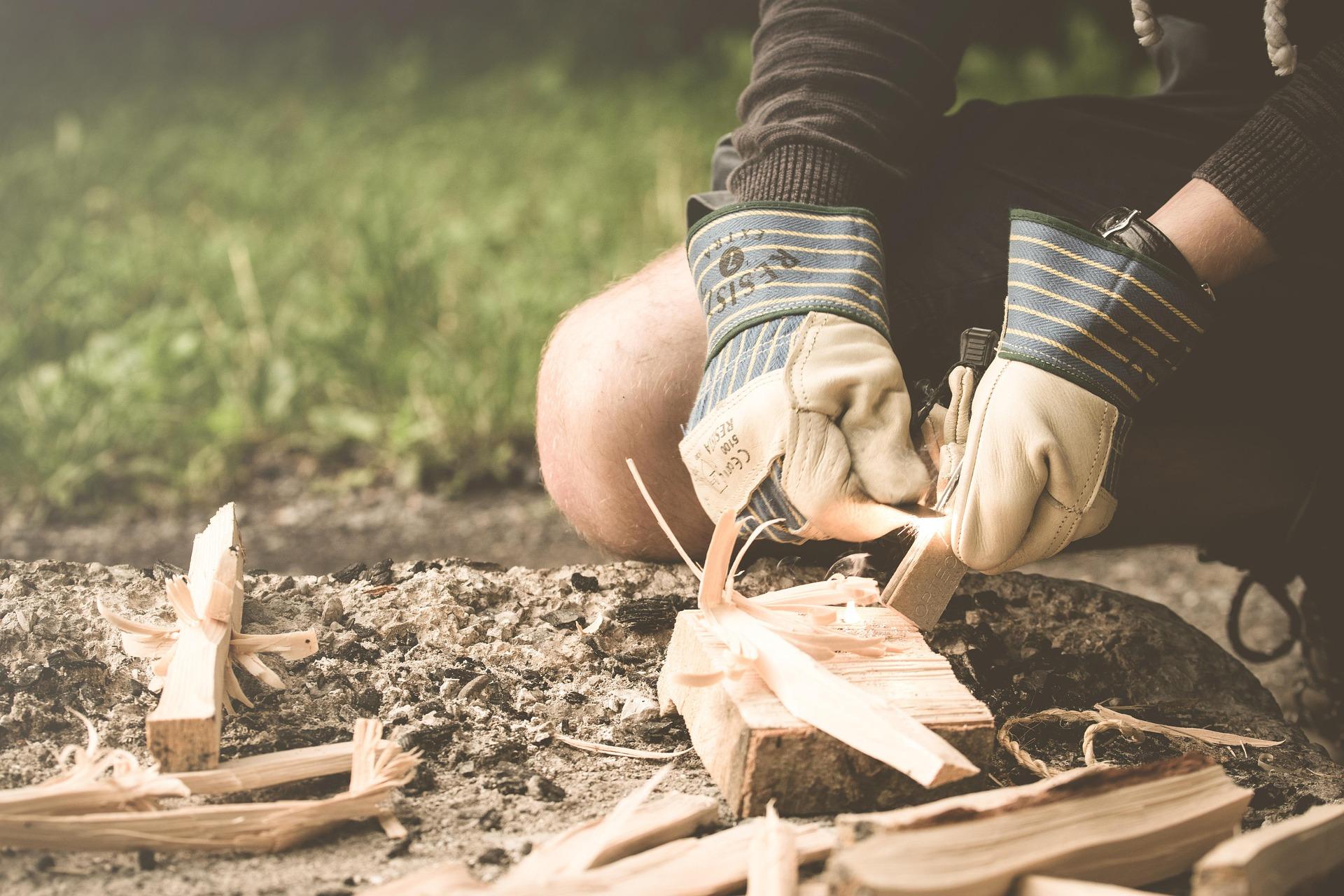
The ignition point should be positioned so that the initial flame can reach the tinder effectively.
Once the tinder catches, avoid immediately disturbing the fire lay.
Allow the flame to develop and begin transferring heat to the surrounding kindling.
Adding more fuel too early can smother the developing fire.
Scouts should learn to observe what is happening rather than constantly adjusting the structure.
When the Teepee Fire Lay Is Useful
The teepee fire lay can be useful when:
It isn’t necessarily the best design for every situation.
For example, another fire lay may be more appropriate where a particular fuel arrangement, cooking method or longer-lasting fire is required.
The important skill is understanding why a particular fire lay has been chosen.
Advantages of the Teepee Fire Lay
The teepee has several useful characteristics.
It is relatively simple to understand and construct.
It encourages good airflow around the centre.
It provides a clear progression from small tinder to larger fuel.
It is also easy for a leader to inspect visually before lighting.
For beginners, this makes it a useful way to introduce the basic principles of fire-lay construction.
Limitations of the Teepee Fire Lay
The teepee design also has limitations.
As the wood burns, the structure can collapse inwards.
The fire may therefore need additional fuel or rearrangement as it develops.
It can also be less suitable for situations where a long-lasting or widely distributed fire is required.
This is why Scouts should learn several different fire lays rather than assuming the teepee is the answer to every fire-lighting problem.
Common Teepee Fire Lay Mistakes
Too Much Large Fuel
Large pieces can prevent the initial flame from reaching enough kindling.
Poor Airflow
Packing the wood too closely can restrict oxygen.
Not Enough Kindling
If there is too much of a jump from tinder to large fuel, the fire may struggle to develop.
Tinder Buried Too Deeply
The tinder needs access to air and should be positioned where the initial flame can spread into the kindling.
Unstable Construction
Pieces that are balanced precariously can fall as soon as the fire starts burning.
Build the structure carefully and keep it appropriate to the size of the fire.
Adding Fuel Too Quickly
Allow the fire to establish before adding larger pieces.
Ignoring the Conditions
A good fire lay cannot compensate for an unsuitable site or dangerous weather.
If conditions aren’t appropriate, don’t light the fire.
Teaching Scouts About the Teepee Fire Lay
The teepee fire lay provides an excellent opportunity to teach Scouts to think about why they are arranging the wood in a particular way.
Instead of simply telling Scouts to copy a shape, ask questions such as:
“Where does the fire start?”
“Why is the tinder in the middle?”
“Why aren’t the pieces packed tightly together?”
“Why do we use smaller kindling before larger fuel?”
“What happens if we block all the gaps?”
These questions encourage Scouts to understand the principles behind the fire lay.
Once they understand those principles, they can apply them to other fire-lay designs.
Comparing the Teepee With Other Fire Lays
The teepee is only one option.
A log cabin fire lay creates a more structured arrangement using alternating layers of wood.
A lean-to fire lay uses a larger piece of fuel or support as part of its structure.
A star fire lay arranges longer pieces of fuel around a central point.
Each design has different characteristics.
Learning the differences helps Scouts understand that fire lays are tools rather than fixed rules.
Safety When Using a Teepee Fire Lay
Fire activities should always be appropriately supervised.
Only light a fire where it is permitted and where the site is suitable.
Keep the fire area clear of unnecessary combustible material and make sure Scouts know where they should stand.
Don’t allow Scouts to reach across a lit fire or place hands close to the flames.
Keep suitable fire-control equipment available for the activity and site.
Never leave a lit fire unattended.
Don’t add large quantities of fuel simply to make the fire bigger.
At the end of the activity, extinguish the fire thoroughly and make sure it is completely out and cold before leaving.
If weather conditions become unsafe, stop the activity and extinguish the fire.
Respecting the Environment
Fire can damage the environment even when it appears to be under control.
Avoid lighting fires on sensitive ground, including areas where heat could damage roots or vegetation.
Don’t cut living trees for firewood.
Use only suitable fuel and follow the rules of the site.
Keep the fire as small as necessary for the activity.
Once the fire has been extinguished, leave the area clean and deal with any remaining ash or fire debris appropriately.
Adapting the Skill for Different Ages
Younger Scouts can learn the basic structure of a teepee fire lay using unlit materials.
They can identify the tinder, kindling and larger fuel and explain where each should go.
Older Scouts can begin to experiment with how the spacing between pieces affects airflow.
More experienced Scouts can compare the teepee with other fire lays and explain why one design might be more appropriate in a particular situation.
The progression should always be based on understanding and safe practice rather than simply making larger fires.
Final Thought for Leaders
The teepee fire lay is a useful starting point for teaching Scouts about fire because its structure makes the basic principles easy to see.
The tinder provides the initial flame, the kindling allows the fire to grow and the larger fuel keeps it going. The spaces between the pieces allow air to reach the fire while the shape encourages heat and flames to rise.
Once Scouts understand these principles, they are no longer simply copying a fire lay. They are beginning to understand how and why a fire develops.
That understanding will make it much easier for them to learn and choose other fire-lay designs as their outdoor skills develop.
🔒Ready to test your survival skills?
Join Survival Guides UK for free, complete challenges, earn badges and increase your Survival Level.
JOIN FREE →
CRAIG BURR
FOUNDER · SURVIVAL GUIDES UK
I'm Craig, the person behind Survival Guides UK. I created SGUK because I wanted somewhere people could learn real outdoor skills in a practical, straightforward way — from lighting a fire and tying knots to navigation, campcraft and everything in between.
You can read more about the story behind SGUK here as well as our approach here.