
Scout Equipment Safety: A Practical Guide for Leaders
Camping and outdoor equipment makes Scouting possible.
Tents, stoves, ropes, tools, cooking equipment, torches and other kit allow young people to learn practical skills and become more independent. But equipment is only useful when it is suitable, in good condition and used correctly.
For Scout leaders, equipment safety starts before an activity begins.
A few minutes spent checking, preparing and organising equipment can prevent problems later and helps young people develop good habits of their own.
This guide covers the basic principles of checking, using, maintaining and storing Scout and outdoor equipment safely.
Why Equipment Safety Matters
Equipment can gradually become damaged, worn or unsuitable without anyone noticing.
A tent pole can develop a crack.
A rope can become worn.
A stove can become dirty or damaged.
A cooking handle can become loose.
A torch can stop working because batteries have leaked.
None of these problems necessarily happens suddenly.
Regular equipment checks give leaders an opportunity to identify problems before the equipment is needed.
The aim isn’t to make equipment use complicated.
It’s to develop a simple habit:
Check it, use it correctly, look after it and put it away properly.
Start With the Right Equipment
The safest piece of equipment is often the one that’s appropriate for the activity in the first place.
Consider whether the equipment is suitable for:
The age of the participants
The activity
The environment
The weather
The level of experience
A piece of equipment that’s perfectly suitable for an experienced Scout may not be appropriate for a younger section without additional instruction and supervision.
Don’t assume that because something is labelled as camping or outdoor equipment it is automatically suitable for every Scout activity.
The Pre-Activity Equipment Check
Before an activity starts, carry out a basic visual inspection.
You don’t necessarily need to dismantle everything.
Look for obvious problems such as cracks, tears, fraying, corrosion, missing parts, sharp edges, damaged fasteners or anything that doesn’t look right.
Check that equipment is clean enough to inspect properly and that important components are present.
If you’re unsure whether an item is safe to use, don’t use it until it has been properly assessed.
It is better to remove one item from service than discover a problem while young people are using it.
Give Equipment a Simple Status
For larger equipment stores, it can be useful to have a straightforward system for identifying equipment that needs attention.
For example, equipment can be considered:
Ready to use
Needs attention
Do not use
You don’t need an elaborate system.
The important thing is that damaged equipment cannot accidentally find its way back into an activity.
A clearly marked container for equipment awaiting repair can be particularly useful.
Teach Young People to Check Equipment Too
Equipment safety shouldn’t be something that only leaders think about.
Where appropriate, teach young people how to carry out simple checks themselves.
For example, before putting up a tent, they might check poles, pegs and fabric.
Before using a compass, they can check that it is intact and working as expected.
Before using a cooking item, they can check that handles and components are secure.
The leader remains responsible for deciding whether equipment is suitable for use, but involving young people helps develop responsibility.
Explain Before You Hand Over
Never assume that young people automatically know how equipment should be used.
Demonstrate unfamiliar equipment before allowing participants to use it.
Show:
What it does
How it works
What can go wrong
How to carry it
Where to put it when finished
When to ask for help
Keep the demonstration practical.
A short explanation followed by supervised practice is often more effective than a long lecture.
Camping Equipment
Tents and shelters are among the most commonly used pieces of Scout equipment.
Before use, check fabric, seams, zips, poles, clips, guy lines and pegs.
Don’t use damaged poles simply because they “will probably be fine”.
Make sure tents are pitched in a suitable location and secured appropriately for the conditions.
After use, tents should be dried thoroughly before long-term storage.
Packing a wet tent away and leaving it in a storage box is an easy way to create mould, unpleasant smells and damaged fabric.
Ropes and Cordage
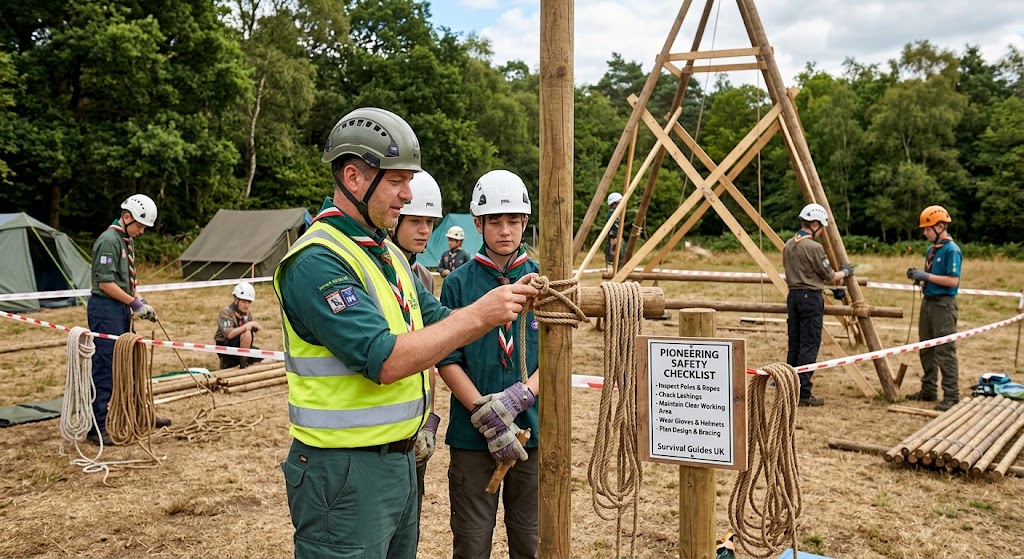
Rope is extremely useful for Scout activities, but it needs proper care.
Before use, check for obvious signs of damage such as excessive fraying, cuts, chemical contamination or other deterioration.
Different ropes have different purposes.
Don’t assume that because a rope looks strong it is suitable for climbing, lifting, securing people or any other activity involving significant loads.
Teach young people to carry and store rope correctly.
Avoid leaving ropes tangled, wet or contaminated with mud and dirt.
After use, clean and dry them as appropriate and store them where they can be inspected easily.
Knives and Other Sharp Tools
Sharp tools require particularly clear instructions and supervision.
Young people should understand:
Where the tool can be used
How it should be carried
Where the safe working area is
What direction the tool should be used in
What to do when finished
The leader should ensure the equipment and activity are appropriate for the young person’s age, experience and ability.
Don’t allow tools to be passed casually between people.
When not being used, they should be secured appropriately.
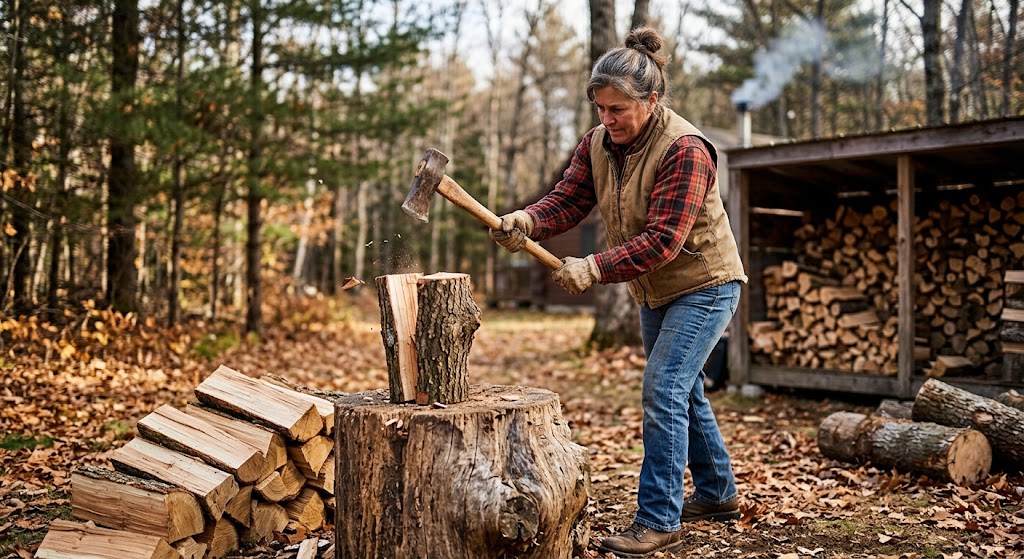
Axes and Saws
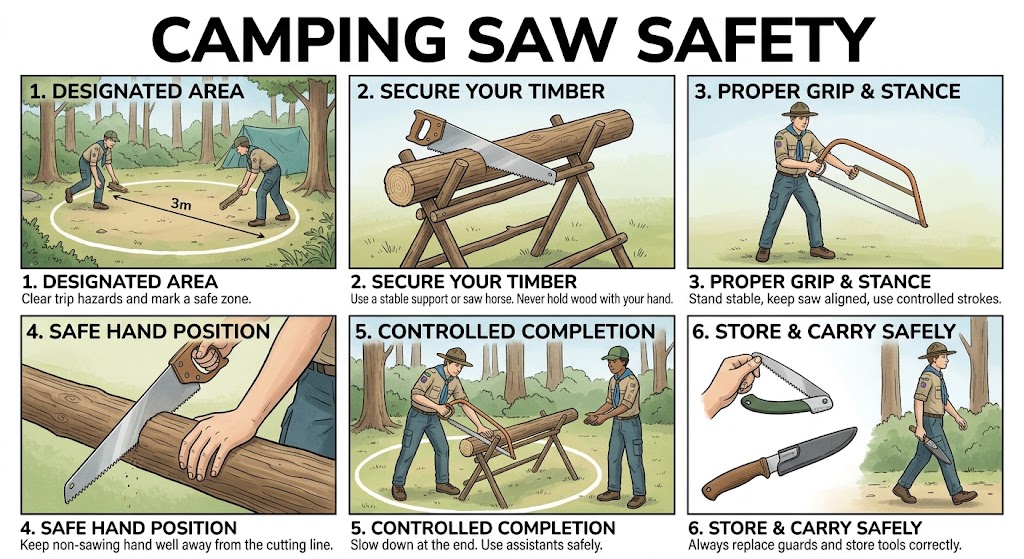
Axes, saws and similar tools require additional care.
Check handles, blades, guards and other components before use.
Establish a clear working area before tools are handed out.
Young people should know where they can stand and where nobody else should enter.
A tool should never be left lying on the ground where somebody could accidentally step onto or trip over it.
When the activity ends, collect all tools before moving on to another activity.
A simple tool count can be useful for group sessions.
Stoves and Cooking Equipment
Cooking equipment should be checked before every use.
Look for damaged fuel systems, loose components, blocked burners, damaged hoses, cracked cookware and other signs of deterioration.
Only use fuel and equipment according to the manufacturer’s instructions.
Make sure cooking areas are stable and positioned appropriately.
Keep young people at a safe distance from hot surfaces and flames unless they are actively participating under suitable supervision.
After cooking, remember that equipment can remain hot for much longer than it appears.
Allow it to cool before packing it away.
Torches and Lighting Equipment
Torches are easy to overlook because they seem relatively harmless.
However, a failed torch can become a significant problem during an evening activity.
Before a night hike or outdoor session, check that torches work properly.
Consider carrying spare batteries or another suitable backup lighting source.
Check battery compartments for corrosion or leakage.
Head torches should be checked for secure straps and working controls.
Teach young people not to shine bright beams directly into another person’s eyes.
First-Aid and Emergency Equipment
Emergency equipment needs regular checking because you may not discover a problem until you need it.
Check that first-aid supplies are present and in usable condition.
Check torches, whistles and communication equipment.
Make sure emergency equipment is stored somewhere accessible rather than buried at the bottom of a kit box.
For larger groups and camps, leaders should know who has responsibility for carrying and checking essential emergency equipment.
Equipment Maintenance
Maintenance doesn’t need to mean repairing everything yourself.
Sometimes the correct action is simply to remove an item from service and arrange an appropriate repair or replacement.
Follow the manufacturer’s instructions for equipment maintenance wherever relevant.
Don’t improvise repairs to safety-critical equipment unless you are certain the repair is appropriate.
If an item has reached the end of its useful life, replace it.
A cheap replacement is usually preferable to taking a risk with damaged equipment.
Cleaning Equipment
Dirt can hide damage.
Mud, food residue, salt, moisture and other contaminants can also contribute to deterioration.
Clean equipment according to the manufacturer’s instructions.
Camping equipment should generally be allowed to dry properly before storage.
Cooking equipment should be cleaned after use.
Tools should be cleaned and checked before being returned to storage.
Cleaning isn’t just about appearance.
It is part of equipment maintenance.
Drying Equipment Properly
Moisture is one of the biggest enemies of stored camping equipment.
Tents, groundsheets, tarps, ropes and some clothing should not be packed away wet for long periods.
After a wet activity, create a routine for drying equipment.
This might involve hanging items in a suitable ventilated area, opening tent bags and spreading equipment out until completely dry.
Don’t place damp equipment into sealed containers and assume it will dry later.
It may instead develop mould or mildew.
Equipment Storage
Good storage makes equipment easier to inspect and easier to use.
Store equipment in a dry, secure and suitable location.
Keep items organised so that frequently used equipment can be found quickly.
Heavy equipment should be stored so that it cannot fall onto people.
Sharp tools and hazardous equipment should be secured appropriately.
Fuel and other potentially hazardous materials should be stored according to the relevant instructions and requirements.
Avoid overcrowding equipment boxes.
If you have to force everything into a container, it’s more difficult to spot missing or damaged equipment.
Label Your Equipment
Labels can make a surprisingly big difference.
Mark boxes according to their contents.
For example:
Cooking
Shelter
Navigation
Campcraft
Lighting
First Aid
Emergency
This reduces preparation time and makes it easier to return equipment to the correct place.
For larger groups, numbering equipment can also help with inventory checks.
Keep an Equipment Inventory
A basic inventory can help prevent equipment gradually disappearing from the store.
It doesn’t need to be complicated.
Record the main items you have and periodically check whether they’re still present and usable.
This is particularly useful for equipment such as:
Tents.
Tarps.
Compasses.
Axes.
Saws.
Cooking equipment.
Torches.
Ropes.
First-aid supplies.
An inventory also helps you identify what needs replacing before your next camp.
Don’t Ignore Small Damage
A small tear or loose component might not seem important.
However, minor damage can become more significant when equipment is exposed to wind, rain, heat or repeated use.
If you notice a problem, record it.
Don’t rely on remembering it later.
A simple equipment-maintenance log can be enough.
For example:
Item: Large tarp
Problem: Small tear near corner
Action: Removed from use
Next step: Repair or replace
This takes very little time and prevents the same problem being discovered repeatedly.
Responsible Use
Teach young people that equipment isn’t disposable.
Use equipment for its intended purpose.
Don’t drag, throw or deliberately misuse it.
Don’t modify equipment unless that modification is appropriate and authorised.
Return equipment after use rather than leaving it outside.
Treating equipment responsibly helps it last longer and teaches young people an important principle:
You look after equipment so that someone else can safely use it after you.
What to Do With Damaged Equipment
If equipment is damaged, remove it from normal use.
Don’t simply put it back in the box with everything else.
Mark it clearly and move it to an appropriate repair or disposal area.
If you’re unsure whether an item can be repaired safely, seek suitable advice rather than guessing.
For safety-critical equipment, don’t allow an improvised repair to create a false sense of security.
Safety
Equipment should always be used according to its intended purpose and any relevant manufacturer instructions.
Activities involving fire, sharp tools, stoves, ropes, water or other hazards require appropriate planning, supervision and controls.
Equipment checks do not replace appropriate training, supervision or activity-specific safety procedures.
Young people should only use equipment that is appropriate for their age, experience and the activity.
Damaged or questionable equipment should be removed from use until it has been properly assessed, repaired or replaced.
Store equipment securely and keep potentially hazardous items inaccessible when they are not being used.
For activities requiring specialist skills, qualifications or specific safety procedures, follow the relevant requirements rather than relying on a general equipment checklist.
A Simple Equipment Safety Routine
A useful routine is:
Before: Check equipment, suitability, condition and completeness.
During: Monitor how equipment is being used and stop unsafe use.
After: Clean, inspect and return equipment correctly.
Later: Dry, maintain, repair, replace and record problems.
This four-stage approach works for almost every type of Scout equipment.
Equipment Safety Checklist for Leaders
Before an activity, ask:
Is the equipment suitable?
Is it in good condition?
Is everything present?
Does anyone need instruction before using it?
Is additional supervision required?
Is it suitable for the weather and environment?
Do we have backup equipment where it is sensible to do so?
Is damaged equipment clearly separated?
Do we know how the equipment should be maintained?
Can everything be safely stored afterwards?
If the answer to any important question is no, deal with the problem before the activity begins.
Learning Outcomes for Leaders
By following good equipment-management practices, leaders can:
Final Thought for Leaders
Equipment safety doesn’t require complicated systems.
It comes down to good habits.
Check equipment before use. Teach people how to use it. Pay attention while it’s being used. Clean and dry it afterwards. Store it properly. Remove damaged items from service.
Those simple steps make outdoor activities easier to run and help young people understand that equipment is something to be respected rather than simply taken out of a box and forgotten about afterwards.
A well-managed equipment store isn’t just more organised.
It’s part of running safer, better outdoor activities.
🔒Ready to test your survival skills?
Join Survival Guides UK for free, complete challenges, earn badges and increase your Survival Level.
JOIN FREE →
CRAIG BURR
FOUNDER · SURVIVAL GUIDES UK
I'm Craig, the person behind Survival Guides UK. I created SGUK because I wanted somewhere people could learn real outdoor skills in a practical, straightforward way — from lighting a fire and tying knots to navigation, campcraft and everything in between.
You can read more about the story behind SGUK here as well as our approach here.