How to Find North Without a Compass
If you find yourself outdoors without a compass, there are still ways to work out roughly which direction is north. The Sun, shadows and stars can all give you useful clues, although none of these methods should be treated as a precise replacement for a compass.
The most important thing is to understand what each method is actually telling you. Natural signs can help you get your bearings and decide which general direction to travel, but they should be combined with a map, landmarks and other information whenever possible.
Use the Sun
The Sun is one of the simplest natural clues for working out direction.
In the UK and other northern hemisphere locations, the Sun generally appears in the southern part of the sky during the day. This means that, if you can work out roughly where the Sun is, you can often estimate where north lies in relation to it.
However, the Sun moves across the sky throughout the day, and its exact position changes with the time of year and your location. Don’t assume that the Sun will always be directly south at midday.
Instead, use it as a broad indication.
For example, if the Sun is roughly in front of you and it is morning, you are generally facing towards the east. North will therefore be roughly to your left.
If it is late afternoon and the Sun is roughly in front of you, you are generally facing towards the west. North will then be roughly to your right.
These are estimates rather than exact directions, but they can be useful if you have lost your sense of direction.
Use Your Shadow
Your own shadow can give you another useful clue.
The Sun is responsible for your shadow, so the shadow points broadly away from the Sun. If you know roughly where the Sun is in the sky, your shadow gives you the opposite direction.
You can make this easier to observe by standing still and marking the end of your shadow with a small stone or stick.
Wait for a while and mark the end of the shadow again.
The two marks show how the Sun has moved across the sky, and the line between them can help you establish an approximate east-west direction.
This method takes a little patience, but it is more useful than simply looking at your shadow once and guessing.
Try the Stick and Shadow Method
A simple stick can be used to make the shadow method more useful.
Push a reasonably straight stick into the ground so that it stands upright. Make sure it is secure and that you can clearly see its shadow.
Place a small stone at the end of the shadow.
Wait around 15–20 minutes, then mark the new position of the shadow with another stone.
The two marks show the direction in which the shadow has moved.
The first mark is approximately west of the second mark, while the second mark is approximately east of the first.
Once you have an east-west line, you can work out north and south from it.
This is still an approximation, but it gives you something more useful than simply guessing from the position of the Sun.
Remember That the Sun Does Not Always Rise Exactly in the East
You may have heard that the Sun rises in the east and sets in the west.
This is useful as a general rule, but it isn’t exactly true every day.
The position where the Sun rises changes throughout the year. In the UK, it rises north-east of east during part of the year and south-east of east during another part.
The same applies to sunset.
So don’t look at a sunrise and assume that the direction you are facing is exactly east. Think of it as a general indication of direction.
This is particularly important if you’re trying to use the Sun for navigation rather than simply understanding where the four main directions lie.
Use an Analogue Watch
An analogue watch can provide another rough way of estimating direction when you are in the northern hemisphere.
Point the hour hand towards the Sun.
Then imagine a line halfway between the hour hand and the 12 on the watch face.
That approximate line points towards south. North is directly opposite it.
For example, if your watch says 10 o’clock and you point the 10 towards the Sun, the halfway point between 10 and 12 gives you an approximate southerly direction.
There are important limitations to this method. Your watch must be showing the correct local time, and daylight saving time affects the calculation. It also becomes less reliable when the Sun is low or difficult to see.
Treat it as a rough navigation aid rather than an accurate method.
Find North Using the Stars
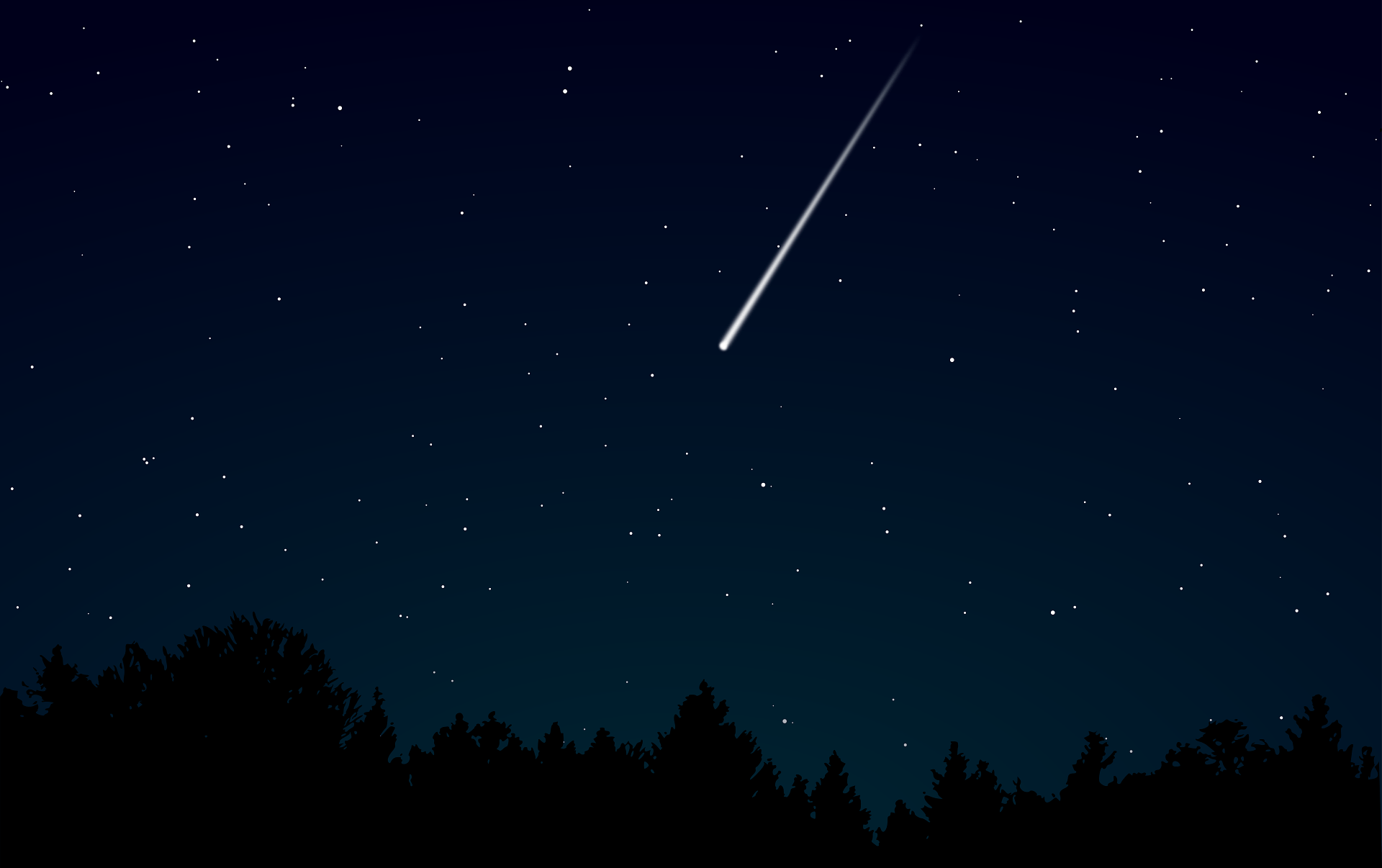
At night, the stars can provide one of the most useful natural navigation clues.
In the northern hemisphere, the North Star, also known as Polaris, appears very close to the direction of true north.
If you can identify Polaris, you can use it to establish north.
The difficulty is finding it in the first place.
Find the North Star Using the Plough
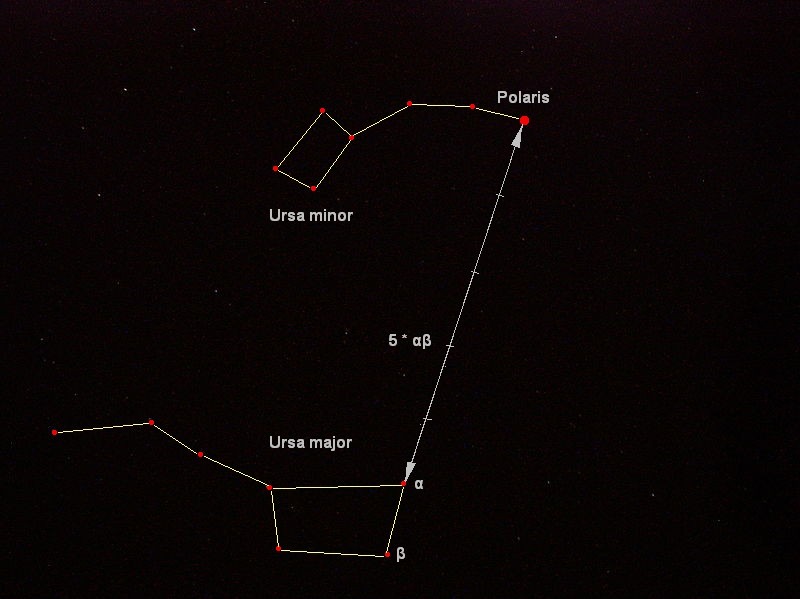
One of the easiest ways to locate Polaris is by using the Plough, which is part of the constellation Ursa Major.
Look for the familiar shape formed by seven bright stars. It looks roughly like a saucepan or a large ladle.
The two stars forming the outer edge of the Plough’s bowl are often called the pointer stars.
Imagine a line extending from the lower pointer star through the upper pointer star and continue that line into the sky.
Carry on for roughly five times the distance between those two stars and you will reach Polaris.
Polaris isn’t usually the brightest star in the sky, so don’t simply look for the brightest point of light. Use the shape of the Plough and the pointer stars to locate it.
Once you’ve found Polaris, the direction from you towards it is approximately north.
Use the Stars Carefully
Star navigation works best when the sky is reasonably clear and you have enough visibility to identify the constellations.
Cloud, light pollution, trees and hills can all make the method more difficult.
There is also a difference between finding true north using Polaris and using a magnetic compass, which points towards magnetic north. The two directions are not exactly the same.
For basic outdoor navigation, the important point is that Polaris gives you a useful indication of true north.
Don’t Use Moss as Your Main Method
You may have heard that moss always grows on the north side of trees.
This is a common outdoor myth.
Moss can grow on many sides of a tree depending on moisture, shade, shelter, humidity, tree species and the surrounding environment.
You may sometimes notice more moss on one side, but that does not mean that side is automatically north.
The same applies to other natural clues such as tree growth, dampness and lichen.
They can tell you something about the local environment, but they should not be treated as reliable compasses.
Use Several Clues Together
The safest way to estimate direction without a compass is to look for several clues that agree.
For example, you might know that:
- the Sun is in the southern part of the sky
- your shadow is pointing roughly north
- you remember which direction you were travelling
- a visible hill or building is in a known direction
- your map gives you an approximate orientation
None of these clues needs to be perfect.
The more pieces of information you can compare, the better your overall understanding of where you are.
What to Do If You Are Unsure
If you are genuinely lost, don’t simply pick a direction because it feels right.
Stop and think about what you know.
Look at your surroundings and identify anything recognisable. Check your map if you have one. Think about the direction you were travelling, how far you have travelled and any landmarks you passed.
If you have enough information to work out a safe route back to a known location, do that rather than continuing deeper into unfamiliar terrain.
If you cannot establish where you are, staying in a safe location and getting help may be more sensible than continuing to travel.
Safety When Navigating Without a Compass
Natural navigation methods are useful skills, but they should not encourage you to take unnecessary risks.
Don’t walk into unfamiliar terrain simply because you have estimated where north is. A direction is not a route, and travelling north could take you towards steep ground, cliffs, water, dense vegetation or other hazards.
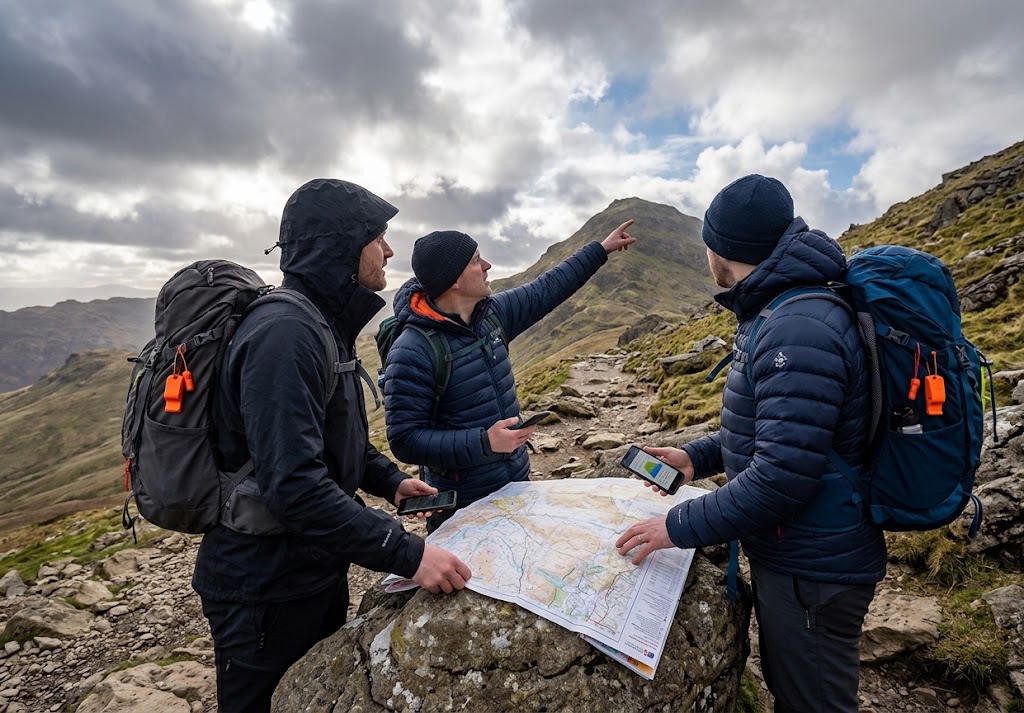
If you’re walking with other people, make sure everyone knows what is happening before changing direction.
If visibility is poor, conditions are deteriorating or you are becoming unsure of your position, stop and reassess rather than pressing on.
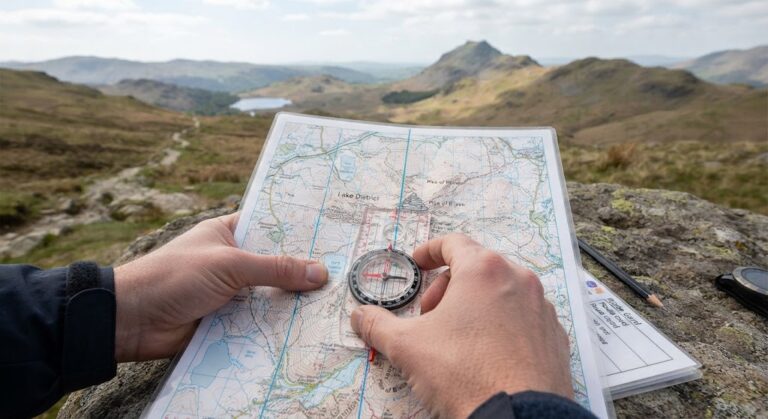
A compass, map and appropriate navigation skills remain the better choice for planned journeys.
Practise Before You Need the Skill
The best way to learn natural navigation is to practise when you already know exactly where you are.
Take a walk somewhere familiar and try estimating north using the Sun. Check your estimate against a compass afterwards.
Try the shadow method on another day.
At night, if conditions allow, practise finding the Plough and locating Polaris.
Doing this when there is no pressure makes it much easier to understand how the methods work.
Think of It as Finding Direction, Not Finding a Perfect Bearing
Finding north without a compass is a useful outdoor skill, but it has limits.
The Sun can give you a broad indication. Shadows can help establish an east-west line. An analogue watch can provide another rough estimate, and Polaris can give you a strong indication of true north at night.
None of these methods should be treated as an exact substitute for a compass.
The real skill is learning to combine the clues around you and use them to build a picture of where you are and which way you are facing.
That is what makes natural navigation useful: you are not relying on one trick. You are learning to read the landscape and understand the world around you.
🔒Ready to test your survival skills?
Join Survival Guides UK for free, complete challenges, earn badges and increase your Survival Level.
JOIN FREE →
CRAIG BURR
FOUNDER · SURVIVAL GUIDES UK
I'm Craig, the person behind Survival Guides UK. I created SGUK because I wanted somewhere people could learn real outdoor skills in a practical, straightforward way — from lighting a fire and tying knots to navigation, campcraft and everything in between.
You can read more about the story behind SGUK here as well as our approach here.