Fire Safety Checks Before Lighting a Campfire
Lighting a campfire should never be the first step of a fire activity.
Before a flame is introduced, there are several things that should be checked to make sure the fire is appropriate for the location, weather conditions, equipment and people involved.
Taking a few minutes to carry out these checks can prevent many common problems.
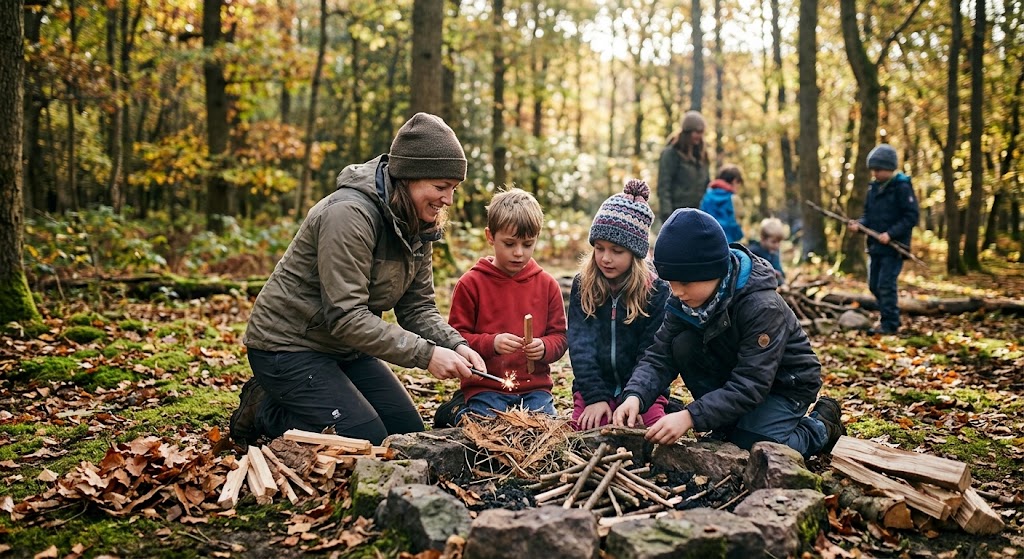
For Scouts, this is also a useful opportunity to learn that good fire safety starts with preparation rather than reacting to problems once a fire is already burning.
Is a Fire Allowed?
The first check is whether you are actually permitted to have a fire.
Campsites, landowners and outdoor locations may have their own rules about fires.
There may also be temporary restrictions during periods of high fire risk.
Check the current rules before preparing the fire.
If fires aren’t permitted, don’t light one.
Having an alternative activity ready means that a fire restriction doesn’t have to spoil the programme.
Check the Weather
Weather conditions can have a major effect on fire safety.
Before lighting the fire, consider:
A fire that may be manageable in calm, damp conditions could become much more difficult to control in strong winds or very dry weather.
Don’t assess the weather once and then forget about it.
Conditions can change while the activity is underway.
Check the Wind
Identify which direction the wind is coming from and where smoke, sparks and embers are likely to travel.
Look at what is downwind of the proposed fire.
This could include tents, trees, dry grass, buildings, paths or other groups.
If the wind is strong or unpredictable, reconsider whether the fire should go ahead.
Check the Ground
The ground around the fire should be suitable.
Look for dry grass, leaves, roots and other combustible material.
Avoid unsuitable ground such as peat.
Don’t assume that bare-looking ground is automatically safe.
The area should also be stable enough for people to work around without slipping or tripping.
Check the Surrounding Area
Look beyond the immediate fire area.
A fire doesn’t only present a risk to what is directly beside it.
Consider nearby:
Think about what could be affected if sparks or embers escaped the fire area.
Use an Appropriate Fire Area
Where the campsite or location provides an established fire area, use it in accordance with the site’s rules.
An established fire area may have been selected because the ground and surrounding conditions are more appropriate.
Don’t move a fire simply because another location looks more convenient.
If there isn’t a suitable fire area, seek appropriate advice before creating one.
Check the Fire Area Is Clear
Remove unnecessary combustible material from the immediate area.
This might include dry leaves, grass, rubbish or loose materials that could catch from sparks.
Don’t create a huge cleared area unnecessarily or damage vegetation simply to make space for a fire.
The aim is to create an appropriate, controlled fire area while leaving the surrounding environment undisturbed.
Check Your Fuel
Make sure you have suitable fuel for the activity.
Use appropriate, reasonably dry firewood where permitted.
Avoid using:
Don’t collect or damage living trees simply to obtain firewood.
Don’t Bring Too Much Fuel
Having a large pile of wood beside the fire can create an unnecessary hazard.
Only bring forward the amount of fuel that is reasonably needed.
Store additional fuel away from the immediate fire area.
This also makes it easier to keep the fire at an appropriate size.
Check Your Equipment
Inspect any equipment that will be used around the fire.
This might include cooking equipment, fire tools, containers and other relevant items.
Check for damage before use.
Damaged equipment should be removed from use and reported rather than being used because it is convenient.
Check Fire-Control Equipment
Appropriate fire-control equipment should be ready before the fire is lit.
The exact equipment required will depend on the fire, activity and location.
Make sure everyone responsible for the activity knows where the equipment is.
Don’t put it somewhere that is difficult to reach quickly.
A fire-control method should never be an afterthought.
Check First-Aid Arrangements
Fire activities should be supported by appropriate first-aid arrangements.
Know where the first-aid equipment is located and who is responsible for dealing with injuries.
For burns, appropriate first aid should be available.
Leaders should also know how to access further medical assistance if required.
Check Access for Emergency Services
Before starting the activity, make sure you know how emergency services could reach the location if necessary.
This is particularly important at larger campsites, remote locations or areas with complicated access.
Know the site’s address or location details and any useful access information.
In an emergency, being able to clearly explain where the group is can save valuable time.
Check Who Is Responsible
Someone should have clear responsibility for managing the fire.
Don’t assume that another adult is watching it.
If several leaders are present, agree who is responsible for the fire and who is supervising the wider group.
Responsibilities should remain clear throughout the activity.
Check the Scouts
Make sure the Scouts understand the basic fire rules before the fire is lit.
They should know:
Where they can stand or sit.
Where they must not go.
What they should do if something falls into the fire.
Who they should tell if they see a problem.
That they must not run around the fire.
That they must not throw objects into it.
Keep instructions appropriate to the age and experience of the group.
Check the Group’s Behaviour
Consider whether the group is currently able to follow the safety rules.
Scouts may be excited, tired or distracted.
If the group isn’t settled enough to safely participate, take some time to establish expectations before lighting the fire.
Sometimes delaying the activity for a few minutes is all that is needed.
Check Children’s Involvement
If younger children are present, decide what they will and won’t be allowed to do.
Don’t assume that everyone should have the same level of access to the fire.
Younger children may be able to observe or take part in simple supervised activities while adults retain responsibility for the most hazardous tasks.
Check Clothing
Think about what people are wearing.
Loose clothing, scarves and long hair can present additional risks around flames.
Long hair should be tied back where appropriate.
Avoid allowing clothing to hang close to the fire.
Remember that some synthetic materials can melt when exposed to high temperatures.
Check Seating
If the activity involves sitting around the fire, arrange seating before lighting it.
Seats should be stable and positioned at a sensible distance.
Make sure people can get in and out without stepping over equipment or moving dangerously close to the flames.
Leave enough room for leaders to supervise the group.
Check for Smoke
Think about where smoke is likely to travel.
Don’t position the fire so that smoke will continually blow towards tents, buildings or people.
Remember that wind direction can change.
If the proposed fire position creates an obvious smoke problem, reconsider the location.
Check Nearby Water
If water is the planned method for extinguishing the fire, make sure a suitable supply is available and can be accessed safely.
Don’t assume that a nearby stream or pond is automatically suitable.
You need to know whether enough water can be obtained and whether it can be used safely.
Follow the site’s arrangements where specific fire-control equipment is provided.
Check the Fire Size
Decide what size fire is actually needed.
A fire for cooking may need to be different from one used for a supervised demonstration or campfire gathering.
Don’t build a large fire simply because you can.
The larger the fire, the more heat, flames, smoke and burning material there may be to manage.
Check the Fire Lay
Choose a fire lay appropriate for the purpose of the activity and the conditions.
Scouts can be involved in discussing why a particular fire lay has been selected.
However, remember that no fire lay makes unsuitable weather or ground conditions safe.
The overall situation matters more than the name or shape of the fire lay.
Check for Dry Vegetation
Pay particular attention during hot or dry weather.
Look for dry grass, leaves, bracken and other combustible vegetation.
If the surrounding area is unusually dry, the risk of a spreading fire may be significantly higher.
If conditions are unsuitable, don’t light the fire.
Check for Strong Winds
Strong or gusty winds can carry sparks and embers away from the fire.
They can also push flames towards nearby hazards.
If wind conditions are making the fire difficult to predict or control, postpone the activity.
There is no benefit in taking unnecessary risks simply to stick to the original programme.
Check the Fire Will Be Supervised
A live fire should not be left unattended.
Make sure there will always be appropriate supervision throughout the activity.
This includes times when Scouts are eating, moving around, participating in another activity or getting ready for bed.
If nobody can safely supervise the fire, it should be extinguished.
Check Your Emergency Plan
Before lighting the fire, make sure leaders know what they will do if something goes wrong.
Consider:
What happens if someone is burned?
What happens if the fire spreads?
Where will Scouts move?
Who will call for help?
Who will supervise the rest of the group?
Where is the first-aid equipment?
Where is the fire-control equipment?
These questions are much easier to answer before an emergency happens.
A Simple Pre-Fire Check
A short checklist can help leaders make sure nothing important has been forgotten.
Ask:
Is the fire permitted?
Are the weather conditions suitable?
Is the ground appropriate?
Is the fire area clear?
Are there suitable fuel and equipment?
Is fire-control equipment ready?
Is first aid available?
Are the Scouts properly supervised?
Does everyone understand the fire rules?
Is the planned fire size appropriate?
If the answer to an important safety question is no, stop and resolve the issue before lighting the fire.
Don’t Be Afraid to Change the Plan
A planned campfire isn’t a commitment.
If the weather changes, the ground is unsuitable, equipment is missing or the group cannot be safely supervised, change the activity.
Outdoor programmes need to be flexible.
A cancelled fire doesn’t mean a failed session.
There are plenty of other ways to teach outdoor skills.
Teaching Scouts to Assess Risk
The pre-fire check can become part of the learning experience.
Ask Scouts to identify potential hazards around the proposed fire site.
What could catch fire?
Where would the smoke go?
What happens if the wind changes?
Where would people move in an emergency?
What equipment would be needed?
This teaches Scouts to think about fire as part of a wider environment rather than simply something that burns in one place.
Final Thought for Leaders
A safe campfire starts long before the first flame.
Taking a few minutes to check the location, weather, equipment, group and emergency arrangements can prevent problems later.
The most important check is also the simplest:
Is this fire appropriate for the conditions right now?
If the answer isn’t clearly yes, don’t light it.
🔒Ready to test your survival skills?
Join Survival Guides UK for free, complete challenges, earn badges and increase your Survival Level.
JOIN FREE →
CRAIG BURR
FOUNDER · SURVIVAL GUIDES UK
I'm Craig, the person behind Survival Guides UK. I created SGUK because I wanted somewhere people could learn real outdoor skills in a practical, straightforward way — from lighting a fire and tying knots to navigation, campcraft and everything in between.
You can read more about the story behind SGUK here as well as our approach here.