Beavers Navigation Activities: Fun Ways to Learn Navigation
Navigation doesn’t have to begin with complicated maps, bearings and compass work.
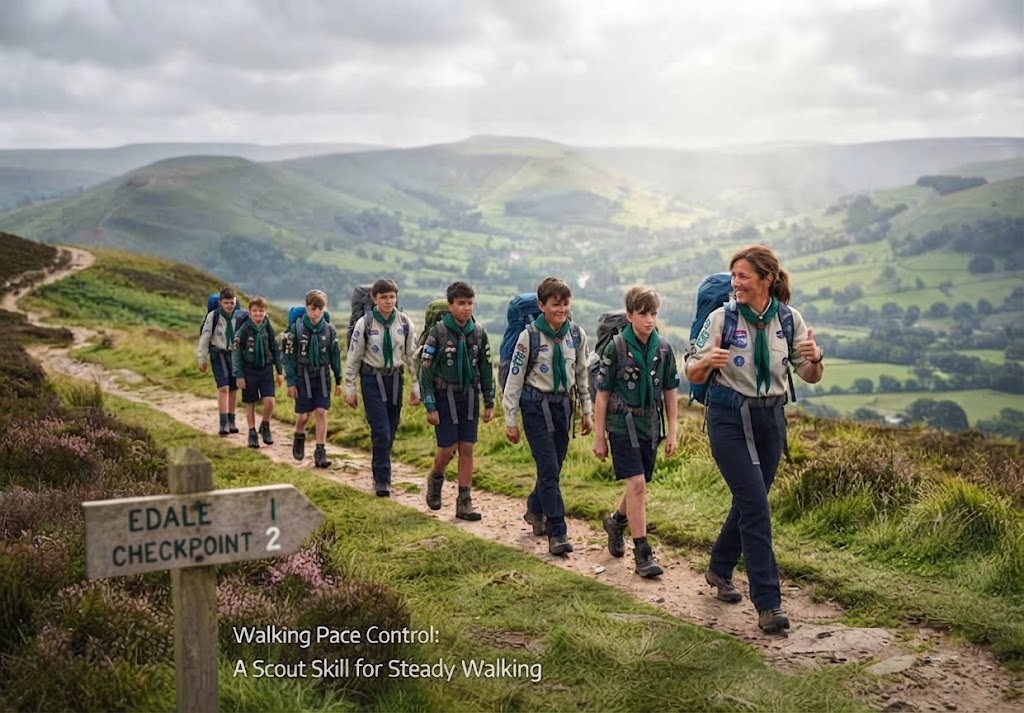
For Beavers, the first steps are much simpler: knowing where they are, following directions and recognising landmarks.
A familiar park, campsite or meeting place can become a brilliant navigation playground.
Through games and simple challenges, Beavers can begin developing the skills they’ll use for more advanced navigation as they progress through Scouting.
⚠️ SAFETY FIRST
Navigation activities for Beavers should always take place in a safe, clearly defined and supervised area that has been checked and risk assessed beforehand.
Beavers should never be deliberately made to get lost. Make sure everyone understands the boundaries of the activity and that leaders know where the group is at all times.
Take particular care around roads, water, steep ground, dense vegetation and other hazards. Adapt or stop an activity if weather, visibility or ground conditions become unsafe.
Follow your Scout organisation’s current safety guidance and the rules of the site you’re using.
1. Follow the Leader
Start with the basics.
Take Beavers on a short route and give simple instructions.
“Turn left at the tree.”
“Walk towards the gate.”
“Stop when you reach the bench.”
It introduces following directions without needing any equipment.
2. Left and Right Challenge
Call out instructions such as:
“Take three steps forward.”
“Turn left.”
“Turn right.”
“Turn around.”
Turn it into a game and gradually make the instructions more complicated.
It may seem simple, but understanding directions is an important foundation for navigation.
3. Find the Landmark
Choose several obvious landmarks around your activity area.
A large tree.
A gate.
A bench.
A building.
A flag.
Give Beavers clues about one of them.
“Find something tall with a roof.”
Can they work out which landmark you mean?
4. Draw a Simple Map
Ask Beavers to draw a basic map of their meeting place or campsite.
They could include paths, buildings, trees and other obvious features.
It doesn’t have to be accurate.
The important idea is understanding that a map is a picture of a real place from above.
5. Treasure Map
Draw a simple map and mark a treasure location with an X.
Give Beavers the map and let them work out where the treasure is.
You can make the treasure something as simple as a message, sticker or group challenge.
6. Navigation Bingo
Create bingo cards containing landmarks.
A tree.
A gate.
A bench.
A path.
A building.
A sign.
Beavers have to find the features on their card.
This works particularly well in a familiar outdoor area.
7. Follow the Trail
Create a short, clearly marked trail using arrows, flags or other suitable markers.
Beavers follow the route and look out for the next marker.
You can add simple challenges at different points.
For example:
“At the next flag, find something green.”
8. What’s Behind You?
Take Beavers somewhere with several obvious landmarks.
Give them time to look around.
Then turn around and ask:
“What was behind you?”
This helps develop spatial awareness and encourages them to pay attention to their surroundings.
9. Landmark Memory Game
Take the group on a short walk.
Afterwards, ask questions such as:
“What was next to the gate?”
“What did we see after the big tree?”
“Which way did we turn?”
It encourages Beavers to remember their route rather than simply following the person in front.
10. Direction Game
Introduce the four basic directions:
North
East
South
West
Start with a simple game.
Call out a direction and ask everyone to face that way.
Once they understand the idea, introduce a compass and show them how it can help identify north.
11. Compass Treasure Hunt
For a simple introduction to compass skills, give Beavers a compass and let them discover which direction is north.
You can then create very short, supervised instructions such as:
“Face north.”
“Now face east.”
Keep the activity about understanding directions rather than expecting precise navigation.
12. Map Symbol Matching
Introduce a few basic map symbols.
A path.
A building.
A road.
A river.
A campsite.
Ask Beavers to match the symbols with photographs or real features.
Don’t introduce too many at once.
13. What’s the Best Route?
Give Beavers a simple map showing several possible routes.
Ask:
“Which way would you go?”
Perhaps one route is shorter while another follows a clear path.
Ask them to explain their choice.
There doesn’t necessarily need to be one correct answer.
14. Follow the Clues
Create a short series of clues.
“Find the gate.”
“From the gate, walk to the large tree.”
“Look beside the tree for your next clue.”
The final clue can lead to a small prize or another activity.
It combines navigation with problem-solving.
15. Human Compass
Choose a central point and call out directions.
“Face north.”
“Turn east.”
“Now face south.”
You can turn it into a quick elimination game where anyone who faces the wrong direction sits out for one round.
16. Map Symbol Relay
Place pictures of map symbols around the activity area.
Call out a symbol and ask teams to find it.
Alternatively, give each team a simple map and ask them to identify where a particular symbol would appear.
17. Which Way Home?
Give Beavers a fictional situation.
“You’ve walked from the campsite to the field. How would you tell someone how to get back?”
Ask them to describe the route using landmarks.
This teaches them to think about navigation from another person’s perspective.
18. Photo Navigation
Take photographs of landmarks around your activity area.
Give Beavers the photographs and ask them to find each location.
For an extra challenge, use close-up photographs showing only part of each landmark.
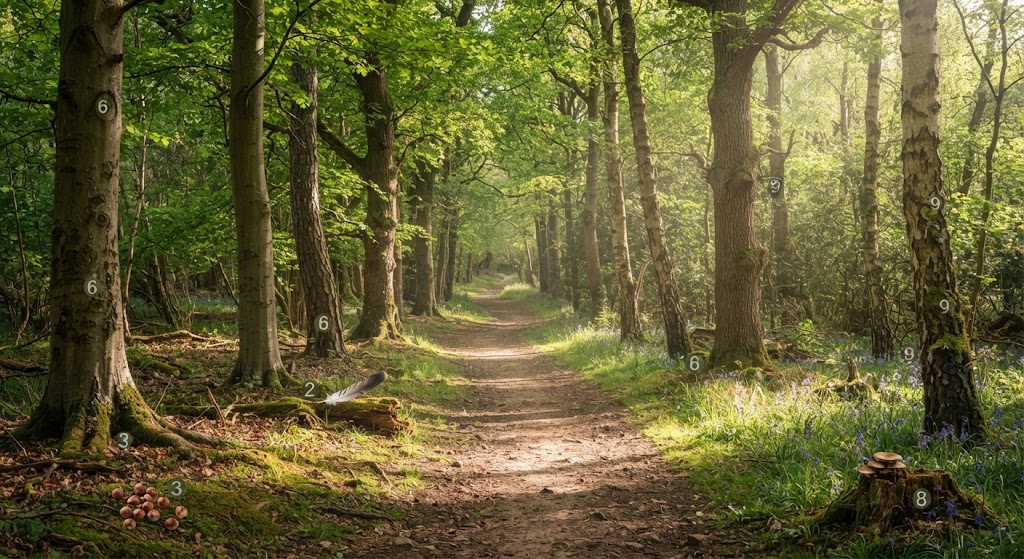
19. Nature Navigation
Combine navigation with a nature walk.
Ask Beavers to follow a route while looking for natural landmarks.
A large tree.
A stream.
A fallen branch.
A particular type of plant.
This helps them understand that the natural environment can provide useful clues about where they are.
20. The Big Beaver Navigation Adventure
Bring several skills together into one adventure.
Beavers could follow a simple map, identify landmarks, follow directions, solve a clue and complete an observation challenge before returning to the starting point.
Keep the route short and the instructions simple.
The objective isn’t to test whether they can navigate perfectly.
It’s to make navigation feel like an adventure.
Start With Landmarks
For Beavers, landmarks are often more useful than technical navigation.
“Walk towards the big tree.”
is much easier to understand than:
“Walk 50 metres on a bearing of 270 degrees.”
That’s perfectly fine.
Technical navigation skills can be introduced gradually as young people become older and more confident.
Introduce Maps Slowly
A complicated topographical map can be overwhelming for a young Beaver.
Start with somewhere they recognise.
Draw the meeting place, campsite or playground from above and let them compare the map with the real world.
Once they understand the basic idea, you can introduce more symbols and detail.
Make Navigation Into a Game
Treasure hunts, secret missions and exploration challenges are perfect ways to teach navigation.
The Beavers don’t necessarily need to think of it as a navigation lesson.
They’re simply trying to find the next clue.
That’s what makes the learning memorable.
Give Them Time to Look Around
It’s easy for young people to become focused on following the person in front.
Occasionally stop and ask:
“Where are we?”
“What can you see?”
“How would you know where to come back to?”
These simple questions encourage Beavers to become more aware of their surroundings.
Final Thoughts
Navigation for Beavers should be about confidence, curiosity and awareness.
Start with left and right.
Introduce landmarks.
Try simple maps.
Play direction games.
Then gradually introduce the compass.
There is no need to rush into advanced navigation. A Beaver who understands how to follow directions and recognise where they are already has the foundations for much more advanced skills later on.
🧭 THE BIG IDEA
Navigation starts with knowing where you are.
Let Beavers explore their surroundings, follow simple directions and discover how maps represent the world around them.
Keep the activities fun, keep the boundaries safe and let the skills develop naturally as they progress through Scouting.
🔒Ready to test your survival skills?
Join Survival Guides UK for free, complete challenges, earn badges and increase your Survival Level.
JOIN FREE →
CRAIG BURR
FOUNDER · SURVIVAL GUIDES UK
I'm Craig, the person behind Survival Guides UK. I created SGUK because I wanted somewhere people could learn real outdoor skills in a practical, straightforward way — from lighting a fire and tying knots to navigation, campcraft and everything in between.
You can read more about the story behind SGUK here as well as our approach here.