What to Do If Someone Panics Outdoors
⚠️ SAFETY FIRST
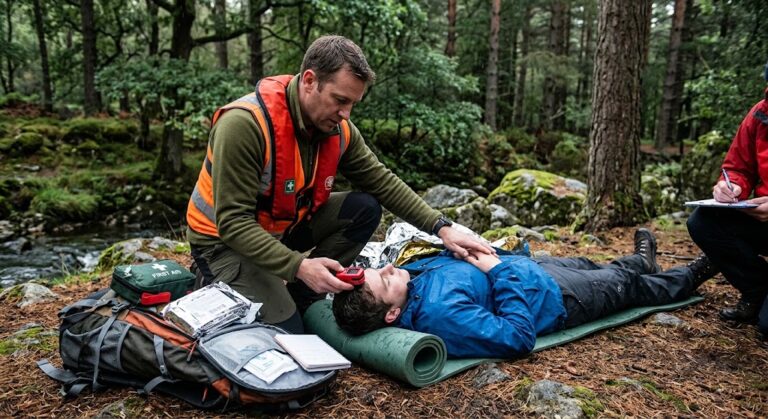
Panic can look frightening, but staying calm and creating a safe environment can make a big difference.
Don’t assume that every episode of distress is a panic attack. Chest pain, severe difficulty breathing, fainting, confusion or other unusual or severe symptoms may have another cause and can require urgent medical attention.
If you’re responsible for young people, follow your organisation’s safeguarding and first-aid procedures.
What to Do If Someone Panics Outdoors
Panic can happen anywhere.
It can happen during:
- A challenging hike
- A night hike
- A camping trip
- An adventurous activity
- Getting lost
- A difficult navigation exercise
- A storm
- An unexpected situation
- Being separated from friends
- Feeling overwhelmed
For Scouts, the outdoors can sometimes introduce situations that feel unfamiliar or frightening.
Someone who is panicking may struggle to think clearly or explain what’s happening.
Your job isn’t to instantly solve everything.
Your first priority is to help them feel safe and reduce the immediate pressure.
What Does Panic Look Like?
Someone experiencing panic might:
- Breathe very quickly
- Shake
- Cry
- Sweat
- Feel dizzy
- Say they can’t breathe
- Feel that something terrible is happening
- Struggle to speak
- Become very frightened
- Want to escape
- Become overwhelmed by noise or people
- Have difficulty following instructions
They might repeatedly say:
“I can’t do this.”
or:
“I need to get out.”
Remember that panic doesn’t necessarily look the same for everyone.
Some people become very quiet rather than visibly distressed.
Step 1: Stay Calm Yourself
This is probably the most important thing a leader or companion can do.
If you become visibly anxious, the person may pick up on it.
Use a calm voice.
Keep your instructions simple.
Avoid shouting.
Avoid suddenly surrounding them with lots of people.
You don’t need to have all the answers immediately.
Your calm presence can help create a sense of safety.
🧭 LEADER TIP
Slow yourself down first.
Speak more slowly.
Lower your voice.
Give one instruction at a time.
Your behaviour can communicate:
“You’re safe. We’ve got time. We’re going to deal with this together.”
Step 2: Move Somewhere Safe
If you’re outdoors, look at the immediate environment.
Is the person:
- Near a road?
- Near water?
- Near a cliff or steep drop?
- Near a campfire?
- On difficult terrain?
- In a storm?
- At risk of falling?
If there’s an immediate hazard, move them to a safer location if you can do so safely.
But don’t turn the situation into another emergency.
If someone is panicking on a narrow path above a steep drop, for example, don’t rush towards them.
Think about your own safety too.
Step 3: Reduce the Pressure
Panic can make ordinary things feel overwhelming.
If ten people are asking:
“What’s wrong?”
“Are you okay?”
“What happened?”
“Can you walk?”
it may make things worse.
If possible, reduce the number of people around them.
One calm person speaking to them may be much more effective than a whole group.
🧠 LESS CAN BE MORE
When someone is overwhelmed, too much information can become another source of stress.
One calm person.
One simple question.
One step at a time.
Step 4: Reassure Them
You don’t need to tell them:
“There’s nothing to worry about.”
You may not know that.
Instead, use reassuring but honest language.
Try:
“You’re with me.”
“We’re going to take this one step at a time.”
“You’re in a safe place.”
“You don’t have to solve everything right now.”
“Let’s just concentrate on getting you comfortable.”
Avoid making promises you can’t guarantee.
Step 5: Listen
Sometimes the most useful thing you can do is listen.
Ask simple questions.
For example:
“What do you need right now?”
or:
“Would you like me to stay with you?”
Don’t force them to explain everything.
If they’re unable to talk, that’s okay.
Give them time.
Step 6: Help Them Slow Their Breathing
Panic can involve rapid breathing.
A person may feel as though they can’t get enough air, even though they’re breathing very quickly.
Encourage slow, comfortable breathing rather than telling them to take huge breaths.
You can model slower breathing yourself.
For example:
“Let’s take this slowly. Breathe in gently, and then breathe out slowly.”
Don’t tell someone to breathe into a paper bag.
That can be dangerous, particularly if the symptoms aren’t caused by panic.
Step 7: Ground Them in the Present
If the person is overwhelmed, grounding can help bring their attention back to what’s happening around them.
Try simple questions such as:
“Can you feel the ground underneath your feet?”
“Can you tell me what you can see?”
“What can you hear?”
“Can you take a slow breath with me?”
Don’t turn this into a complicated exercise.
The aim is simply to give their attention something manageable to focus on.
🌲 OUTDOOR GROUNDING
Being outdoors can actually provide useful things to focus on:
Feel the ground.
Notice the trees.
Listen to the wind.
Look at something nearby.
Take one slow breath.
Step 8: Don’t Force Them to Continue
If someone has panicked during a hike or activity, don’t immediately tell them:
“Come on, we’ve got to keep going.”
They may need time.
Once they’re calmer, reassess the situation.
Can they safely continue?
Do they need to return?
Does someone need to accompany them?
Is the activity still appropriate?
A successful outdoor activity isn’t one where everyone reaches the destination at all costs.
What If Someone Panics Because They’ve Got Lost?
Getting lost can be particularly frightening.
The first thing to do is stop.
Don’t let panic turn into a dangerous attempt to find the route.
Use a simple process:
STOP
Stop moving.
THINK
Think about where you last knew your location.
OBSERVE
Look at the surroundings and available information.
PLAN
Decide what to do next.
If you’re with a Scout who is panicking because they’ve become separated from the group, reassure them that stopping is a positive decision.
“We’re not going to rush. We’re going to work this out.”
What If Someone Panics During a Night Hike?
Darkness can make panic much worse.
Reduce unnecessary stimulation.
Use torches appropriately.
Move to a safe position.
Stay together.
Don’t leave the person alone unless there is a compelling safety reason and your procedures require it.
If the activity is no longer safe, stop the activity.
There is nothing wrong with ending a night hike because someone is struggling.
What If Someone Panics During a Storm?
Storms can be frightening even for experienced adults.
If someone becomes distressed during severe weather:
Safety comes first.
Move to the appropriate shelter or safe location according to your activity’s emergency plan.
Don’t let the need to calm someone distract you from an actual environmental hazard.
Once you’re somewhere safe, you can concentrate on helping them settle.
This is another reason why good outdoor activities have an emergency plan before they start.
What NOT to Do
❌ Don’t shout
It can increase their distress.
❌ Don’t tell them to “just calm down”
They may already be trying.
❌ Don’t crowd them
Give them appropriate personal space.
❌ Don’t argue with their fear
You don’t need to prove that they’re wrong.
❌ Don’t force them to continue
Safety comes before completing the activity.
❌ Don’t use a paper bag for breathing
This can be dangerous.
❌ Don’t assume it’s definitely panic
Physical emergencies can sometimes look similar.
When Is It More Than Panic?
Panic symptoms can overlap with symptoms of other medical conditions.
Get urgent medical help if someone has symptoms such as:
- Severe or persistent chest pain
- Severe difficulty breathing
- Loss of consciousness
- Severe confusion
- A seizure
- Blue or grey lips or skin
- A serious injury
- Signs of a severe allergic reaction
- Symptoms suggesting heatstroke
- Any other condition that appears immediately life-threatening
If you’re unsure whether someone is experiencing panic or a medical emergency, treat the situation seriously and seek appropriate medical assistance.
🚨 TRUST YOUR INSTINCTS
If something doesn’t look right, don’t assume:
“It’s just a panic attack.”
A person’s symptoms may have another cause.
When in doubt, get help.
What If the Person Is a Child or Young Person?
With Scouts, this is particularly important.
A young person may not have the words to explain what’s happening.
They may simply say:
“I want to go home.”
or:
“I can’t do this.”
Take them seriously.
Don’t embarrass them in front of the group.
Give them appropriate privacy and involve the relevant leader or responsible adult according to your organisation’s procedures.
If a young person regularly becomes distressed during activities, it may be worth discussing appropriate support with their parent/carer and the relevant people within the organisation.
Helping Someone Without Taking Over
There’s a useful balance between helping someone and doing everything for them.
Try to give them manageable choices:
“Would you rather sit here or walk over to that bench?”
“Would you like some water?”
“Would you like me to stay with you?”
Small choices can give someone a sense of control when everything feels overwhelming.
After the Panic Has Passed
Don’t immediately pretend nothing happened.
Give the person time to recover.
They may feel:
- Tired
- Embarrassed
- Emotional
- Shaky
- Relieved
Avoid making jokes about what happened.
A simple:
“You did well. You’re okay now.”
can be much more helpful.
If appropriate, discuss what happened later when everyone is calm.
Preparing Scouts for Panic
You can reduce the impact of panic by teaching Scouts what to do before they need it.
During a survival or outdoor skills session, discuss:
What happens when people become frightened?
Why can panic make decision-making harder?
Why is stopping sometimes better than continuing?
Who should you tell if you’re struggling?
A Simple “PANIC” Reminder
You could teach Scouts this simple sequence:
P — Pause
Stop and avoid making rushed decisions.
A — Assess
Are you somewhere safe?
N — Notice
Pay attention to breathing, surroundings and what is actually happening.
I — Inform
Tell a leader, companion or responsible adult.
C — Calm
Slow things down and deal with one problem at a time.
This isn’t a medical treatment protocol, but it’s a useful outdoor decision-making tool.
A Good Scout Leader’s Approach
When someone panics, think:
Safety first.
Reduce stimulation.
Stay calm.
Listen.
Use simple instructions.
Give them time.
Don’t force them.
Monitor their condition.
Get help when necessary.
You don’t need to be a mental-health professional to provide basic support.
Sometimes simply being the calm person who stays with them is enormously valuable.
Final Thoughts
Panic can be frightening for the person experiencing it and for everyone around them.
The best response is usually not complicated.
Create safety.
Slow everything down.
Stay calm.
Give the person space.
Listen.
Encourage slow, comfortable breathing.
Don’t force them to continue an activity.
And always remember that not every episode of intense distress is necessarily a panic attack.
If there are concerning physical symptoms or you’re unsure what’s happening, seek appropriate medical help.
🧭 THE BIG IDEA
When someone panics, don’t add to the panic.
Slow down.
Create safety.
Stay with them.
Take one step at a time.
🔒Ready to test your survival skills?
Join Survival Guides UK for free, complete challenges, earn badges and increase your Survival Level.
JOIN FREE →
CRAIG BURR
FOUNDER · SURVIVAL GUIDES UK
I'm Craig, the person behind Survival Guides UK. I created SGUK because I wanted somewhere people could learn real outdoor skills in a practical, straightforward way — from lighting a fire and tying knots to navigation, campcraft and everything in between.
You can read more about the story behind SGUK here as well as our approach here.