
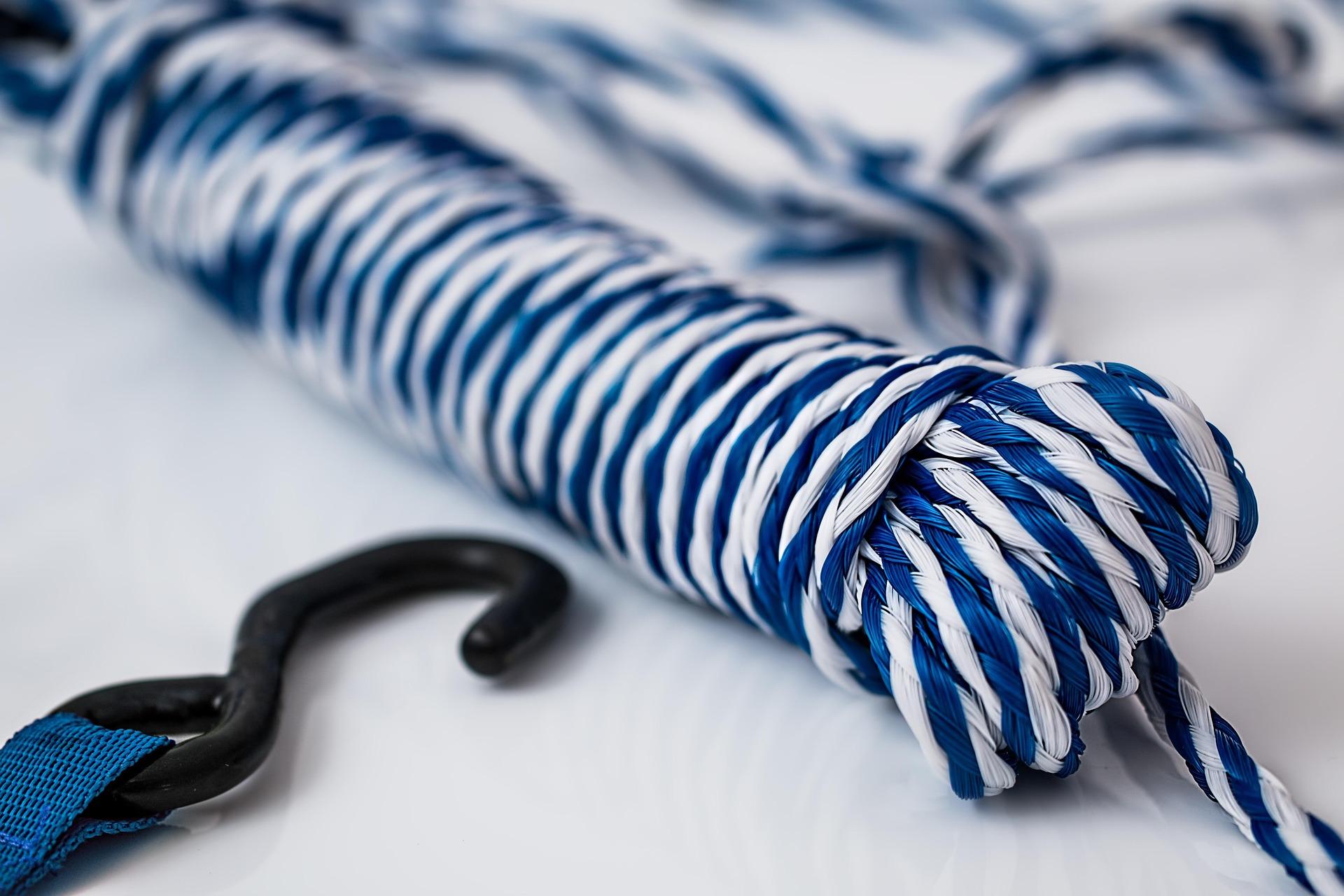
Rope Care: How to Look After Rope Safely
Rope is one of the most useful pieces of equipment you can carry outdoors.
It can be used for:
- Knots
- Lashings
- Shelters
- Camp equipment
- Pioneering projects
- Securing equipment
- Training activities
But rope needs to be looked after.
Dirt, moisture, chemicals, sunlight, abrasion and poor storage can all damage rope over time.
Learning how to care for your rope means it will be easier to use, last longer and be less likely to cause problems when you need it.
Safety First
Never use damaged or questionable rope for an activity where its failure could cause injury.
Rope used for climbing, abseiling, rescue, belaying or other life-safety applications must be treated differently from ordinary camp or pioneering rope. Always follow the manufacturer’s instructions and the relevant activity guidance.
When in doubt, take the rope out of service and ask a suitably competent person to assess it.
Why Does Rope Care Matter?
Rope might look simple, but it is made from fibres that can be affected by the environment.
Poor care can cause:
- Fraying
- Cuts
- Abrasion
- Weakening
- Stiffness
- Mould
- Contamination
- Permanent deformation
A rope can sometimes look usable while having suffered damage that isn’t immediately obvious.
That’s why good rope care starts with a simple habit:
Check your rope before you use it.
1. Inspect Your Rope
Before using a rope, give it a quick inspection.
Don’t just look at the ends.
Work your way along the entire length.
Look for:
CUTS
Small cuts or deep damage can compromise the rope.
FRAYING
A small amount of normal wear may occur, but significant or unusual fraying needs attention.
HEAT DAMAGE
Look for melted, glazed or hardened areas.
CHEMICAL CONTAMINATION
Unusual staining, smells or contact with chemicals can be a warning sign.
MOULD OR MILDEW
Particularly important if the rope has been stored damp.
ABRASION
Look for areas that have been repeatedly rubbed against rough surfaces.
2. Feel the Rope
Your eyes aren’t the only inspection tool.
Run the rope carefully through your hands.
You’re looking for:
- Unusual hard spots
- Soft spots
- Flattened sections
- Changes in diameter
- Stiff sections
- Lumps
- Damaged areas
A rope that suddenly feels different in one section deserves closer inspection.
Remember:
Look, feel and think.
3. Keep Rope Clean
Dirt and grit can work their way into rope fibres.
After using your rope, remove obvious dirt.
For ordinary outdoor rope, follow the manufacturer’s cleaning instructions.
If washing is permitted, use an appropriate method and avoid aggressive chemicals or cleaning products unless specifically recommended by the manufacturer.
Never assume:
“If soap is safe for clothes, it’s safe for rope.”
Different rope materials can react differently to cleaning products.
4. Dry Rope Properly
One of the biggest enemies of stored rope is moisture.
If you’ve used rope in:
- Rain
- Wet grass
- Mud
- Snow
- Damp conditions
allow it to dry properly before putting it into long-term storage.
The best approach:
1. Clean it if necessary.
↓
2. Allow it to dry naturally.
↓
3. Keep it somewhere well ventilated.
↓
4. Store it only when completely dry.
Don’t put wet rope into a sealed bag and forget about it.
That can encourage mould and unpleasant smells.
5. Protect Rope From Sunlight
Ultraviolet light from the sun can degrade some rope materials over time.
If rope isn’t being used, store it somewhere:
Don’t leave your rope permanently exposed outside if it doesn’t need to be.
6. Keep Rope Away From Chemicals
Chemicals can damage rope fibres.
Keep rope away from substances such as:
- Fuel
- Oil
- Solvents
- Strong cleaning chemicals
- Paint
- Other potentially damaging substances
If rope becomes contaminated with an unknown chemical:
Don’t assume it’s still safe.
Identify the substance if possible and follow the rope manufacturer’s guidance.
For critical applications, contaminated rope should be taken out of service.
7. Watch Out for Abrasion
Rope doesn’t like being repeatedly dragged over rough surfaces.
Sharp rocks, rough timber and other abrasive surfaces can damage fibres.
When using rope:
Think about where it is running.
Ask:
Is the rope rubbing against anything sharp or rough?
If it is, consider whether you can change the setup.
This is particularly important during pioneering activities.
8. Look After the Ends
The ends of a rope are particularly vulnerable to fraying.
A simple way to prevent this is to finish the ends appropriately for the rope and activity.
Depending on the type of rope, this may involve:
- Whipping
- Melting/sealing synthetic rope where appropriate
- Another manufacturer-approved method
Important
Different rope materials behave differently when exposed to heat.
Never burn or melt an unknown rope.
If you’re unsure what your rope is made from, use a suitable mechanical finishing method or check the manufacturer’s instructions.
9. Store Rope Properly
Don’t just throw rope into a box.
Good storage helps prevent:
- Knots
- Kinks
- Tangling
- Unnecessary abrasion
- Contamination
For general camp rope, coiling is a simple and useful storage method.
How to Coil a Rope
Hold one end of the rope.
Make consistent loops.
Keep the loops neat and similar in size.
Continue until you reach the other end.
Secure the coil appropriately.
Don’t pull the rope unnecessarily tight while storing it.
10. Avoid Permanent Kinks
Repeatedly storing rope with tight bends or kinks can make it more difficult to use properly.
When preparing rope for storage:
Keep it neat.
Avoid unnecessary tight bends.
Don’t crush it under heavy equipment.
A well-organised rope bag or storage area makes it much easier to find the rope you need.
11. Keep Different Ropes Organised
If you have several ropes, consider giving them a clear purpose.
For example:
CAMP ROPE
General-purpose camp activities.
PIONEERING ROPE
Used for pioneering and lashings.
TRAINING ROPE
Used for practising knots.
SPECIALIST ROPE
Equipment requiring specific inspection and care.
Don’t mix specialist life-safety equipment with ordinary camp rope.
Keeping equipment clearly separated makes it easier to know what each rope is intended for.
12. Know When to Retire Rope
This is one of the most important rope-care skills.
Sometimes the correct thing to do is:
STOP USING IT.
Consider taking a rope out of service if you find:
- Serious cuts
- Significant abrasion
- Severe fraying
- Heat damage
- Chemical contamination
- Unexpected changes in structure
- Unknown history where safety is critical
Don’t try to make damaged rope “good enough” for an important job.
And never:
Use a damaged rope simply because you don’t have another one.
For specialist rope, follow the manufacturer’s inspection and retirement criteria.
The Rope Care Check
Here’s a simple system for Scouts to remember:
LOOK → FEEL → CLEAN → DRY → STORE
LOOK
Inspect the entire rope.
FEEL
Check for unusual changes.
CLEAN
Remove dirt using an appropriate method.
DRY
Allow the rope to dry completely.
STORE
Coil and store it correctly.
Then:
CHECK AGAIN BEFORE USE.
Your First Rope Care Challenge
The Rope Inspection Challenge
Take a piece of ordinary camp or practice rope.
Don’t use climbing or life-safety equipment for this exercise unless you’re being supervised by someone appropriately competent.
Work along the entire rope.
Check for:
Now decide:
GREEN
Looks suitable for its intended ordinary use.
AMBER
Something needs further investigation.
RED
Take it out of use.
The important part:
Explain your decision.
Don’t simply say:
“It looks okay.”
Explain what you checked.
Bonus Challenge: Clean and Coil
Take a piece of suitable practice rope.
Your challenge:
1. Inspect it.
2. Clean it if appropriate.
3. Dry it correctly.
4. Coil it neatly.
5. Store it correctly.
Then give it to another person.
Can they:
Identify what type of rope it is?
Tell what it is normally used for?
Uncoil it without creating a tangled mess?
Explain how they would inspect it before use?
Explorer Challenge: The Rope Detective
Ask a leader to provide several pieces of rope.
Some should be in good condition.
Others can have safe, obvious examples of wear introduced for the exercise.
Don’t use genuinely unsafe equipment for children to handle.
Your challenge is to identify:
GOOD ROPE
Suitable for its intended purpose.
QUESTIONABLE ROPE
Needs further inspection or advice.
DAMAGED ROPE
Should not be used.
For each one, explain:
What did you notice?
Why does it matter?
What would you do with the rope?
This turns rope inspection into an actual decision-making skill rather than simply memorising a checklist.
What Have You Learned?
You should now understand that looking after rope is more than simply putting it away after camp.
You’ve learned how to:
Most importantly:
Rope care is part of rope safety.
Scout Connection
Rope care is an important supporting skill for many Scout activities.
It develops:
ROPE SKILLS
Understanding how rope behaves and how to maintain it.
OBSERVATION
Spotting small signs of damage.
RESPONSIBILITY
Looking after shared equipment.
CAMPING
Maintaining equipment used around camp.
PIONEERING
Keeping ropes ready for knots, lashings and construction projects.
TEAMWORK
Making sure equipment is safe and ready for the next person.
A good Scout doesn’t simply know how to tie a knot.
A good Scout also knows how to look after the equipment they’re using.
For specialist activities such as climbing, abseiling or rescue, always follow the specific equipment manufacturer’s instructions and current Scouts guidance.
SurvivalGuidesUK is an independent educational resource and isn’t an official Scouts website. Always follow the current Scouts programme requirements and your leader’s instructions.
SurvivalGuidesUK Safety Notice
This guide is intended for general outdoor, camping and Scout rope-care education.
Do not use ordinary camp or pioneering rope for climbing, abseiling, rescue, belaying or other life-safety applications.
Specialist ropes have specific inspection, maintenance and retirement requirements. Always follow the manufacturer’s instructions and the appropriate activity guidance.
If you are unsure whether a rope is safe for its intended use, do not use it until it has been assessed by an appropriately competent person.
🔒Ready to test your survival skills?
Join Survival Guides UK for free, complete challenges, earn badges and increase your Survival Level.
JOIN FREE →
CRAIG BURR
FOUNDER · SURVIVAL GUIDES UK
I'm Craig, the person behind Survival Guides UK. I created SGUK because I wanted somewhere people could learn real outdoor skills in a practical, straightforward way — from lighting a fire and tying knots to navigation, campcraft and everything in between.
You can read more about the story behind SGUK here as well as our approach here.