30-Minute Activity Plan: The Scout Knot Challenge
Knot tying is one of those traditional outdoor skills that becomes much more useful when Scouts understand why they are tying a particular knot rather than simply trying to memorise its name.
This activity turns knot practice into a series of short challenges. Scouts work individually and in teams to choose, tie and test simple knots for different jobs.
The emphasis is on using the right knot for the right situation, rather than simply seeing who can tie the fastest.
Time: 30 minutes
Group size: 6–30 Scouts
Age: Adaptable for Cubs and Scouts
Location: Indoors or outdoors
Equipment: Short lengths of rope or cord for each Scout, several longer ropes, cones or other suitable objects
For younger Scouts, concentrate on one or two simple knots. Older Scouts can be given a wider selection and asked to explain why they have chosen each one.
Before You Start
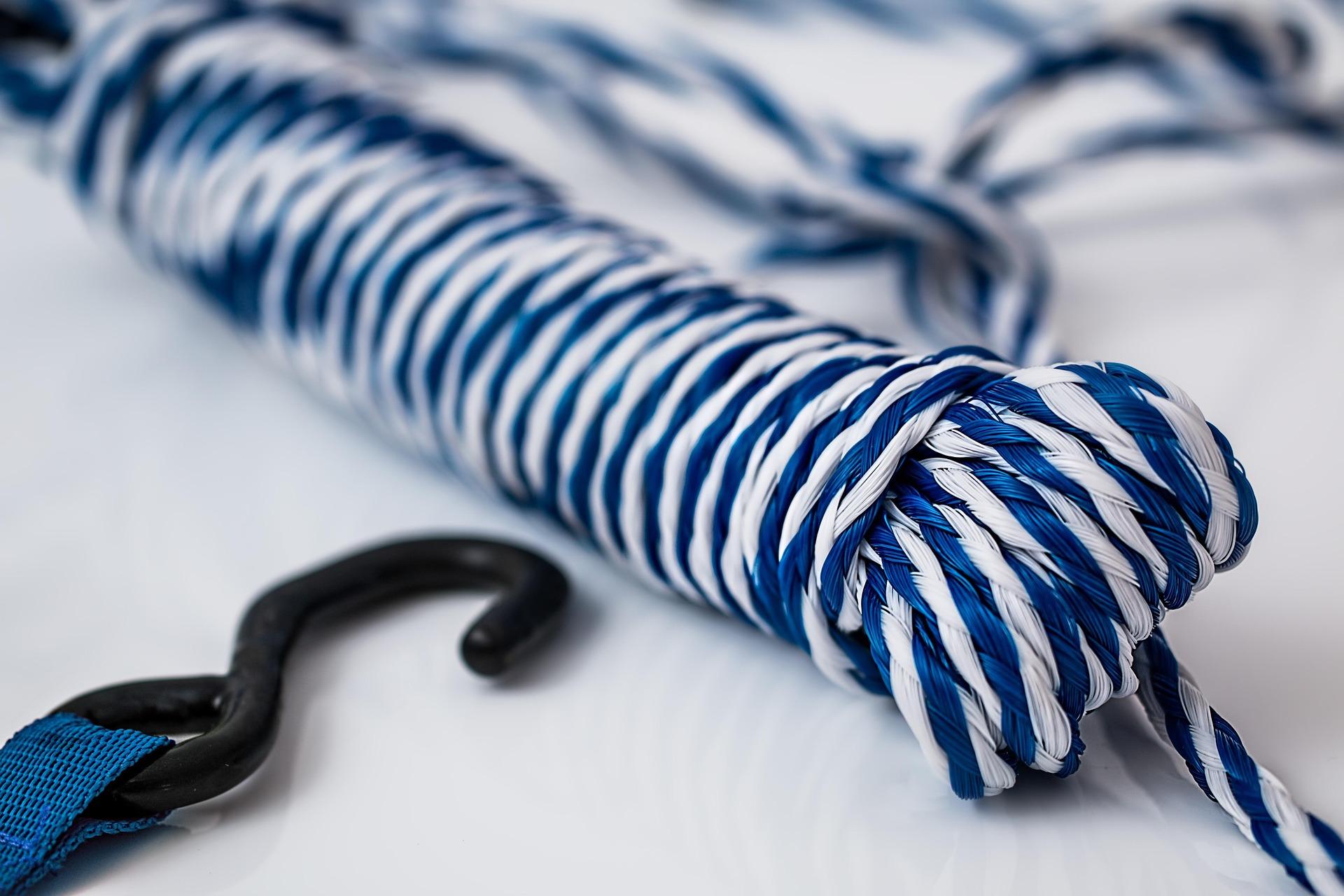
Give each Scout a suitable length of rope or cord. Avoid very thin cord that is difficult for younger Scouts to handle.
Choose the knots according to the experience of your group. Suitable examples include the reef knot, clove hitch, bowline and round turn and two half hitches.
Before beginning, check that everyone knows the difference between tying a knot for practice and using a knot for something that genuinely needs to support a person or significant load.
For this activity, nobody should climb, be lifted, suspended or supported by the ropes.
0–5 Minutes: Knot Warm-Up
Give everyone a piece of rope and ask them to tie a knot they already know.
Don’t tell them which knot to use.
After a minute, ask a few Scouts to show what they tied and explain what they think the knot could be useful for.
Introduce the idea that different knots have different purposes.
A knot that joins two ropes isn’t necessarily the right choice for attaching a rope to a post. A knot that is easy to tighten isn’t necessarily the easiest one to untie.
The challenge today is to think about the job first, knot second.
5–15 Minutes: Knot Stations
Set up a few simple stations around the meeting area.
At each station, give the Scouts a practical problem.
For example:
Join two ropes: The Scouts need to join two similar-sized ropes together.
Attach a rope: The Scouts need to attach their rope securely around a post or suitable object.
Create a fixed loop: The Scouts need to make a loop that will remain a fixed size.
Secure a rope: The Scouts need to attach a rope to an object so that it can be tightened and secured.
Give the Scouts time to work out which knot they think is appropriate.
Once they’ve made their choice, they should tie it and explain their reasoning to the leader.
Don’t immediately correct mistakes. Ask questions such as:
“Why did you choose that knot?”
“What happens when you pull it?”
“Would you be able to untie it afterwards?”
“What would happen if you used a different knot?”
This makes the activity about understanding rather than memorisation.
15–25 Minutes: The Knot Challenge
Now divide the Scouts into small teams.
Give each team three or four short challenges.
For example, the team might be asked to:
The team has to decide which knot is appropriate before tying it.
Once they believe they’ve completed a challenge, a leader checks their work.
For older Scouts, add a second layer to the challenge: they must explain why their chosen knot is suitable.
For younger Scouts, you can provide pictures or names of the knots they are allowed to use.
The aim isn’t to catch Scouts out. If someone chooses the wrong knot, let them test it safely and discuss what they could change.
25–30 Minutes: Knot Review
Bring everyone together and ask which knot they found most useful.
Talk about why some knots are easier to tie than others and why being able to untie a knot afterwards can be just as important as tying it securely.
Ask the Scouts to choose one knot they would like to practise more.
Finish with a quick demonstration of one useful knot and encourage the Scouts to practise it at home using a suitable piece of cord.
Safety
Use only suitable ropes or cord and keep all practice at ground level.
Never use the ropes to support a person’s weight. Scouts should not climb on, hang from or be lifted by ropes used during this activity.
Check the area for trip hazards, particularly if longer ropes are being used.
Make sure knots are tested by hand rather than by pulling with excessive force.
Leaders should supervise younger Scouts closely, particularly when working around posts, furniture or other fixed objects.
If a knot becomes difficult to undo, don’t encourage Scouts to force it. Ask a leader for assistance.
Leader Notes
Try not to turn this into a race.
Speed can encourage Scouts to rush their technique, whereas the real value comes from learning how a knot behaves and understanding when it is useful.
One effective approach is to let Scouts make mistakes. If someone chooses an unsuitable knot, allow them to discover the problem through a safe hand test and then try another solution.
For Cubs, use a small number of familiar knots and focus on recognising their different uses.
For Scouts, introduce more choice and ask them to justify their decisions.
You can also make the activity progressively harder by giving Scouts fewer clues about which knot to use.
If your group already has strong knot-tying skills, give them unusual but safe problems to solve rather than simply asking them to tie increasingly complicated knots.
Learning Outcomes
By the end of the activity, Scouts should have had the opportunity to develop:
Final Thought for Leaders
Knot tying can sometimes become an exercise in remembering names and copying diagrams.
A more useful skill is knowing what you need the rope to do and then choosing an appropriate way of securing it.
Giving Scouts small problems to solve turns a traditional outdoor skill into something more meaningful. It also gives them an opportunity to experiment, make mistakes and learn from them — all without needing a complicated activity or large amount of equipment.
🔒Ready to test your survival skills?
Join Survival Guides UK for free, complete challenges, earn badges and increase your Survival Level.
JOIN FREE →
CRAIG BURR
FOUNDER · SURVIVAL GUIDES UK
I'm Craig, the person behind Survival Guides UK. I created SGUK because I wanted somewhere people could learn real outdoor skills in a practical, straightforward way — from lighting a fire and tying knots to navigation, campcraft and everything in between.
You can read more about the story behind SGUK here as well as our approach here.