SGUK Outdoor Skills Challenge 65: Check for Widow-Makers After Autumn Gales
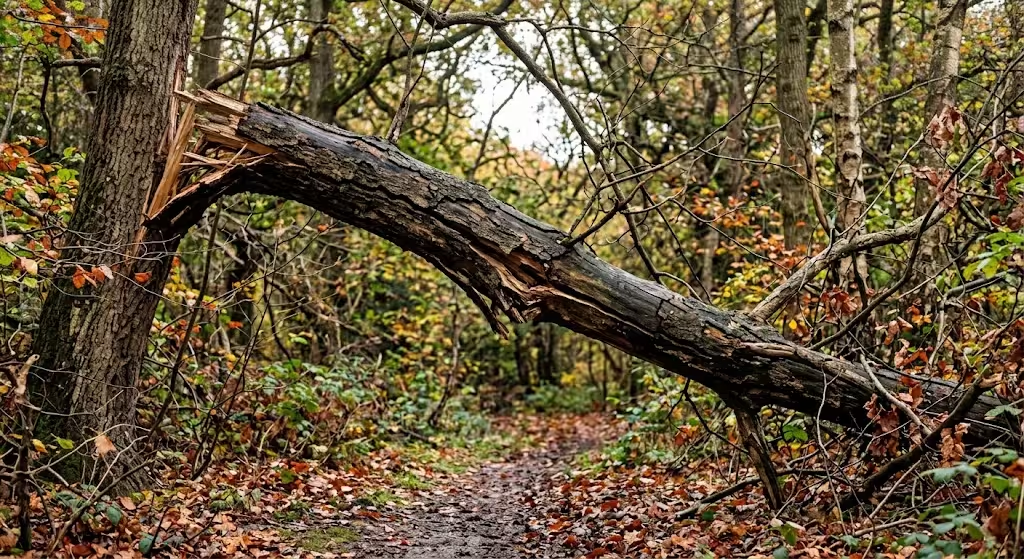
After a spell of strong autumn winds, woodland can look perfectly normal from the path while hiding dangerous damage overhead. A widow-maker is a term used for a dead or broken branch, or sometimes a damaged tree, that could fall without warning.
Your challenge is to learn how to recognise the warning signs from a safe distance and make sensible decisions about where to walk. You should never approach a dangerous tree to inspect it more closely.
Your Challenge
Learn to recognise potential overhead hazards after autumn gales and practise deciding whether a woodland route is safe to use.
Your task is to identify at least three warning signs of storm damage and explain what you would do if you noticed them.
What You’ll Need
- A familiar woodland route or suitable outdoor area
- Your observation skills
- A phone or camera, if you want to record evidence from a safe position
Do not enter a woodland that has been closed after a storm, and do not go out during strong winds simply to complete this challenge.
Take the Challenge
- Check before you visit. Look for local storm warnings, woodland closures and notices from the land manager. After severe weather, postpone your visit if safety information is unavailable or conditions remain unsettled.
- Learn the warning signs. From a safe place, look for broken branches caught high in tree crowns, large dead limbs, freshly split branches and trees that are leaning unusually or have roots lifting out of the ground. Any of these may indicate a hazard, but you cannot reliably judge a tree’s safety just by looking at it.
- Look up without approaching. When you are in an open, permitted area, observe the canopy from a distance. Do not stand underneath a suspect branch to get a better view, touch hanging wood or walk closer to inspect cracks.
- Assess the route, not just the tree. Ask yourself whether the path passes beneath damaged trees or through an area where branches could fall. If you see significant damage, choose a safer route away from the affected trees or turn back.
- Recognise less obvious hazards. Storm damage can include partly uprooted trees, branches resting on other trees and fallen trunks under tension. These can move or fall unexpectedly. Do not climb over or move storm debris to continue your walk.
- Know when to leave. If you encounter extensive damage, hear cracking or falling wood, or notice trees moving dangerously in gusts, move away from the area as safely as possible. Report serious hazards to the land manager rather than attempting to deal with them yourself.
Check Your Results
Check your understanding against these points:
- Can you identify at least three signs of possible storm damage?
- Do you understand why a hanging branch can fall without warning?
- Can you explain why getting closer to inspect a tree is unsafe?
- Do you know when to turn back or choose another route?
- Can you explain who to contact to report a dangerous tree?
Complete the Challenge
Your challenge is complete when you can identify three warning signs of storm damage and explain how you would avoid the hazards they present.
You can submit a photograph of storm damage taken from a safe distance, or a photograph of your notes. Do not approach a damaged tree just to obtain evidence.
How to Submit Your Challenge
Submit your evidence
- Go to your SGUK member profile.
- Open Social Activity.
- Upload a photograph of your evidence to the activity wall.
- Add the hashtag #SGUKChallenge65.
- Share it for verification.
Challenge 65 Checklist
Want to Push Yourself?
Learn the difference between a hanging branch, a split trunk and an uprooted tree. Find out why each can be dangerous and how woodland managers decide when an area needs to be closed.
What’s Next?
If you haven’t completed the previous challenge, try SGUK Outdoor Skills Challenge 64: Learn How to Cook with Rosehips. You can complete the SGUK Challenges in any order.
Once you’ve shared your evidence and it has been verified, the SGUK Outdoor Skills Challenge 65 is complete and the completed challenges figure will be updated on your profile.
Learn. Practise. Master.
That’s what the SGUK Outdoor Skills Challenge is all about.
🔒Ready to test your survival skills?
Join Survival Guides UK for free, complete challenges, earn badges and increase your Survival Level.
JOIN FREE →
CRAIG BURR
FOUNDER · SURVIVAL GUIDES UK
I'm Craig, the person behind Survival Guides UK. I created SGUK because I wanted somewhere people could learn real outdoor skills in a practical, straightforward way — from lighting a fire and tying knots to navigation, campcraft and everything in between.
You can read more about the story behind SGUK here as well as our approach here.